Afghan schoolgirls poisoned in anti-education attack

[caption id="attachment_6209" align="alignleft" width="300" caption="Source : http://blog.amnestyusa.org/"]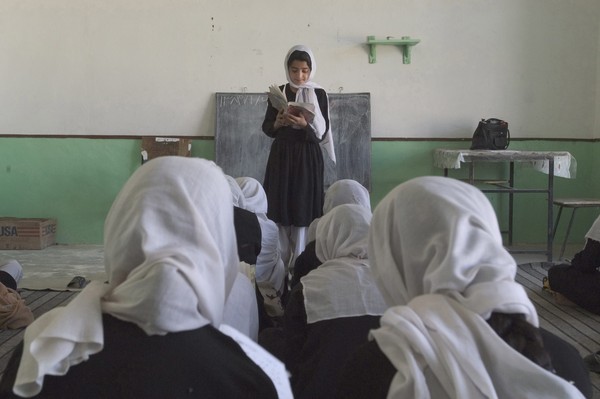 [/caption]
About 150 Afghan schoolgirls were poisoned on Tuesday after drinking contaminated water at a high school in the country's north, officials said, blaming it on conservative radicals opposed to female education.
Since the 2001 toppling of the Taliban, which banned education for women and girls, females have returned to schools, especially in Kabul.
But periodic attacks still occur against girls, teachers and their school buildings, usually in the more conservative south and east of the country, from where the Taliban insurgency draws most support.
"We are 100 percent sure that the water they drunk inside their classes was poisoned. This is either the work of those who are against girls' education or irresponsible armed individuals," said Jan Mohammad Nabizada, a spokesman for education department in northern Takhar province.
Some of the 150 girls, who suffered from headaches and vomiting, were in critical condition, while others were able to go home after treatment in hospital, the officials said.
They said they knew the water had been poisoned because a larger tank used to fill the affected water jugs was not contaminated.
"This is not a natural illness. It's an intentional act to poison schoolgirls," said Haffizullah Safi, head of Takhar's public health department.
None of the officials blamed any particular group for the attack, fearing retribution from anyone named.
The Afghan government said last year that the Taliban, which has been trying to adopt a more moderate face to advance exploratory peace talks, had dropped its opposition to female education.
But the insurgency has never stated that explicitly and in the past acid has been thrown in the faces of women and girls by hardline Islamists while walking to school.
Education for women was outlawed by the Taliban government from 1996-2001 as un-Islamic.
Related Stories

The War That Could Redraw the World: What's Happening in Iran
On February 28, 2026, the United States and Israel launched a coordinated air campaign against Iran with a scope and precision that caught even seasoned Middle East analysts off guard. The target: Ayatollah Seyyed Ali Kh...

The US-Iran War: What It Means for Your Gas Bill
Ten days into the US-Israel military operation against Iran, Americans are feeling it at the pump. Gas prices have surged roughly 20% since joint airstrikes launched on February 28, with the national average for regular...

Water Crisis: Cities Running Dry Across India
Delhi's groundwater levels have fallen approximately one meter per year for two decades—a decline that is measurable, inexorable, and unsustainable. Bangalore's aquifers are nearly depleted despite being a major metropol...