Long awaited iPhone on Verizon's network

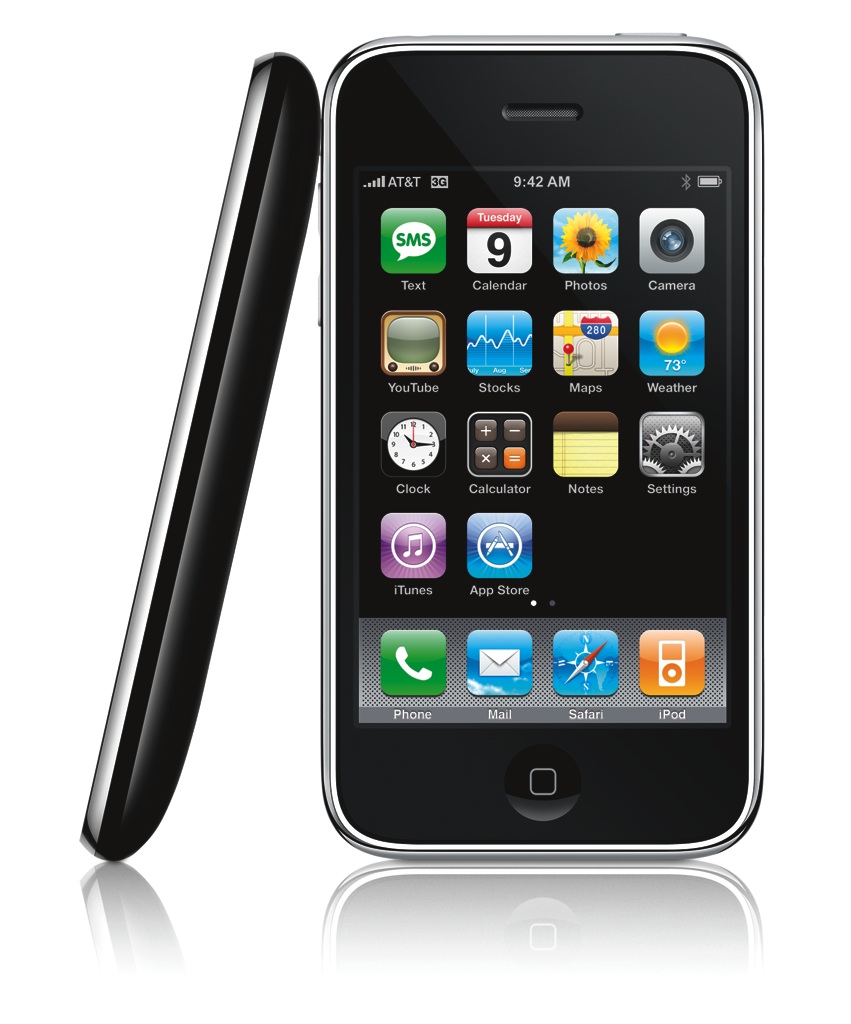 When Verizon takes the stage at Lincoln Center in New York tomorrow to share the "latest news" with us, it's almost a given that it's going to be the long-awaited iPhone on Verizon's network.
The press conference is going to be held in New York, far from Silicon Valley and the Bay Area, where Apple typically holds its major product events. Instead, this announcement will be on Verizon's turf, which means tomorrow will probably focus on what kind of plans the carrier will offer, whether it's 3G or 4G, and when customers can start buying it. In other words, this is Verizon's event, not Apple's.
For Apple, adding a secondary carrier in other countries isn't a major news event--it's barely a press release. But when it's the U.S., it's a different story. AT&T's exclusivity deal has been the subject of much hand-wringing and thousands of blog posts mainly because AT&T's perceived inability to handle the sheer amount of traffic the iPhone dumps on its network. Verizon has, for better or worse, become the symbol of a solution to the dropped-call problems experienced by loyal iPhone owners.
But how, exactly, does the iPhone being on Verizon's network affect Apple? In short: it's going to be good. It's a new crop of customers to go after, and the chance for head-to head sales competition with Android's biggest supporter for the first time. But there are also potential pitfalls, like managing outsized expectations, and the possibility of navigating a new release cycle.
When Verizon takes the stage at Lincoln Center in New York tomorrow to share the "latest news" with us, it's almost a given that it's going to be the long-awaited iPhone on Verizon's network.
The press conference is going to be held in New York, far from Silicon Valley and the Bay Area, where Apple typically holds its major product events. Instead, this announcement will be on Verizon's turf, which means tomorrow will probably focus on what kind of plans the carrier will offer, whether it's 3G or 4G, and when customers can start buying it. In other words, this is Verizon's event, not Apple's.
For Apple, adding a secondary carrier in other countries isn't a major news event--it's barely a press release. But when it's the U.S., it's a different story. AT&T's exclusivity deal has been the subject of much hand-wringing and thousands of blog posts mainly because AT&T's perceived inability to handle the sheer amount of traffic the iPhone dumps on its network. Verizon has, for better or worse, become the symbol of a solution to the dropped-call problems experienced by loyal iPhone owners.
But how, exactly, does the iPhone being on Verizon's network affect Apple? In short: it's going to be good. It's a new crop of customers to go after, and the chance for head-to head sales competition with Android's biggest supporter for the first time. But there are also potential pitfalls, like managing outsized expectations, and the possibility of navigating a new release cycle.
Related Stories

Tier-2 Cities: India's New Growth Engines Are Still Sputtering
For the past fifteen years, development experts and policy makers have confidently predicted that India's Tier-2 cities—Pune, Surat, Lucknow, Chandigarh, Indore, Nagpur—would absorb India's relentless urbanization and be...

The Startup Winter: Which Startups Survived the Downturn?
From 2021 to early 2023, Indian startups received venture capital at unprecedented scale. 2021 saw ₹49,000 crore ($5.9 billion) invested—exceeding the total capital deployed in all of 2019-2020 combined. The money flowed...

The New Indian Middle Class: Aspirations, Anxieties, Consumption
India's middle class—roughly 250-350 million people with annual household incomes between ₹10 and ₹50 lakh—represents a purchasing power that shapes entire economies. Yet their consumption patterns reveal a psychology di...