The Upside of Autism

When it comes to disorders of the mind, our society has a tendency to seek out the safety of clear-cut categories. We want there to be a bright line separating normal from abnormal, health from sickness.
Alas, the human brain is a category buster \u2014 an organ so complicated that it continues to surprise and confound.
Consider autism. In recent years, autism has received an increasing amount of attention, largely because of a dramatic increase in its incidence. According to a new report from the Centers for Disease Control, about 1 in 88 children is now diagnosed with autism-spectrum disorders, which include "classic" autism as well as Asperger syndrome.
These diagnoses are often based on observed deficits in social interaction, such as a lack of eye contact or verbal conversation. Temple Grandin, a noted autistic scientist and professor, describes the experience of spending time with nonautistics as akin to being "an anthropologist on Mars."
Because of these obvious shortcomings, it's easy to miss what comes with them. The same neurology that makes small talk bewildering often makes other things \u2014 pattern recognition, sustained attention to detail, deep focus on a special interest \u2014 extraordinary. Grandin herself became one of the world's leading experts on humane livestock-handling design, work she traces directly to the visual, detail-attentive way her autistic mind processes the world.
That doesn't romanticize the real challenges families face \u2014 they are substantial, and nobody living them needs a lecture about silver linings. But it does complicate the story. The rising prevalence numbers mean autism is no longer a rarity discussed in clinics; it is part of the ordinary landscape of schools, workplaces, and neighborhoods. Understanding it as a difference with its own strengths, rather than only a deficit to be fixed, changes what accommodations look like \u2014 and what expectations are set.
The upside of autism is not that the hard parts aren't hard. It's that the same brain can be both \u2014 and that society is richer for making room for minds that work differently.
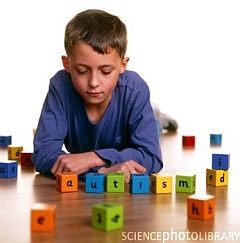 When it comes to disorders of the mind, our society has a tendency to seek out the safety of clear-cut categories. We want there to be a bright line separating normal from abnormal, health from sickness.
Alas, the human brain is a category buster, an organ so complicated that it continues to surprise and confound.
Consider autism. In recent years, autism has received an increasing amount of attention, largely because of a dramatic increase in its incidence. According to a new report from the Centers for Disease Control, about 1 in 88 children is now diagnosed with autism-spectrum disorders, which include "classic" autism as well as Asperger syndrome.
These diagnoses are often based on observed deficits in social interaction, such as a lack of eye contact or verbal conversation. Temple Grandin, a noted autistic doctor, describes the experience of spending time with nonautistics as akin to being "an anthropologist on Mars."
Because of these obvious shortcomings
Related Stories

Please don't deport my 9-year-old son to a land he doesn't know because of his autism
Nurse Maria Sevilla's visa was refused because of her autistic son Tyrone's healthcare costs — and her Change.org petition gathered 123,000+ signatures.

E. coli Outbreak in Six States Is Probed
How CDC investigators traced a 2012 E. coli outbreak across six states — from patient interviews to supply-chain sampling — and why leafy greens keep recurring.
Townhouse Books and Café in St. Charles, IL — A Review by SAGA
SAGA reviews Townhouse Books & Café in St. Charles: an indie bookstore in an 1853 Victorian house on the Fox River — plus sandwiches and salads.