HRT is back in favor. Why were women told to avoid it for so long?
In 2002 one study drove women off hormone therapy. Two decades later, the FDA and America's gynecologists have changed course, and many women are asking what they were never told.
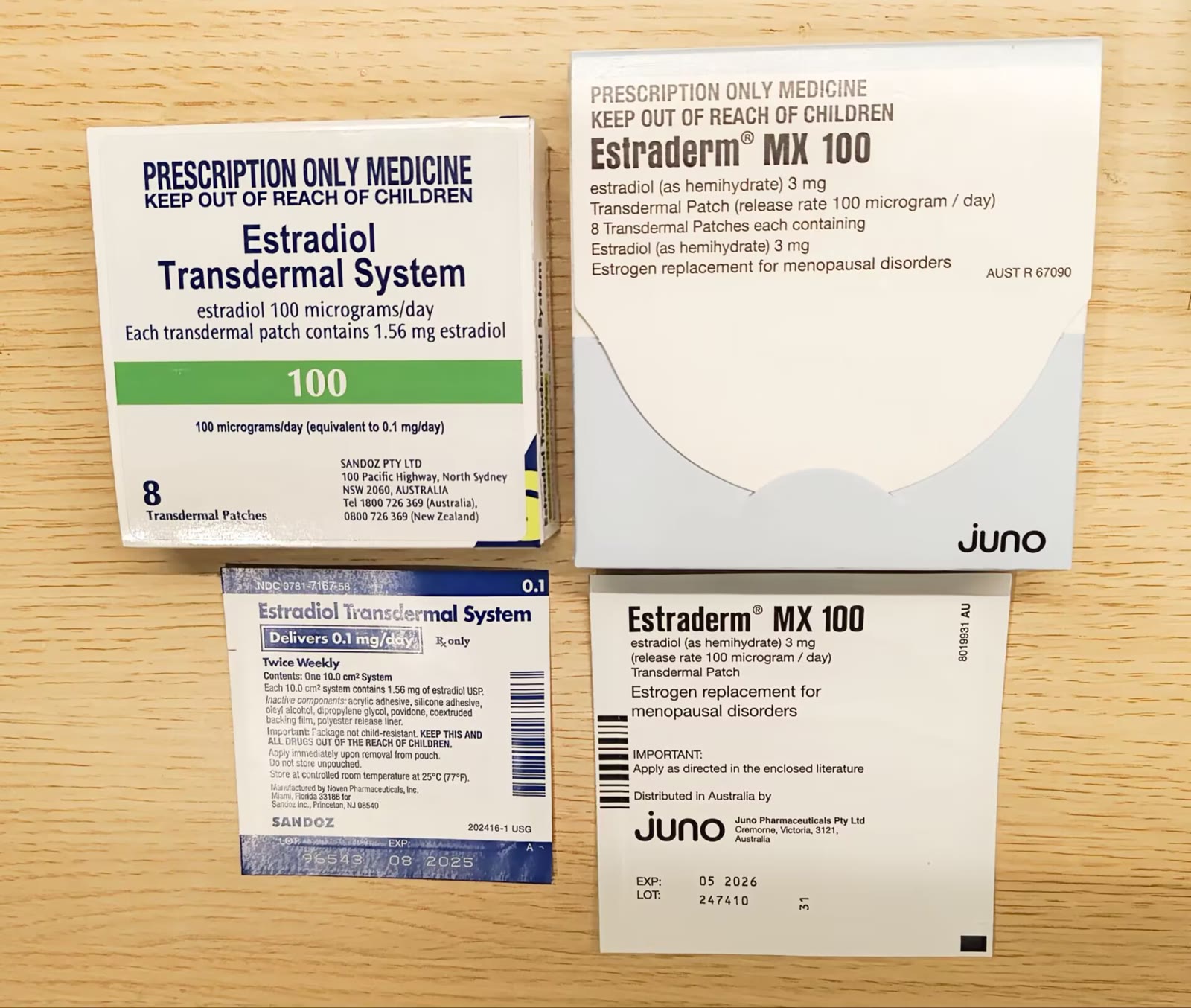
Top photo: packs of estradiol transdermal patches, one of the forms of hormone therapy for menopause, photographed in Australia in June 2025. Photo by Vack Xu, CC0, via Wikimedia Commons.
I first explored hormone replacement therapy (HRT) in my thirties, mostly for its possible benefits for aging skin. The research was inconclusive, and doctors discouraged it.
Twenty years later, my concerns are different. Hot flashes, anxiety, sleepless nights, brain fog, mood swings and plantar fasciitis have become familiar complaints. Some friends swear by HRT. Others remain wary. I have spent years reading about it, unsure what to believe.
So when physician Peter Attia called the retreat from hormone therapy "the greatest single failure of the modern medical system" in a 2025 60 Minutes interview, I was intrigued.
In 2002, the Women's Health Initiative reported that women taking combined estrogen and progestin faced a 26 percent higher risk of breast cancer, along with increased risks of heart disease, strokes and blood clots.
Women stopped taking hormones. Doctors stopped prescribing them. HRT use among postmenopausal American women fell from 26.9 percent in 1999–2000 to 4.7 percent in 2017–20.
The headlines had left out important details. The increased breast cancer risk amounted to eight additional cases per 10,000 women treated for a year. The women in the trial were 63 on average, many more than a decade past menopause.
Later research found that age, timing and treatment type mattered. Women who started hormone therapy closer to menopause had different cardiovascular risks from those who began much later. Estrogen alone had a different breast cancer risk profile from combined therapy. Patches and gels were associated with a lower risk of blood clots than oral estrogen.
In November 2025, the FDA announced plans to remove broad boxed warnings about breast cancer, heart disease and dementia from hormone products. In October 2026, the American College of Obstetricians and Gynecologists issued updated guidance strongly recommending hormone therapy for troublesome hot flashes, night sweats and related sleep problems.
Prescriptions were already rising. In England, NHS hormone prescriptions increased nearly fivefold between 2015–16 and 2024–25. In America, estrogen prescribing rose 19 percent between July 2025 and February 2026.
Yet many women still struggle to get help.
A 2019 survey found that fewer than 7 percent of American medical residents felt adequately prepared to manage menopause. Access also varies sharply. In England, hormone therapy use among women over 40 ranged from 23 percent in Brighton and Hove to just 4 percent in Newham, east London.
Menopause symptoms themselves are often overlooked. Hot flashes dominate the discussion, but women also report joint pain, sleep disturbances, anxiety and changes in mood. Some endure years of symptoms without connecting them to hormonal changes.
Many women simply do not talk about it. A 2022 Abbott survey in India found that 79 percent of respondents believed women were not comfortable discussing menopause with family, friends or colleagues. Three in four women had never heard of their mothers or older sisters seeking help for it.
Meanwhile, menopause has become a booming business. Specialized clinics are attracting investment, celebrities are discussing hormone treatments, and podcasts are bringing menopause into everyday conversation. Women are finally asking questions that their mothers may never have asked.
I welcome the renewed interest in HRT. The evidence supports its benefits for many women, particularly those who begin treatment around menopause. Doctors can assess individual risks, recommend suitable formulations and help women decide when to start.
For years, women were encouraged to endure symptoms that could have been treated. I wish I had known more about HRT when I first began experiencing them. I suspect many women feel the same.
After two decades of fear surrounding hormone therapy, women deserve to hear what the newer research has found. And doctors need to start having these conversations with them.
This article is for general information and is not medical advice. Talk to your own doctor before starting or stopping any treatment.




Comments
Loading comments…