Heart checks should begin near a girl's first period, American Heart Association says
Four US medical societies want heart-risk assessment to start around ages 8 to 15 and to follow women through pregnancy and menopause. Pregnancy warning signs that are more common in South Asian women are part of the new framework.
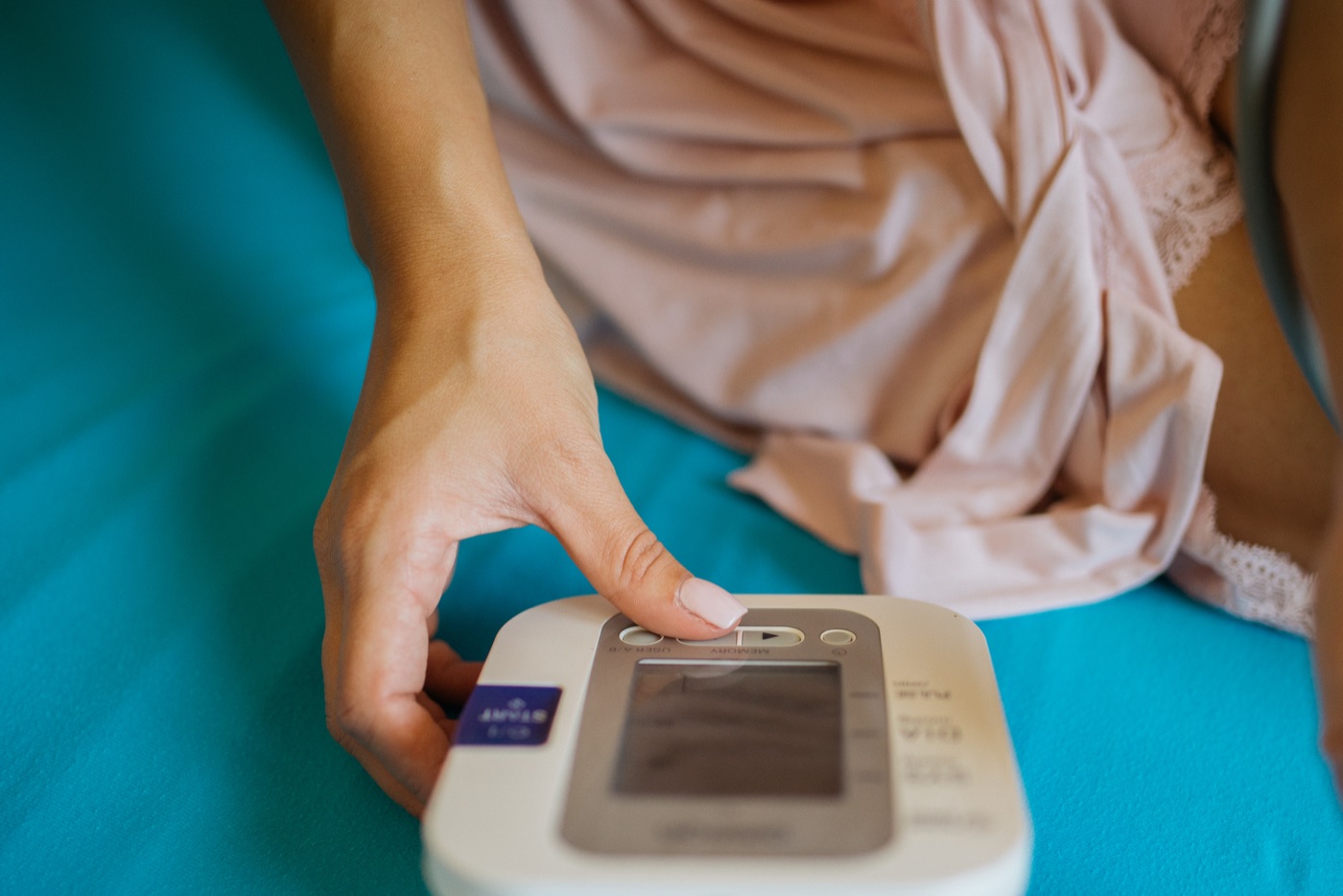
Top photo: a woman reaches for a digital blood pressure monitor while sitting on a bed, September 12, 2020. Photo by Shixart1985, CC BY 2.0, via Wikimedia Commons.
A girl's first period belongs in her heart record, four American medical societies said this week. In three joint papers published in the journal Circulation on Monday, October 26, the groups asked doctors to start assessing cardiovascular risk around perimenarche, the years near a first period, which they put at roughly ages 8 to 15. The guidance runs past menopause.
The American Heart Association led the effort with the American Academy of Pediatrics, the American College of Obstetricians and Gynecologists and the Society for Maternal-Fetal Medicine. Each paper carries all four names. The central one is a presidential advisory on a "female-specific life course approach." A scientific statement gives clinical guidance, and a science advisory proposes national centres for women's heart care.
Cardiovascular disease is the leading cause of death in American women, the heart association said. It claims more than 400,000 lives a year. Only 41 percent of women recognise it as their greatest health threat.
The framework reads pregnancy as an early warning. Studies in Australia and the Netherlands have found some pregnancy complications more often in South Asian women.
"Women experience their healthcare across clinical specialties, but it often is fragmented or disconnected," said Sadiya S. Khan, a cardiovascular epidemiologist at Northwestern University's Feinberg School of Medicine in Chicago, who chaired the writing group. The guidance tries to stitch those specialties together.
The framework divides a woman's life into four stages. After perimenarche comes ovarian cycling, from about 15 to 44, then perimenopause, from about 45 to 51, and postmenopause, according to a release from Ann & Robert H. Lurie Children's Hospital of Chicago. Pregnancy can fall in any of them. The groups call it a "modifying life event" and a biological "stress test."
Amanda Marma Perak, a paediatric cardiologist at Lurie Children's and vice chair of the writing group, started with periods. "Periods can be a marker of heart health," Marma Perak said. She called menstrual patterns "a female-specific vital sign." She also said heavy bleeding "is the most common cause of iron deficiency in young women."
That point travels. India's National Family Health Survey found that 57 percent of women aged 15 to 49 were anaemic in 2019–21. That was up from 53.1 percent in 2015–16. The survey does not say how much of it comes from menstrual bleeding.
The guidance also flags heavy or irregular cycles as a possible sign of polyendocrine metabolic ovarian syndrome, Contemporary Pediatrics reported. That is the new name for polycystic ovary syndrome. Helena Teede was first author of the global consensus behind it, published online in The Lancet in May. It dropped the misleading reference to cysts.
The papers also link anxiety, depression and eating disorders to poorer heart health. All three are more common in girls and women, the groups said.
Pregnancy carries the most detail. Several outcomes count as risk enhancers. They include high blood pressure, preeclampsia, gestational diabetes, preterm birth, a baby small for gestational age, and stillbirth.
"An adverse pregnancy outcome can unmask increased cardiovascular risk," said William A. Grobman, an obstetrician at Brown University's Warren Alpert Medical School and the group's other vice chair, in Contemporary OB/GYN. Follow-up still lags. The heart association put follow-up within six months of delivery at about 60 percent for American women with blood pressure complications in pregnancy. About four in ten miss it.
Gestational diabetes is on that list. A 2023 review in the Medical Journal of Australia, led by University of Sydney researchers, cited an Australian study in which women born in South Asia had 4.33 times the odds of gestational diabetes of women born in Australia. The same review cited a separate South Asian analysis. It found an 11-fold risk of later type 2 diabetes after gestational diabetes, with a cumulative incidence of 33 percent at ten years.
The Dutch picture is more cautious. The HELIUS study in Amsterdam, published in the European Journal of Preventive Cardiology in 2022, looked at 2,466 mothers from six ethnic groups. It was a single snapshot in time. Women of South Asian Surinamese origin had pregnancy complications and heart risk factors more often than women of Dutch background.
Pregnancy history added little, though. Adding it to standard screening did not substantially improve prediction of heart risk factors in the Dutch study.
Heart association statements inform future guidelines and do not themselves make treatment recommendations, Contemporary OB/GYN noted. Camille A. Clare, president of the American College of Obstetricians and Gynecologists, said in a statement on ACOG's LinkedIn page, according to the same outlet, that women's heart health has been "overlooked and historically under-resourced."
The papers name a few concrete steps. Doctors are pointed to the heart association's PREVENT calculator. It estimates sex-specific risk over 10 and 30 years.
A woman who had preeclampsia or gestational diabetes can make sure that history reaches her current doctor. Heavy or irregular periods belong in a daughter's check-up too. A new mother who had high blood pressure in pregnancy can ask for a check after delivery.
This article is general information and is not medical advice. The three papers appeared online in Circulation on October 26, 2026.




Comments
Loading comments…