Retro Reel by Sreepathy, Volume 18

Retro Reel is a column about movies — not the latest box-office releases, but recommendations of good films across genres, with a retrospective bent. Sreepathy is an unabashed movie buff with a list of about 450 must-watch movies. He lives in Naperville with his wife and two sons.
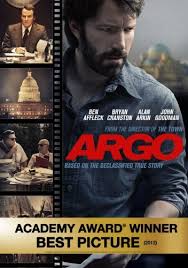
Argo
Here's the kind of movie that makes movie-watching worth its while.
"Based on a true story." That ubiquitous line from many a movie's beginning never sounded truer or more authentic than from Argo (2012). If you don't know the political history behind Argo, you'll be transfixed by its story — it plays out like a top-class, race-against-time spy thriller that keeps you on the edge. If you do know the history, its story may not keep you chewing your fingernails but its storytelling certainly will. Either way, with the sheer incredulity of its central plot, the movie leaves you in trickles of cold sweat. Especially because the feeling of "it-actually-happened-30-years-back" repeatedly sinks in at regular intervals.
Argo is the dramatization of the "Canadian Caper," the popular name for the CIA's joint covert operation with the Canadian government to exfiltrate six US embassy staffers from Iran during the infamous hostage crisis of 1979–80. While more than fifty staff members from the American embassy were taken hostage by students and supporters of the Iranian Revolution, these six staffers managed to escape and were sheltered by the Canadian ambassador in his house in Tehran.
As soon as the US knew about the six that had escaped, it decided to rescue them ASAP. The government considered many "exfil" options that would avoid the hawk-like attention of the Iranian revolutionary guards, but rejected them all because of the high risk. Finally, Tony Mendez, a CIA agent, came up with a cock-and-bull deception scheme of ferreting out the six diplomats from Iran by passing them off as a fake Canadian film crew that had purportedly come to Iran to scout a location for a sci-fi movie named Argo. You would think it was a big surprise that the scheme succeeded in spite of its cockamamie nature, but maybe it did because of that!
This movie's USP is clearly authenticity — the eye for detail in it is stunning. Its art direction recreates the late 70s and early 80s so perfectly that you completely lose the sense that it was made just last year. The Tehran of the 70s shown in the movie was replicated on a set in Turkey. As the movie intercuts actual historical video footage from Tehran and the US at many places, you realize how truthful the replication is. Not only that, as you watch the movie, you feel as if it was filmed in the 70s or 80s, thanks to the deliberate graininess of the picture and the colors of the camera lenses used. The makers even went to the extent of using Warner Brothers' old 70s logo in the film's beginning credits!
To be sure, the events in real life thirty years ago may have played out relatively easier than the just-in-time, quick-paced dramatized sequences in the film, but then you've got to give its makers that cinematic license to keep the onscreen proceedings from getting dull. Notwithstanding that, much of the credit for the movie's authenticity should deservedly go to its young director, Ben Affleck, whose career behind the camera has been a fascinating one to watch. Even as a young writer at twenty-five, when most writers dabble in light stuff, Affleck had already co-written a mature but brilliant original screenplay for Good Will Hunting (1997) along with another young talent, Matt Damon. From thereon, he only got better with his directorial debut, the finely-nuanced, well-layered drama Gone Baby Gone (2007). A couple of years later, he followed it up with directing The Town (2010), which was clearly several notches above most cops-chase-robbers flicks but made some compromises for the box-office. Now with Argo, Affleck, at just forty, can clearly boast of having earned admission to the club of big-league directors such as Jonathan Demme, Clint Eastwood, and Martin Scorsese.
And then there's the scintillating storytelling in the movie. Firstly, in terms of acting, it's a triumph for its ensemble. This is the kind of movie in which individual performances should not overshadow one another; the entire group has to perform like a well-oiled machine. With that in mind, Affleck, in a remarkably quiet manner, underplays himself in the main role of CIA agent Tony Mendez, and makes sure that the group's acting as a whole is never undermined. In playing that role, Affleck also pulls off the difficult double-act of directing the movie as well as playing the lead actor in it. Next is the way humor is used. It's never easy to introduce humor into a storyline that is otherwise so serious and tense, without it sticking out like a sore thumb. By getting the two Hollywood characters (played effortlessly by John Goodman and Alan Arkin) to raise the laughs, the narrative isolates it from the serious action happening in Tehran, and provides some relief from the tension it creates.
Lastly, the quality of storytelling is enhanced by the way it is paced and edited. Editing is one of those technical aspects of filmmaking that doesn't get the credit it deserves, even though it is that very aspect which decides how a movie finally appears on screen. With easily one of the best film-editing efforts in recent times, William Goldenberg — Argo's richly deserving winner of the Oscar for Best Film Editing — keeps the story tight and compelling by dicing and splicing the three parallel narratives happening in Tehran, Washington DC, and Los Angeles in the most absorbing manner.
At the end, as the movie credits start rolling, Argo's story compels you to be struck by the US's commitment to put the entire weight of its hefty government behind getting just six of its own citizens out of harm's way. At the same time, Argo's history jolts you to think hard about why the United States' foreign policy of the last seven decades has consistently followed a trajectory of meddling in the internal affairs of sovereign countries, tragically to the detriment of millions of their peace-loving citizens. Whether you commend the commitment or condemn the meddling will depend on whether your politics is dictated by nationalism or internationalism. Either way, you're likely to be filled with an eerie fascination for both facets of this country's irrefutable geopolitical reality.
Did someone say integrity and indifference cannot coexist in one entity?
PS: Argo is available at the Naperville Public Library — and there's no fee to check out DVDs from the library.
Related Stories

Retro Reel by Sreepathy, Volume 17
Spielberg's Minority Report asks whether crime can be stopped before it's committed. A Retro Reel column on fate, free will, and the future of policing.

Retro Reel by Sreepathy, Volume 16
Sreepathy's Retro Reel on Sidney Lumet's 12 Angry Men (1957): a single jury room, twelve men, and a masterclass in power, prejudice, and reasonable doubt.

Retro Reel by Sreepathy, Volume 22: The Ox-Bow Incident
Sreepathy's Retro Reel recommends The Ox-Bow Incident (1943) — William Wellman's stark western about mob justice and Henry Fonda's man-in-the-minority.