After the Aurora temple plot: what older immigrant communities can teach Indian Americans
After a foiled shooting at the Aurora Balaji temple and another season of jewellery burglaries, a look at how the Irish, Chinese, Italian, Japanese and Jewish communities learned to organize, what Sikh Americans have already built, and what the wider Indian American community can borrow.
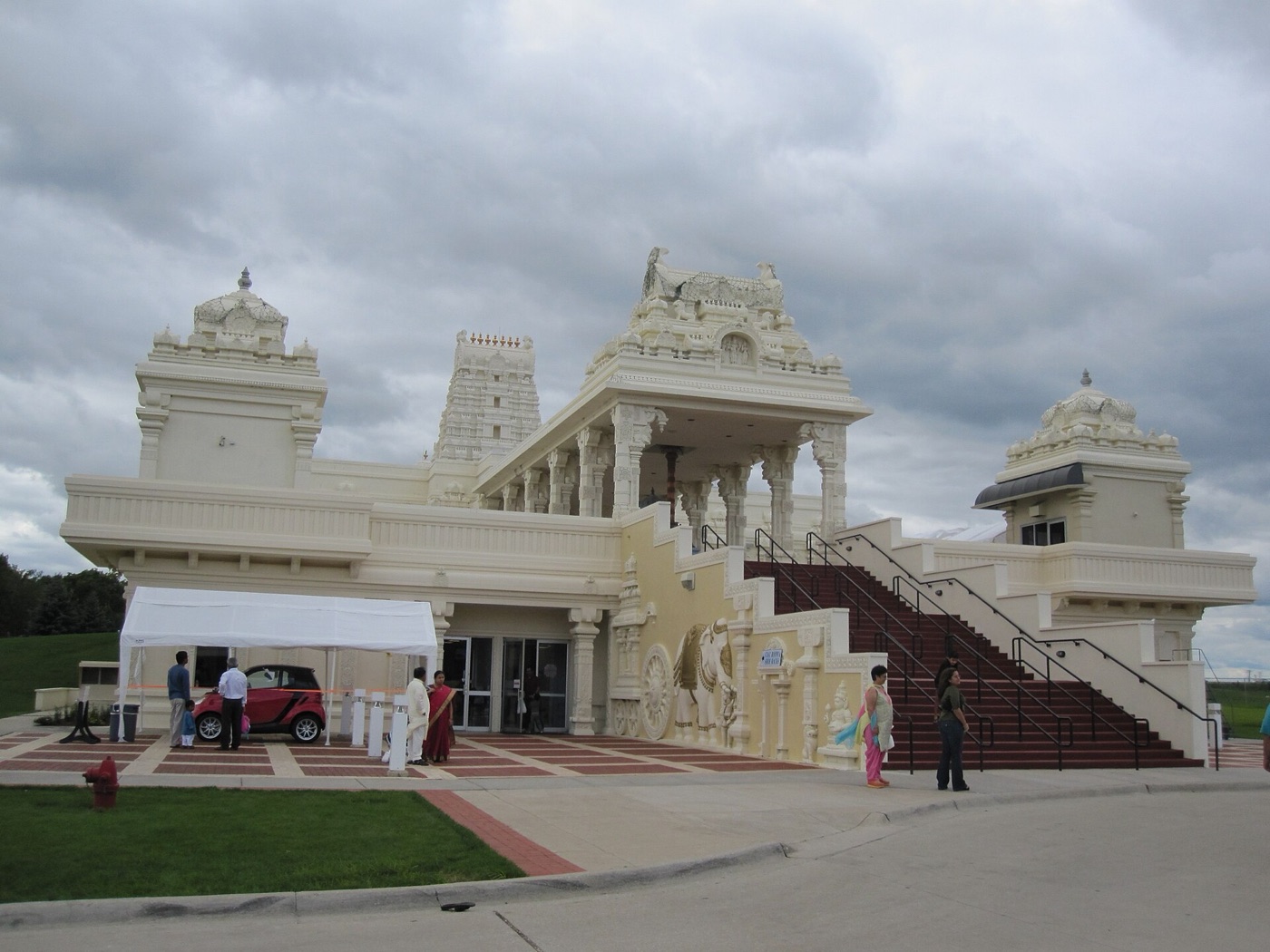
On the first afternoon of Navaratri, as families in their festival clothes made their way past the cream-coloured towers of the Sri Venkateswara Swami Temple in Aurora, a 19-year-old man sat in a car nearby with an AR-style rifle, raised it toward a worshipper, and pulled the trigger on a weapon that jammed. Prosecutors say he drove away, texted a co-worker that the man he had aimed at was "certainly saved by his God today," and promised to come back once the gun was fixed. He never got the chance, because two of his colleagues at a Taco Bell in Arlington Heights read his messages, decided he meant them, and called 911.
The near-miss in Aurora, a short drive from the subdivisions of Naperville where many of the temple's devotees live, has arrived in the middle of the festive season, when police departments from Texas to Massachusetts issue their annual warnings to Indian families about burglars who come looking for gold, and in a year when researchers have documented a sharp rise in anti-Indian abuse online. Taken together, these events have left many Indian Americans asking a question that the Irish, the Chinese, the Italians, the Japanese and American Jews each had to answer in their own time, and that Sikh Americans within our own community have been answering since 2001, which is how a community that is still new to this country protects its places of worship, its celebrations and its homes while continuing to make itself at home.
A plot two years in the making
According to prosecutors and reporting by WBEZ Chicago, Alexandros Paporakis of Palatine had been planning a mass shooting for about two years and had settled on the Aurora temple roughly two months before he arrived there on Sunday, October 11. Police who searched his apartment found a rifle, magazines, about 300 rounds of ammunition, a gas can and Nazi materials, along with an eight-page manifesto in which he described nonwhite people as "subhumans" and laid out a plan to kill as many of them as he could. A judge has ordered him detained on charges of making a terrorist threat and possessing a firearm illegally, and the detention order notes that he described himself as a white supremacist.
Representative Raja Krishnamoorthi, whose family worships at the temple and who was inside with them that afternoon, said in a statement that "we cannot wait until innocent people are killed to take these threats seriously," and he has asked the F.B.I. to investigate the attempt as a hate crime. At a news conference organized by a coalition of Hindu and Muslim groups, Aurora's mayor, John Laesch, urged residents to keep celebrating the holiday without fear, and the temple's trustees posted additional security for the remaining nights of the festival.
Gold, and the people who come for it
For many Indian households in America, the weeks between Navaratri and Diwali are the only time of year when the heaviest wedding jewellery leaves the bank locker, and burglars who target Indian homes have learned that calendar well. Police in Austin have warned Indian and South Asian residents about burglaries that cluster around Diwali, officers in Frisco have described strangers who stop women on the street to ask for directions or a blessing before slipping the chains from their necks, and a crew that broke into more than 90 Indian American homes in Massachusetts and Rhode Island was eventually caught after an investigation that The Boston Globe reconstructed in detail.
The police warnings describe thieves drawn above all by the gold itself, since 22-karat jewellery is light, easy to melt and, at current record prices, worth tens of thousands of dollars in a single wedding set. The burglars who work these neighbourhoods tend to study the patterns of the families who live there, including when they leave for the temple and when they post photographs from a vacation in Hyderabad or Ahmedabad, which means that the habits of the community shape the risk as much as anything the police can do.
How much of it is hate
The volume of hostility directed at Indians online has grown markedly over the past two years, and the numbers gathered by researchers are striking. The Center for the Study of Organized Hate counted roughly 542,000 posts expressing hatred of South Asians on X between January 2025 and June 2026, with monthly volume up about 240 percent from early 2024, a surge that Al Jazeera linked to the fierce national argument over H-1B visas and immigration. The Network Contagion Research Institute found that anti-Indian discourse on the platform nearly tripled in 2025 and drew more than 300 million views, much of it generated by a small number of very active accounts.
Surveys of daily life complicate that picture in useful ways, because they measure what people actually experience offline. In the Carnegie Endowment's 2026 survey of Indian Americans, about half of the respondents said they had faced discrimination since the start of 2025, roughly one in four said they had been called a slur, and nine percent said they had been physically threatened. Yet the share reporting personal discrimination has barely moved since 2020, and by a wide margin respondents said they would still advise a young Indian to take a work visa in the United States over staying in India, which suggests that Indian Americans perceive a more hostile environment without having concluded that the United States has turned against them.
Many Americans who question the H-1B program are raising legitimate concerns about wages, outsourcing and the design of the visa system, and those concerns deserve to be answered on their merits. Indian Americans who dismiss every critic of immigration policy as a bigot will find it harder to be believed when they need to call out racial hatred of the kind set down in the manifesto recovered from the suspect's apartment, a document that called for the killing of nonwhite people.
A familiar American story
Indians have a longer and more painful history in this country than many of us remember, and several episodes from it resemble what the community faces now. In 1907 a mob in Bellingham, Washington, drove Punjabi Sikh mill workers out of town, in 1923 the Supreme Court ruled in United States v. Bhagat Singh Thind that Indians could not become citizens, and in 1987 a gang calling itself the Dotbusters terrorized Indian residents of Jersey City. Most of today's Indian American community, however, traces its arrival to the Immigration and Nationality Act of 1965, which opened the country to engineers, doctors and graduate students, so that by the standards of American immigration we remain a young community still learning how civic life works here.
The most instructive chapter of that history belongs to Sikh Americans, the part of our community that has borne much of the hate violence aimed at Indians in this century and has done the most to organize against it. After a gunman murdered Balbir Singh Sodhi outside his gas station in Mesa, Arizona, four days after the September 11 attacks, a group of young Sikh Americans organized what became the Sikh Coalition, and after a white supremacist killed six worshippers at the gurdwara in Oak Creek, Wisconsin, in 2012, they built a formal gurdwara security program that has shared preparedness resources with almost 300 gurdwaras since 2017. The Oak Creek congregation, according to the son of one of the men killed that day, has roughly doubled in size since the attack, and the blueprint that Sikh Americans have developed is one that Hindu and Jain temples across the country could adopt with little modification.
Five other American communities faced the same test before us, often in harsher forms, and their responses, taken in the order in which they arrived, follow a consistent pattern.
The Irish, 1830s to 1960
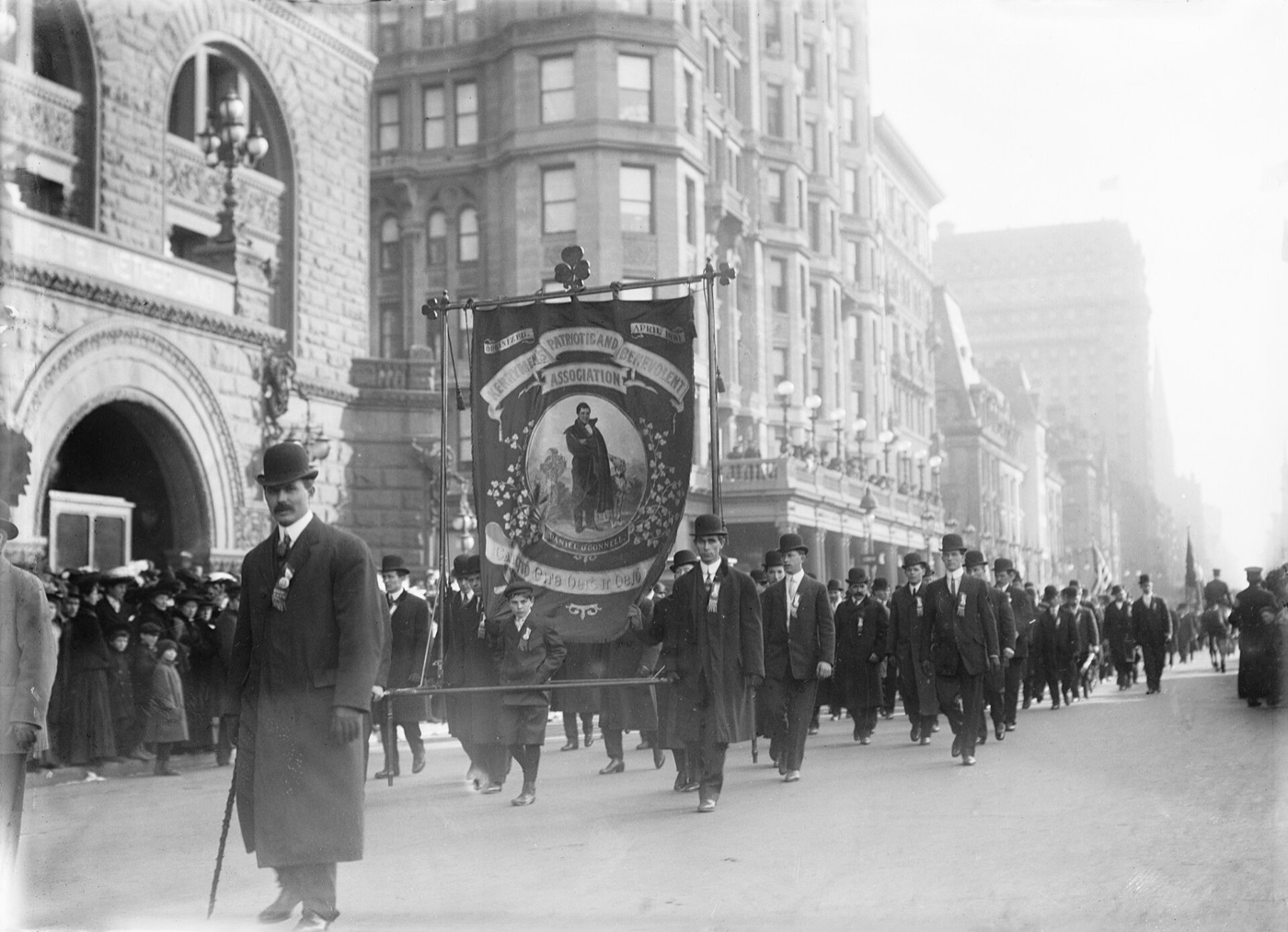 Marchers in New York's St. Patrick's Day parade on Fifth Avenue, 1909. Bain News Service, Library of Congress (public domain).
Irish Catholics who arrived in the 1830s and 1840s met a hostility that included the burning of an Ursuline convent outside Boston in 1834, deadly riots against Catholic churches in Philadelphia in 1844, and the rise of the Know-Nothings, a national political movement built on fear of Catholic immigrants. The Ancient Order of Hibernians, founded in New York in 1836, became the backbone of Irish community life, looking after widows and parishes and, over time, running the St. Patrick's Day parade as a disciplined annual show of Irish presence on Fifth Avenue. Within a few generations the same organizational habits had carried the Irish into police departments, fire companies, labour unions and city halls, and in 1960 the great-grandson of Irish immigrants was elected president, roughly 120 years after the convent fire.
The Chinese, 1850s to the 1950s
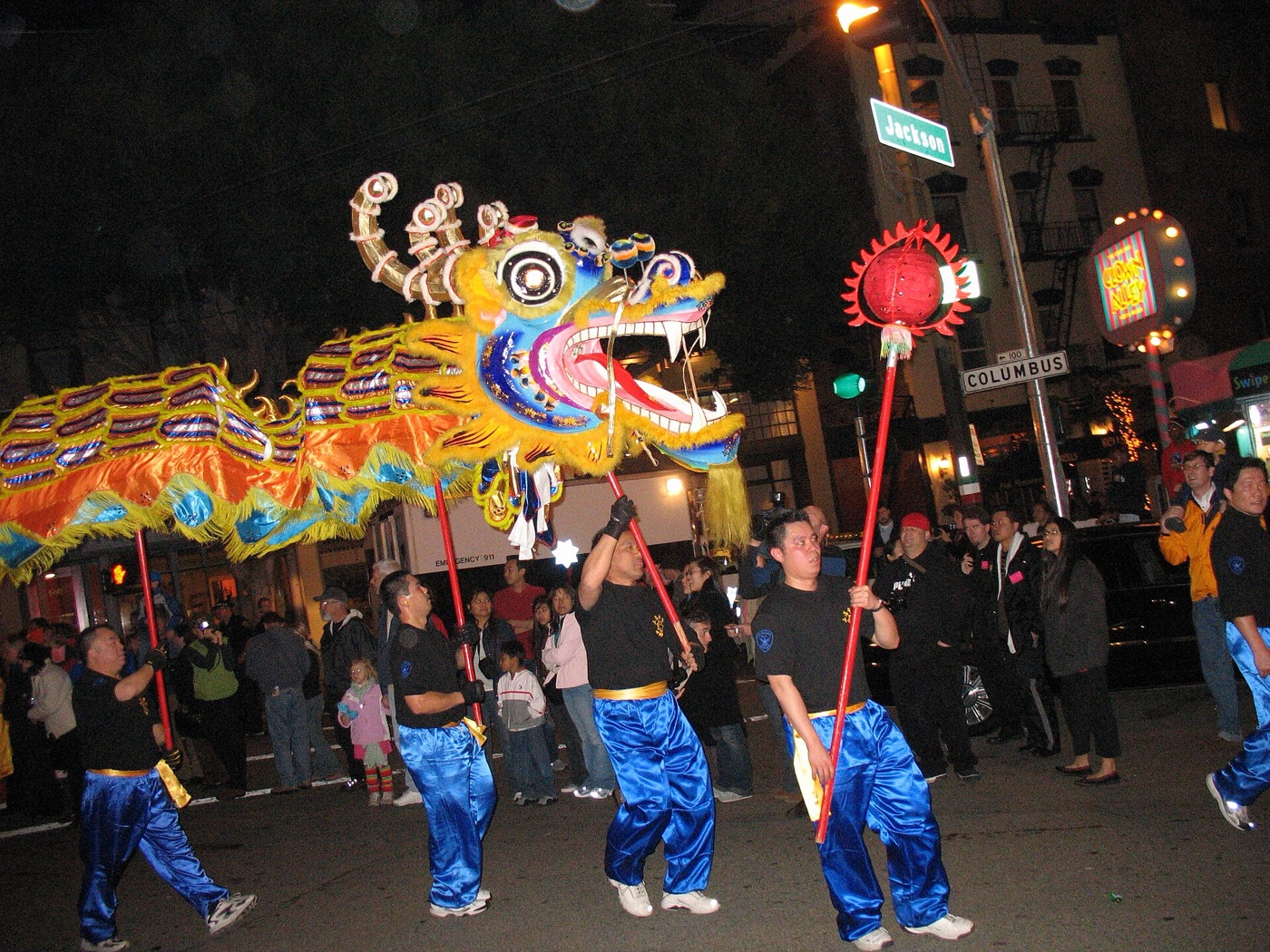 Dragon dancers on Jackson Street in San Francisco's Chinese New Year Parade, 2006. Photo by Eric Chan, CC BY 2.0, via Wikimedia Commons.
Chinese immigrants endured the Chinese Exclusion Act of 1882, the first major federal law to bar immigrants on the basis of nationality, along with massacres in places like Rock Springs, Wyoming, and decades of mob violence across the West. Their benevolent associations, led by the Chinese Consolidated Benevolent Association, known as the Six Companies, pooled money to hire lawyers and carried challenges to discriminatory laws all the way to the Supreme Court. In 1953, with much of San Francisco still regarding Chinatown with suspicion, a businessman named H.K. Wong of the Chinese Chamber of Commerce turned the city's Lunar New Year parade into a large, professionally staged public celebration meant to bring the rest of the city in, and an estimated 140,000 people lined the streets for that first modern parade, which has grown into one of the largest of its kind outside Asia.
The Italians, 1880s to the 1970s
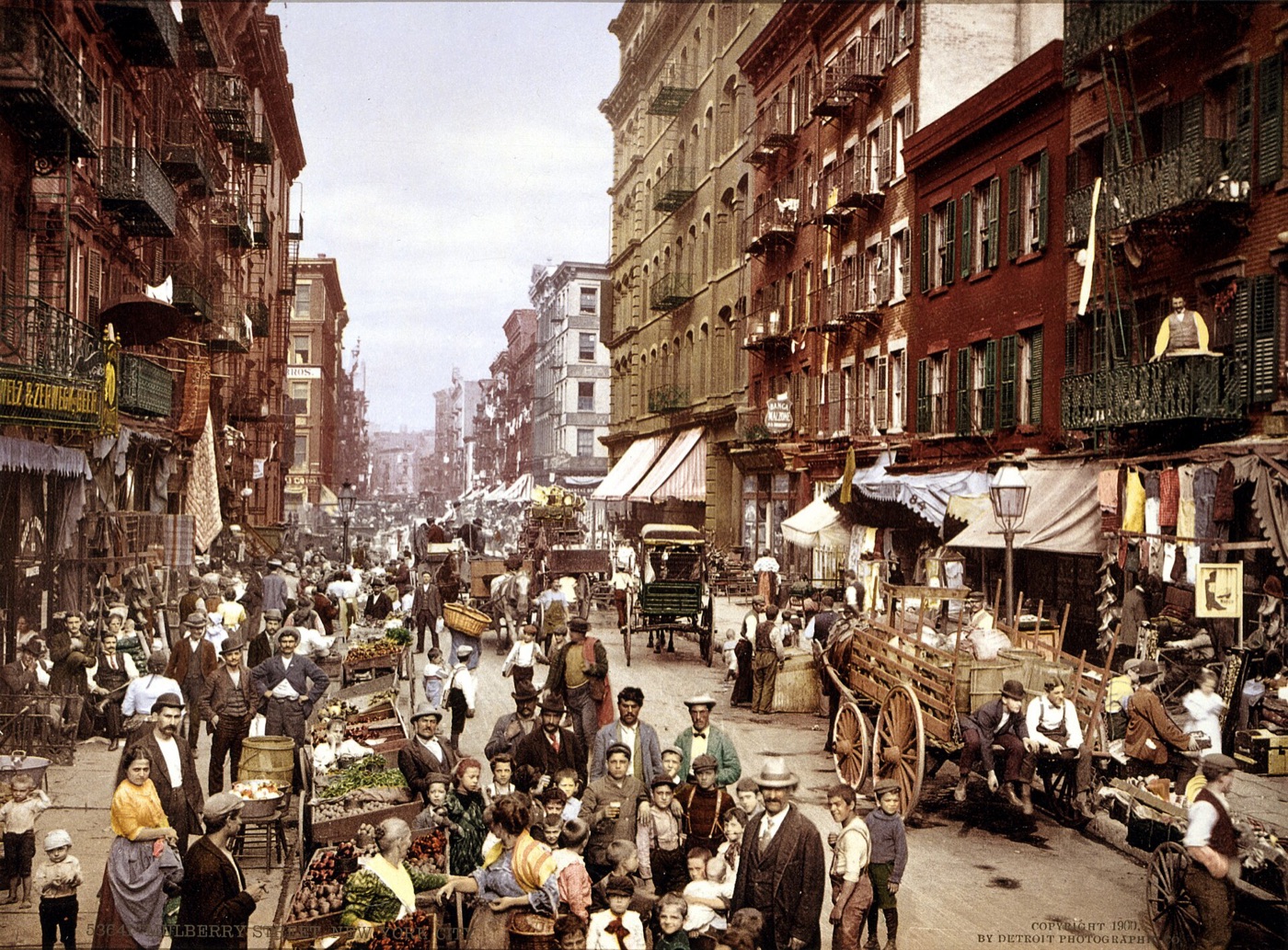 Mulberry Street in New York's Little Italy, around 1900. Detroit Publishing Co., Library of Congress (public domain).
Italian immigrants were routinely caricatured as criminals and anarchists, and in 1891 a mob in New Orleans lynched eleven Italian Americans in one of the largest mass lynchings in American history. The community responded by founding the Order Sons of Italy in America in 1905 as a mutual aid and advocacy society, and by bringing its religious festivals out of the tenements and onto the street, as parishioners of the Church of the Most Precious Blood did in 1926 when, led by Alexander Tisi, they held the first Feast of San Gennaro on Mulberry Street. The feast, which began as a single day and now runs for eleven, is managed by a dedicated nonprofit, Figli di San Gennaro, that negotiates permits, vendors and policing with the city every year, and New Yorkers of every background now treat it as part of their own calendar. Columbus Day became a national holiday in 1937 after decades of lobbying by Italian American organizations.
The Japanese, 1920s to 1988
Japanese Americans founded the Japanese American Citizens League in 1929 and began the Nisei Week festival in Los Angeles's Little Tokyo in 1934, partly to revive a struggling neighbourhood and partly to present their American-born children as proud of their heritage and fully American at the same time. None of that spared roughly 120,000 Japanese Americans from forced removal to incarceration camps in 1942, one of the darkest chapters in the nation's history. Over the following four decades, however, the community pursued a patient and unified campaign for redress that ended with the Civil Liberties Act of 1988, under which the United States formally apologized and paid reparations to survivors, and Nisei Week is still held every August.
The Jewish community, 1913 to today
American Jews founded the Anti-Defamation League in 1913, the year Leo Frank was convicted of murder in Atlanta after a trial steeped in antisemitism, and for more than a century the community has treated the protection of its institutions as a shared and professional responsibility. In 2004 the Jewish Federations of North America and the Conference of Presidents of Major American Jewish Organizations created the Secure Community Network, which now coordinates security for more than 140 federations, runs a round-the-clock intelligence desk in Chicago, trains synagogue volunteers and serves as the community's single point of contact with the F.B.I. and the Department of Homeland Security. Jewish institutions have made extensive use of the federal Nonprofit Security Grant Program over the years, in large part because the community decided long ago that a synagogue's safety should never depend on the improvisation of a single board.
What the older communities built
Across these histories, the communities that recovered most fully from their periods of persecution built three things that outlasted any single crisis: institutions capable of speaking and acting for the whole community with professional competence, public festivals organized so well and so openly that the wider city came to think of them as its own, and working relationships with police, local government and elected officials that were already in place when danger arrived.
Indian Americans have made visible progress on the last of these, as the recognition of Diwali as an official state holiday in Pennsylvania in 2024, in Connecticut in 2025 and in California under AB 268 from January 2026 makes clear. On the first two, the community still resembles the Irish of the 1840s or the Italians of the 1890s, with hundreds of small, separate temples and associations divided by language, region, sect and sometimes politics, each of them handling its own security, its own festival and its own relationship with the town hall.
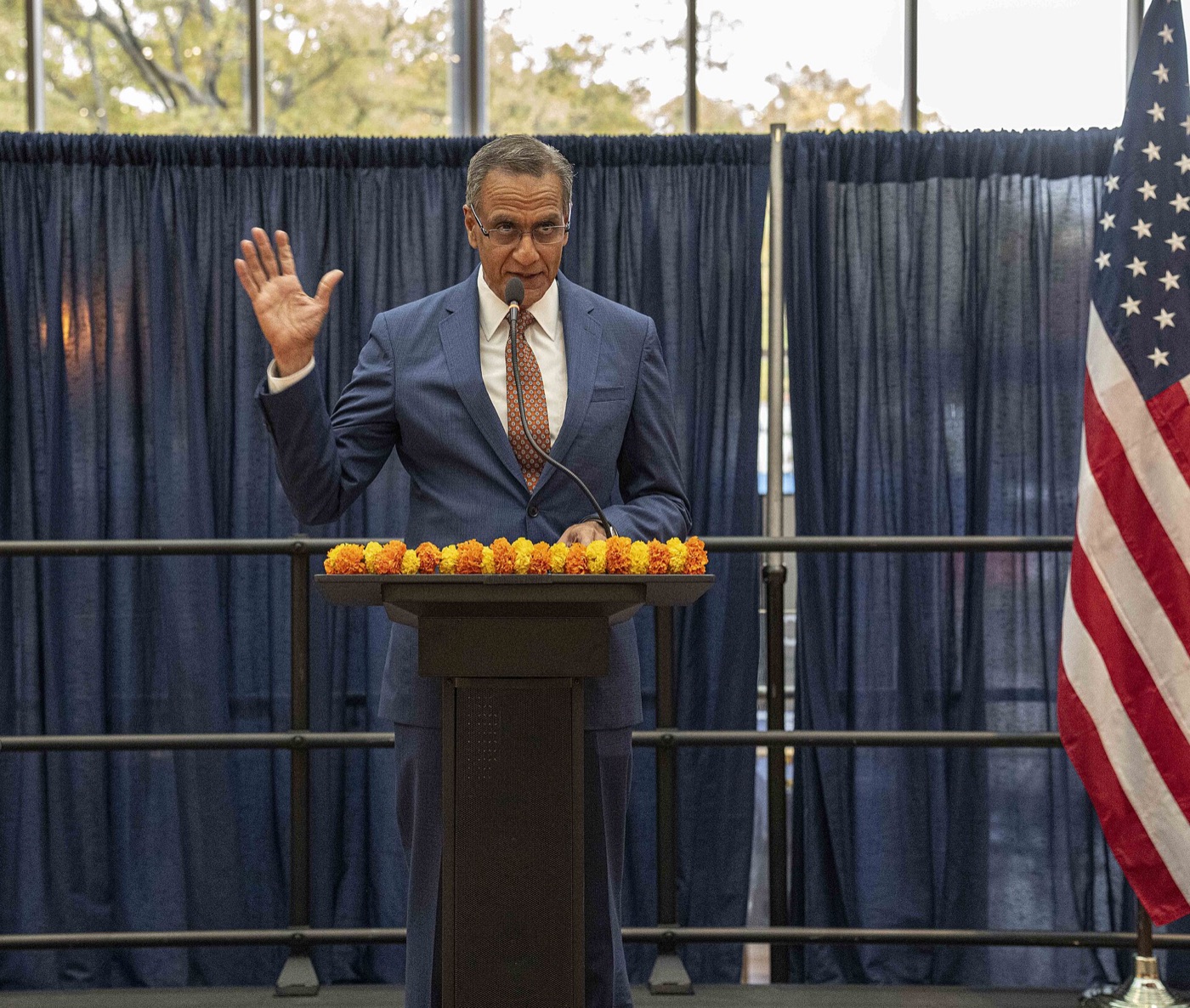 Deputy Secretary of State Richard Verma at the State Department's Diwali celebration in Washington, November 2023. Official State Department photo by Freddie Everett (public domain).
Lessons for the years ahead
The most urgent lesson concerns the temples themselves, which remain the most visible and most vulnerable symbols of the community. The Hindu, Jain and Sikh houses of worship in Chicagoland, and in every metropolitan area with a large Indian population, could form a regional security council modelled on the Secure Community Network, with a trained security lead at each temple, joint drills in responding to an armed attacker, a common channel for reporting worrying behaviour, and standing relationships with local police and the nearest F.B.I. field office. FEMA's Nonprofit Security Grant Program distributed $300 million through state agencies this year and could fund fewer than a quarter of the requests it received, and temples that prepare professional applications together, well ahead of the next deadline, will stand a far better chance than those that learn of the program a week before it closes.
The festivals deserve the same seriousness, since they are the moments when the community is most visible to its neighbours and to anyone who wishes it harm. A Diwali or Navaratri celebration planned months in advance, with a city permit, a published schedule, arrangements for traffic and parking, uniformed officers on site and a standing invitation to the mayor, the police chief, the school board and the neighbours, becomes a civic occasion that the whole town has an interest in protecting. Temples and cultural associations that pooled their resources into a single well-run public Diwali in each suburb, in the way Figli di San Gennaro runs its feast or the Chinese Chamber of Commerce runs its parade, would gain far more in visibility and goodwill than a dozen separate events that the rest of the town never hears about.
At home, the precautions that police have been recommending for years would remove much of the easy opportunity that burglars count on. Families can keep high-value jewellery in a bank locker except on the days it is worn, refrain from posting on social media when they are at the temple or travelling abroad, install cameras and timed lights, keep photographs and a written inventory of their valuables, and organize simple neighbourhood watches during the festival weeks, when the risk is highest.
Every act of hatred should be reported, because incidents that go uncounted cannot be used to persuade a police department, a state legislature or a federal agency to act. Slurs, threats and vandalism belong in a report to local police, threats of violence should also go to the F.B.I. through tips.fbi.gov, and community organizations that keep careful records of their own will find, as American Jewish organizations and the Sikh Coalition have found, that good data is the foundation of effective advocacy.
The news conference in Aurora this week, at which Hindu and Muslim organizations appeared together, demonstrated the value of solidarity across faiths during a crisis. Disputes rooted in Indian politics and religion can fracture temples and cultural associations in America as well, and a community divided along those lines would be easier for its opponents to dismiss and harder for its allies to support.
The longest-term lesson, which every community in this history eventually absorbed, concerns participation in local civic life. The Irish joined police departments, the Italians and the Japanese built citizens' leagues, and American Jews trained their own security professionals, and in every case the investment paid off when it was needed most. Indian Americans who serve on library boards, park districts, school councils and police advisory committees, and who vote in the local elections that decide who runs those institutions, are building the relationships that lead local officials and neighbours to regard a threat against an Indian temple as a threat against the town itself.
Before the diyas are lit
The man charged in Aurora chose his target because he believed that the worshippers inside did not belong in America, while the two co-workers who reported him acted on the assumption that those worshippers were part of the same community they were. Each of the communities in this history secured its place in American civic life by organizing its worship, its celebrations and its safety with patience, and by inviting its neighbours to take part. When diyas are lit across Aurora, Naperville, Edison and Plano in early November, Indian American families will have the experience of those communities to draw on, and this festival season offers a practical moment to begin applying it.

