The Age of Abundance Is Over: We Have Been Living Beyond Our Means

Editor's note: this page previously carried a full reprint of a copyrighted 2007 newspaper essay that did not match the headline. It has been replaced with an original essay on the headline's actual subject.
There is a photograph from July 1959 that captures the promise of the age now ending: Richard Nixon and Nikita Khrushchev arguing in a model American kitchen at the Moscow exhibition, the famous "kitchen debate." The Soviet premier mocked the wastefulness of so many washing-machine models; Nixon countered that abundance itself — choice, plenty, the goods of a middle-class life within a steelworker's reach — was the point. The West's answer to every hard question for the next half-century would be, in essence, more: more growth, more credit, more consumption.
By late 2011, the bill for that answer was coming due everywhere at once.
In Europe, governments that had borrowed to fund generous welfare states — and banks that had lent with abandon — were discovering that the markets financing their abundance could withdraw it in weeks. Greece, Ireland, Portugal, and then Italy and Spain were learning that sovereignty means little when your creditors set your budget. In the United States, the summer had brought a debt-ceiling standoff so reckless that Standard & Poor's stripped the country of its AAA credit rating for the first time in history. American households, meanwhile, were in the middle of a grinding deleveraging — paying down the mortgage and credit-card debt that had funded a decade of living beyond incomes.
The economists Carmen Reinhart and Kenneth Rogoff had given this moment its textbook the year before: This Time Is Different, a survey of eight centuries of financial crises, showing that the aftermath of banking crises is almost always a long period of subpar growth under the weight of debt. The pattern was not new. What was new was the scale — the first truly global debt overhang, with households, banks, and governments all retrenching at once.
"Living beyond our means" sounds like a moral judgment, and it is partly that. But it is also a mechanical description. For roughly thirty years, the developed world consumed more than it produced and bridged the gap with borrowing — private borrowing in America and Britain, public borrowing in southern Europe, and an export model in Asia that depended on someone else doing the consuming. When the credit stopped, the abundance stopped with it.
Whether the age of abundance is truly over, or merely interrupted, remains the open question. The optimists note that human ingenuity has a habit of making scarcity obsolete — that was Marx's great insight too, whatever one thinks of his prescriptions: productive power eventually outruns the old constraints. The pessimists note that energy, demography, and climate impose limits that ingenuity has not yet repealed.
What is certain is that the era in which borrowing could substitute for earning is finished. The next era will be built on what is actually produced, not what can be financed. That is a smaller promise than the kitchen debate offered — but it has the advantage of being real.
Related Stories

Archive: Mark Zuckerberg's India Visit and the Internet.org Summit
In October 2014, Mark Zuckerberg visited India to address the Internet.org summit and meet PM Modi — his bid to connect the world's 5 billion offline.
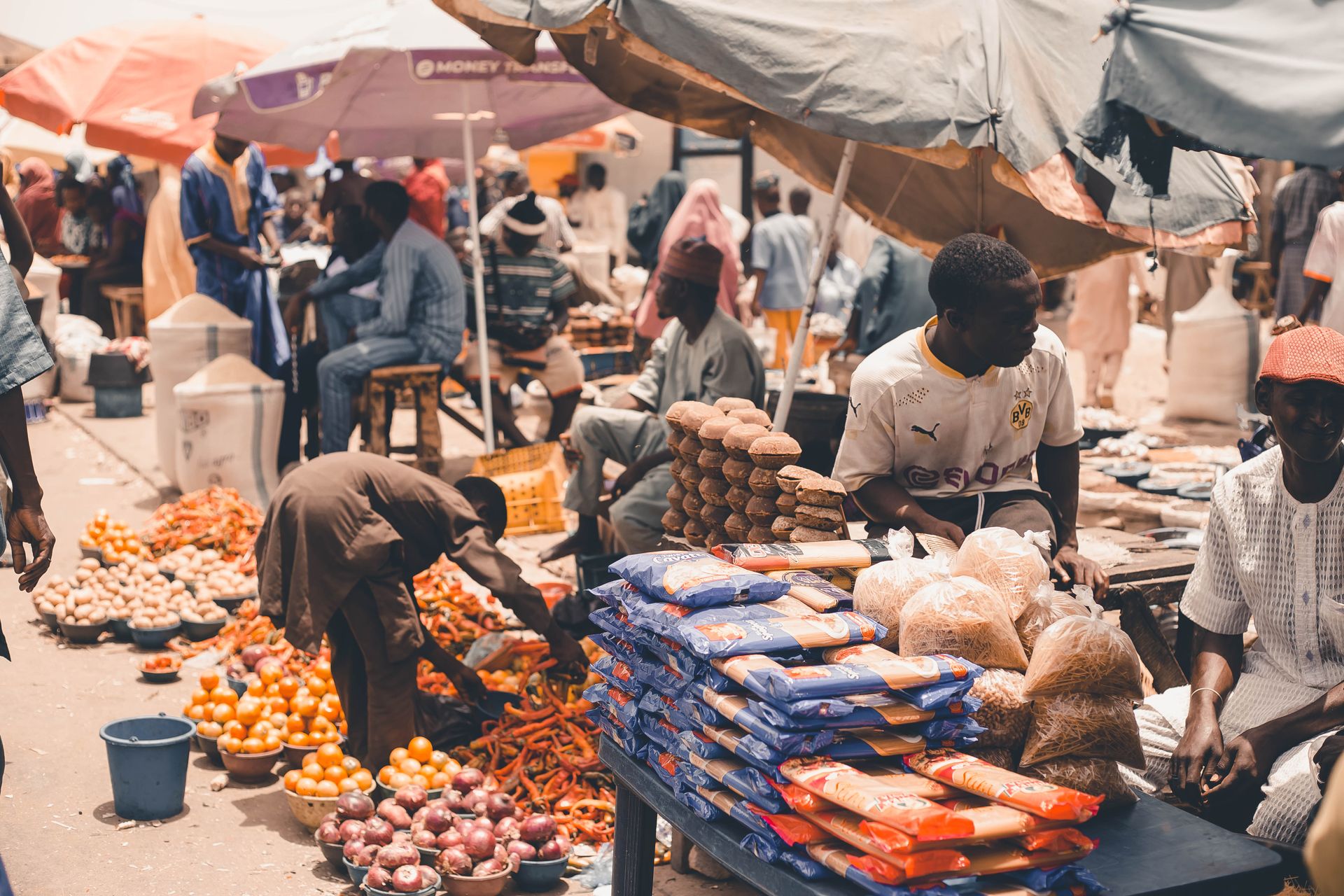
Nigeria's Richest Woman Never Went to University
Folorunsho Alakija, worth $2.6 billion in 2014, told University of Lagos students she never attended one. The fashion-to-oil story behind it.

Loans Could Be Rejected or Approved Based on Facebook Friends
A 2013 CNNMoney report revealed startups like Lenddo and Kreditech were weighing your Facebook friends when deciding whether you get a loan.