The 3 AM wake-up: what sleep science and Ayurveda each say about the small hours
Waking at 3 AM is one of the most reported sleep complaints. The honest version: lighter second-half sleep, cortisol's pre-dawn rise, and the usual evening suspects. Ayurveda marked this hour two thousand years earlier.
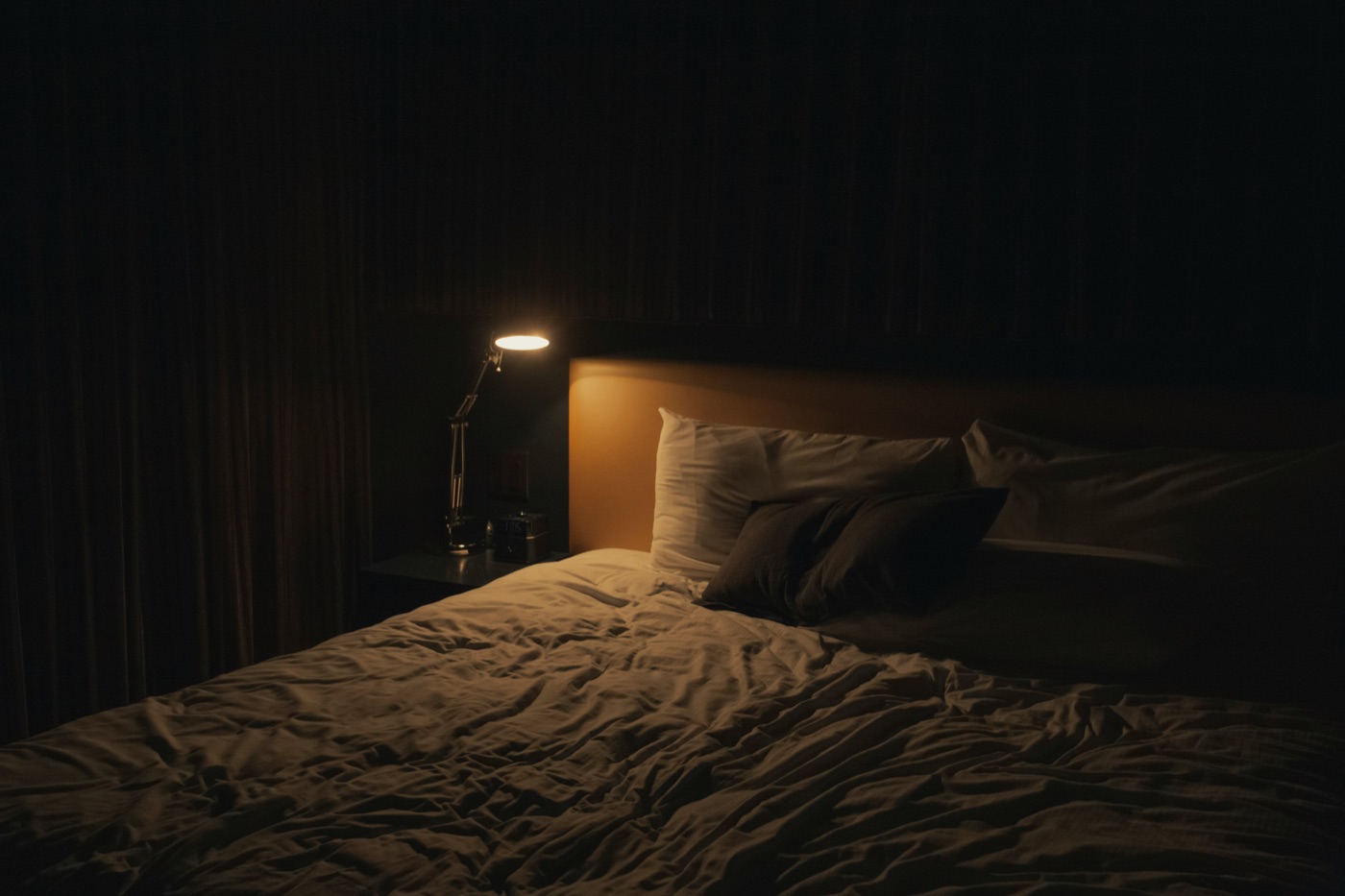
Photo by Jp Valery on Unsplash (unsplash.com/photos/DE9MM2voqKc)
In brief: Waking around 3 AM is one of the most commonly reported sleep patterns, and three things converge at that hour. Sleep architecture: deep sleep dominates the first half of the night, while the second half is lighter, REM-heavy sleep that is easier to surface from. The cortisol rhythm: lowest around midnight, rising from roughly 2–3 AM toward a morning peak. And the evening's usual suspects: alcohol, late caffeine, stress. Ayurveda independently marks 2–6 AM as the Vata period and treats pre-dawn waking as natural. The convergence is suggestive, not proof of a shared mechanism. The honest guides say which is which.
Why is it always 3 AM?
Because the night is not one thing. Sleep runs in roughly 90-minute cycles, and the cycles change composition as the night goes on. Deep, slow-wave sleep dominates the first half of the night; in the later cycles, deep sleep shrinks and REM stretches longer, with brief awakenings between cycles. By 3 AM you are several cycles in, and the sleep you are in is the easiest kind to surface from.
Everyone surfaces briefly between cycles; most people don't remember it. You remember the 3 AM one because something (a noise, a full bladder, a worry) turned a micro-arousal into a full waking. The hour feels chosen. Mostly, it is just where the light sleep lives.
What does cortisol have to do with it?
Cortisol, the alerting hormone, follows a daily curve: it bottoms out around midnight and begins climbing in the early hours, peaking shortly after habitual wake time. A University of Bristol study that measured tissue cortisol in 201 adults around waking (published in Proceedings of the Royal Society B) confirmed the rise begins in the hours before waking, as the body's preparation for the day, not as a response to waking itself.
The honest caveat, and it matters: coincidence is not causation. The cortisol rise coincides with the 3 AM window; no reviewed evidence proves the rise is what wakes you. The likelier role of stress is downstream: a stressed mind, once surfaced, starts problem-solving at 3 AM instead of drifting back down. Stress keeps you awake; it doesn't set the alarm.
The usual suspects
Before blaming hormones, check the evening. Alcohol is the classic offender: it sedates you into sleep, then fragments it, suppressing REM early and producing rebound awakenings, often between 2 and 4 AM. Late caffeine needs no introduction.
Then there's the blood-sugar story doing the rounds online: that the liver runs out of glycogen around 3 AM, blood sugar dips, and a stress response jolts you awake. It is an appealing narrative, and the clinical support for it is thin; honest guides treat it as unproven rather than as advice. (If you have diabetes or take glucose-lowering medication, nocturnal glucose is a real clinical topic — for your doctor, not for self-diagnosis.)
For the full evidence-sorted version (what the cortisol rhythm really shows, which popular explanations hold up and which don't), Swastik's guide to the 3 AM wake-up keeps what's proven, drops what's unproven, and labels which is which.
What does Ayurveda say about this hour?
Long before sleep labs, the classical tradition divided the night into dosha periods: kapha first, pitta in the middle, vata in the small hours. Roughly 2 to 6 AM belongs to Vata, the dosha of movement, lightness, and the nervous system. Sleep is said to begin under kapha's heaviness and end under vata's mobility, which makes the pre-dawn stretch the most fragile part of the night. The tradition even names the hour before dawn (brahma muhurta, roughly the 96 minutes before sunrise) as the natural time to rise, for meditation and study.
This is a traditional framework, not a hormonal mechanism, and it would be dishonest to map it one-to-one onto cortisol curves or sleep stages. But the practical advice that flows from it (guard the early night, keep the pre-dawn hours quiet, rise before sunrise rather than fighting the waking) lands in almost exactly the place modern sleep hygiene does. Two observational traditions, two thousand years apart, noticed the same fragile hour. (For the nighttime half of the equation, including why the tradition favors the left side, see our earlier piece on the science of vamkukshi.)
What actually helps at 3 AM
The unglamorous, best-supported list: keep the room dark, cool, and quiet; don't reach for the phone (nighttime light sends the wrong circadian signal); use slow breathing rather than problem-solving; don't nap the next day to "catch up": a fixed wake time beats compensation.
And if the pattern runs for months and impairs your days, the evidence-backed next step is CBT-I (cognitive behavioral therapy for insomnia). The American Academy of Sleep Medicine's clinical practice guideline finds CBT-I alone the most efficacious first-line treatment for chronic insomnia in adults, ahead of medication. Not another supplement; a structured, time-limited therapy.
One last honest note: occasional 3 AM waking with normal daytime function is a widely reported experience, not a diagnosis. The threshold that matters is pattern plus impairment: regular trouble sleeping that affects your days is what makes it a medical question, for a clinician.
FAQ
Is waking up at 3 AM normal? Occasional waking with normal daytime function is widely reported and not, by itself, a sign of disease. Regular trouble sleeping plus impaired daytime function is the threshold for seeking medical advice.
Does a cortisol spike cause the 3 AM wake-up? Cortisol does begin its normal nightly rise around 2–3 AM. But the rise coincides with the waking window; no reviewed evidence proves it causes the waking. Calling it a "spike" is misleading; it is a gradual, scheduled rhythm.
What does Ayurveda say about waking at 3 AM? The classical scheme assigns the small hours (roughly 2–6 AM) to Vata, the dosha of movement, and treats pre-dawn as the fragile end of sleep, even naming brahma muhurta as the natural rising time. Traditional framing, not a clinical mechanism.
This article is for general information, not medical advice. Persistent sleep problems that affect your daily life warrant a clinician, not an article.
Sources: the Bristol cortisol study via the American Institute of Stress and Medical Xpress; sleep-cycle architecture via Circular's sleep basics; alcohol and 2–4 AM rebound awakenings via Stages of Life Medical Institute; CBT-I as first-line treatment via the AASM clinical practice guideline; the evidence-sorted 3 AM guide via Swastik.