The tariff threat just got a deadline: what Goyal's Washington week actually changes
Piyush Goyal lands in Washington this week with a 100%-tariff law ticking behind him. What actually changed in the India-US trade standoff — and what hasn't.
In brief: A week ago, we described the new American sanctions law as a loaded weapon on the negotiating table. In the seven days since, the weapon got a timetable, the off-ramp got a price, and Washington's first concrete move was relief, not punishment.
Featured image: Commerce and Industry Minister Piyush Goyal at a press conference in New Delhi, March 2024. (Photo: Ministry of Commerce and Industry, Government of India, GODL-India, via Wikimedia Commons)
The threat gets a calendar
The Graham Act — signed September 18 — gave the US president authority, not obligation, to impose tariffs of up to 100% on the five largest buyers of Russian crude oil and gas. We covered that when it happened; what has emerged since is the operating timetable.
The USTR must identify the targeted countries within roughly 30 days of enactment — first determinations around October 18, per trade-law analysts — then reassess the leading importers every 180 days using the preceding 12 months of energy-purchase data. Reported details also put any presidential waiver on a 180-day review cycle, subject to congressional certification that it serves the national interest. The implication: this is not a one-time threat to negotiate away. Every six months, India's Russian-oil receipts — roughly half of its crude imports this summer — go back on a desk in Washington for review. The tariff pressure now has a calendar.
The escape hatch is now on paper
On September 27, The Hindu BusinessLine quoted sources close to the negotiations: a signed US-India trade deal would cap the 100% authorisation under the Graham Act — "the legislation authorises the US President to impose the tariff but does not enforce it," one source said, and "any negotiated trade deal would cap the amount mentioned in the bill." The same sources said a deal could also shield India from the still-open Section 301 investigation into manufacturing overcapacity — warning that "every week that there's no trade deal, India may be a little bit more vulnerable to other pending actions."
That reframes this week's diplomacy. Goyal's trip is not merely about export access; it is about capping a loaded weapon while the trigger is still unfired.
Goyal's week in Washington
The Commerce Ministry announced on September 28 that Goyal will be in the US from September 29 to October 5 — attending the G20 Trade Ministers' meeting in Milwaukee on September 30–October 1 — with bilateral talks "to advance an India-US BTA and finalise an interim deal in line with the Joint Statement of 7 February 2026," per the ministry's statement.
The ask list is familiar: a tariff arrangement preserving India's edge over rival exporters — Vietnam, Thailand, China, Malaysia, Bangladesh — after the February framework's 18% rate lost its legal anchor when the Supreme Court struck down the emergency-powers basis behind it. Indian goods already carry a 10% Section 301 tariff tied to forced-labour findings, in effect since July 24.
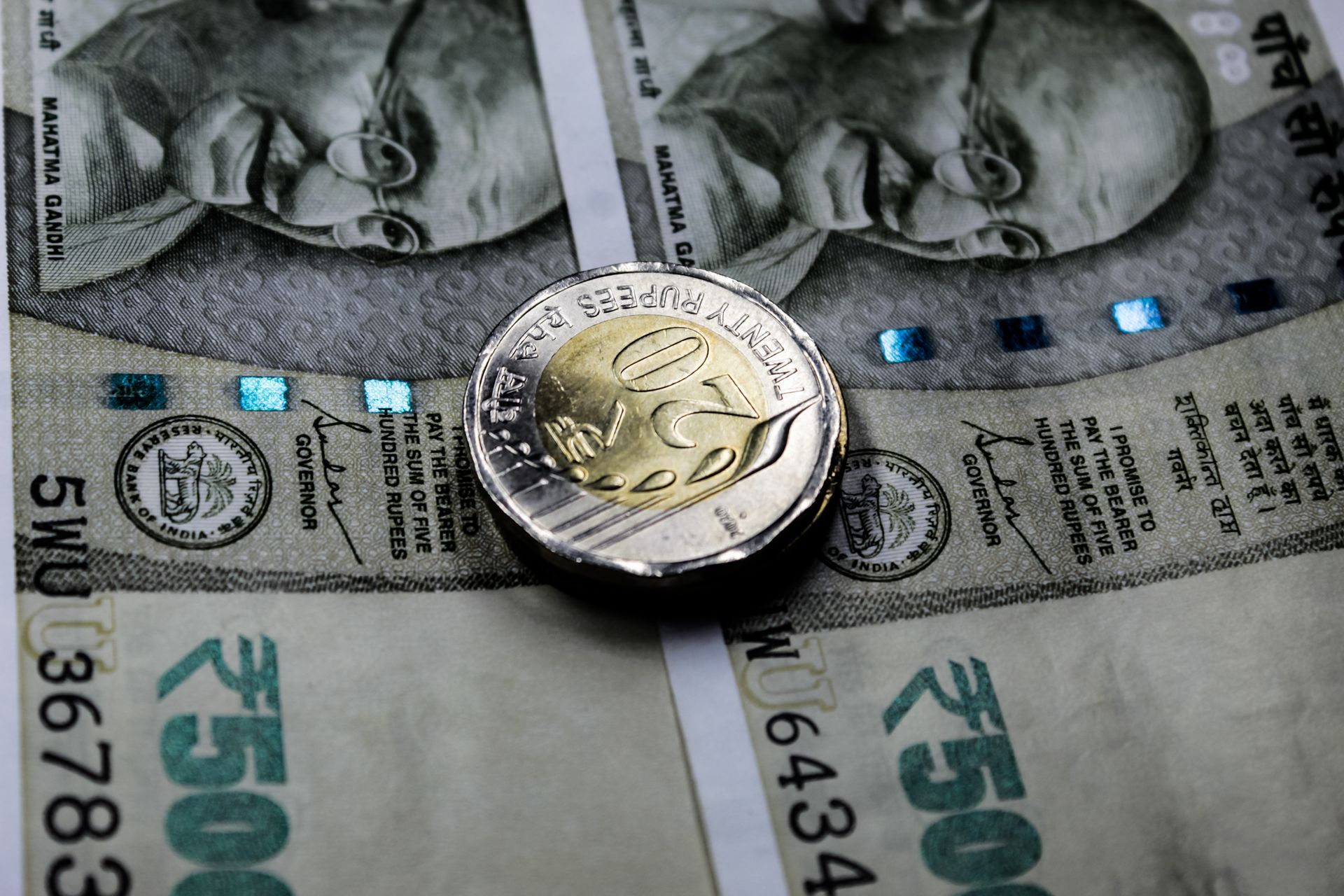
Markets are pricing the uncertainty: the Nifty closed September 25 at 23,140.50 for its seventh straight weekly decline, foreign investors sold for a fifth consecutive week, and the rupee hovered near record weakness around 95.8 to the dollar, per trade-press tallies. Goyal projects confidence — trade press quoted him last week calling the pact "almost done and dusted," pending a final tariff arrangement — while Indian exports to the US hit $42.79 billion in April–August, up from $40.39 billion a year earlier, per government data.
Washington's first concrete move was relief
The week's most telling development arrived not as a punishment but as an exemption. On September 28, the US Commerce Department published a Federal Register list placing India among 20 jurisdictions eligible for zero tariffs on several categories of speciality pharmaceuticals and ingredients — orphan and nuclear medicines, plasma-derived therapies, fertility drugs, cell and gene therapies, antibody-drug conjugates, CBRN medical countermeasures, and certain animal-health products. The exemption takes effect today, September 29, at 12:01 a.m. US Eastern — just as the 100% Section 232 tariff on specified patented pharmaceuticals takes force for other covered companies.
The fine print matters, as always. BusinessLine notes the benefit is limited to the specified segments, and that generic medicines — the bulk of India's pharmaceutical exports to America — were already outside the Section 232 tariffs' scope. Protection for a slice of the industry, not a blanket reprieve.
The skeptical read: Washington just showed its own vulnerabilities. A country imposing 100% tariffs on patented drugs still needs the drugs. India is on the exemption list because its pharmaceuticals are load-bearing for the American health system — the same reason, inverted, that tariffs on everything else stay on the table.
What has not changed
Nothing is signed. The interim agreement remains unconcluded after months of negotiations — the thing Goyal is flying 8,000 miles to finish.
The skeptics have a point. The Global Trade Research Initiative argued on September 17 that India should not trade away its energy security for temporary tariff relief — that "neither signing a trade agreement nor stopping Russian oil purchases can protect it from future US action under Section 301, sectoral measures or other trade laws." Any number Goyal brings home will be judged not by its digits but by the statute behind it.
The diplomatic friction is on the record too: at the UN General Assembly on September 23, External Affairs Minister S. Jaishankar raised India's concerns directly with Secretary of State Marco Rubio; a senior US official later told reporters there were "no hard feelings" over New Delhi's response.
The honest scorecard: the threat acquired a timetable — determinations by mid-October, reviews every 180 days. The off-ramp acquired a price — a signed deal caps the 100%. Washington's first move was a carve-out, not a crackdown — and the decisive meeting is still ahead of us. In tariff wars, as in cricket, what matters is not the scoreboard at the drinks break; it is who is still batting at stumps.
Frequently asked questions
Has the US imposed 100% tariffs on India under the Graham Act? No. The September 18 law gives the president authority — not obligation — to impose duties of up to 100% on the largest buyers of Russian oil and gas. No country-specific tariff has been announced; the first USTR determinations are expected around October 18.
What is Goyal negotiating this week? A bilateral trade agreement and an interim deal, in talks with USTR Jamieson Greer on the sidelines of the G20 Trade Ministers' meeting in Milwaukee, September 30–October 1.
Does the pharmaceutical exemption cover all Indian drugs? No. It covers specified speciality categories — orphan and nuclear medicines, plasma-derived therapies, fertility drugs, cell and gene therapies, antibody-drug conjugates, CBRN countermeasures, and some animal-health products — effective September 29. Generics, the bulk of India's US drug exports, were already outside the Section 232 scope.
Related on Thoughtful India: The 100% tariff threat is forcing India's rupee moment — the Graham Act, explained.
Sources: Reuters (Sep 28, Goyal visit); The Hindu BusinessLine (Sep 27–29; deal-as-shield, Goyal-Greer, pharma exemption); IANS (Sep 28, Commerce Dept pharma list); The Trade Practitioner (Graham Act statutory analysis); Swapupdate.in (180-day reassessment mechanics); American Bazaar/RMN News (Aug 8, waiver provisions); GTRI via Indian Economic Observer (Sep 17, energy-security warning); Outlook Business (export data); The Financial Economy (market tallies); Saptashwatv (Sep 26, Jaishankar-Rubio); Kpler via trade press (Russian-oil share).
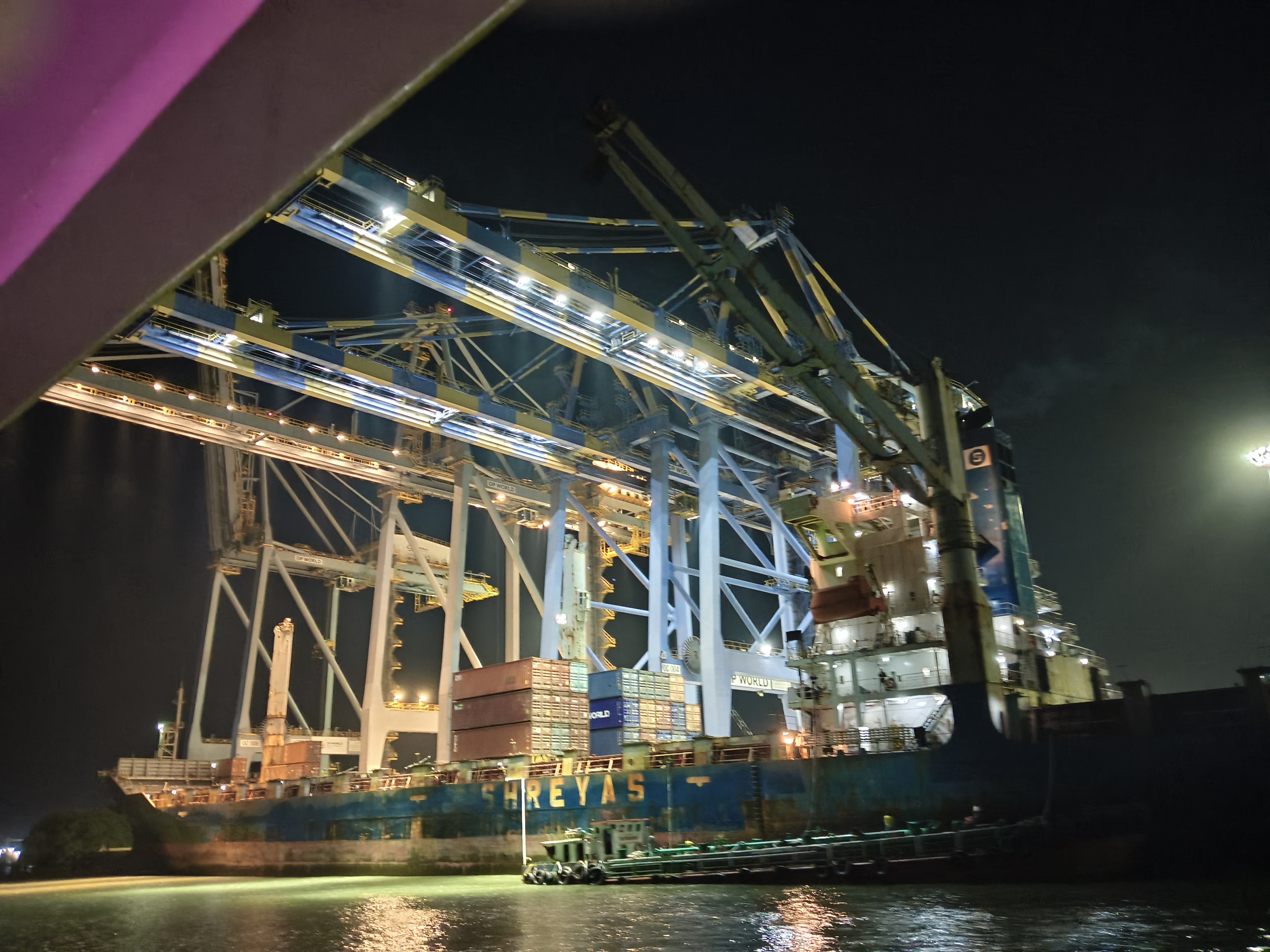
Photo: International Container Transshipment Terminal, Kochi — BgbwikiV4, CC BY 4.0, via Wikimedia Commons.
.jpg)