Religious Tourism Boom: Ayodhya, Varanasi, Tirupati Growth
When India's Ram Mandir in Ayodhya opened in January 2024, millions of pilgrims visited within the first month. The infrastructure matured to handle this: newly constructed roads, hotels rising rapidly, security systems sophisticated enough to process masses. This wasn't spontaneous—it was development policy disguised as religious infrastructure. The temple became justification for investment that transformed an entire region economically and physically.
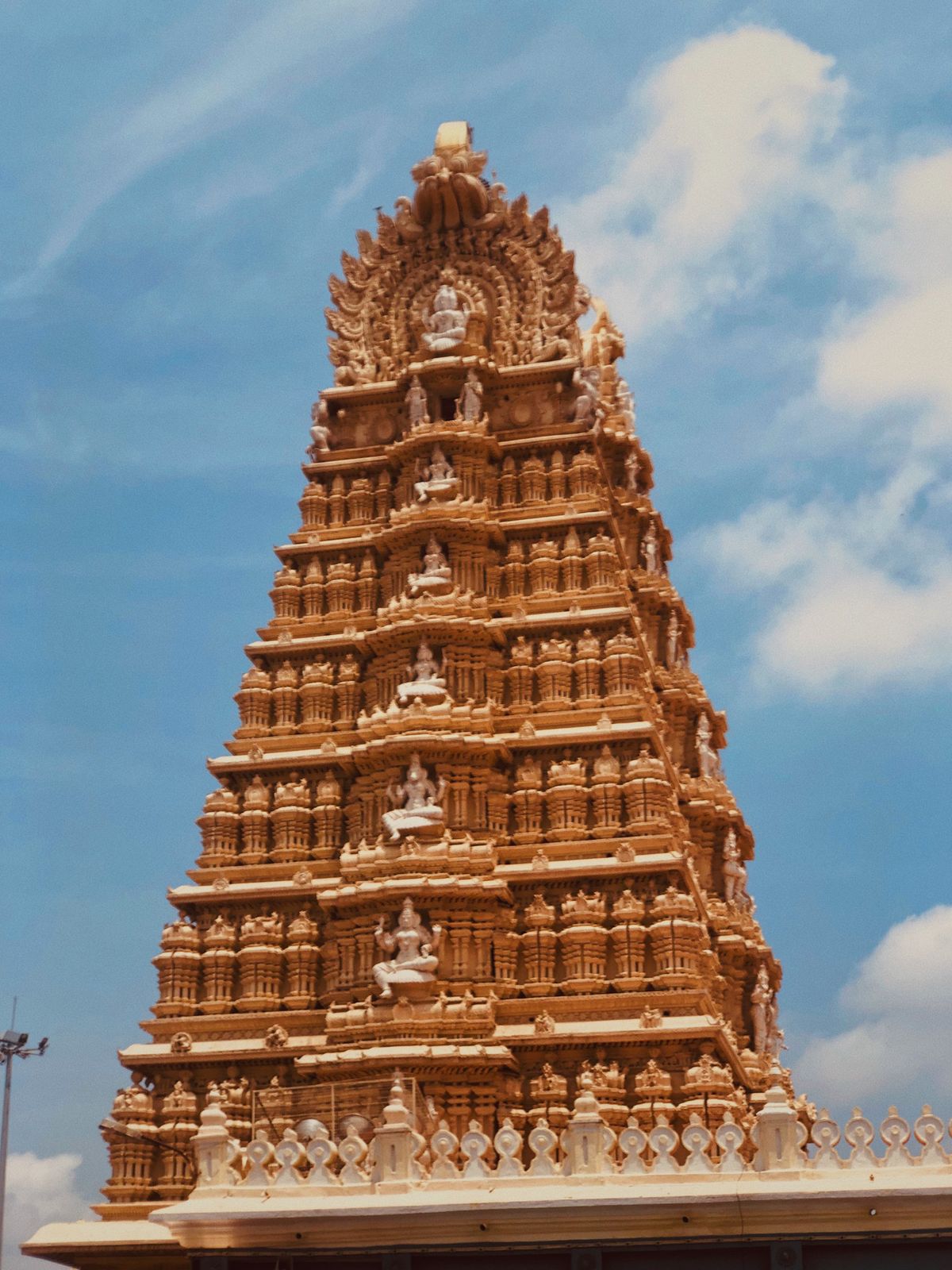
The religious tourism boom represents a fundamental economic shift: spiritual devotion has become quantifiable economic activity. Pilgrim footfalls translate directly into infrastructure investment, real estate appreciation, hotel construction, restaurant ecosystems, and employment. India's three major pilgrimage transformations—Ayodhya's Ram Mandir, Varanasi's Kashi Vishwanath Corridor, and Tirupati's Sri Venkateswara Temple expansion—exemplify how sacred spaces are being simultaneously spiritually honored and economically exploited.
Tirupati leads the metrics. Sri Venkateswara Temple processes 50,000-70,000 pilgrims daily, generating over ₹500 crore annually in offerings and infrastructure fees. The temple has justified six-lane highways, airport expansion, and modern hospitality infrastructure. The economic engine is staggering: local employment runs into the tens of thousands directly, with tens of thousands more in secondary services. Hotels, restaurants, shops, transport operators—entire economic ecosystems have emerged dependent on pilgrim throughput.
Varanasi presents different dynamics. The city unchanged in spiritual essence—still the place where Hindus come to die, to immerse ashes, to bathe in the Ganges—has transformed dramatically in infrastructure. The Kashi Vishwanath Corridor project demolished surrounding structures to create pilgrimage paths. Ghats along the river underwent renovation. Hotels multiplied along the river, competing for riverside positioning and pilgrim accommodation. Strong occupancy incentivizes new construction and competitive franchises. What was previously a spiritual city of decay has become a pilgrimage destination managing tens of thousands of daily visitors with modern amenities.
Ayodhya's transformation is most recent and most dramatic. The Ram Mandir construction, delayed decades through litigation, opened to extraordinary public investment. Thousands of crores of rupees were allocated for the city's transformation: roads, utilities, civic amenities, hotel infrastructure. Land prices near the temple district have appreciated sharply. Developers are acquiring property. Hotels are under construction. Transportation networks are being upgraded. Within five years, Ayodhya will be a fully modern pilgrimage city hosting hundreds of thousands weekly.
The employment impact is substantial and direct. In Tirupati, priests, guides, hotel staff, transport workers, shop owners, and administrative staff number in the tens of thousands. These are often low-skill jobs—laboring, cleaning, basic hospitality—but they're employment. Religious tourism has created livelihoods for populations who previously lacked opportunity. A person from a rural background can become a hotel manager, a transportation coordinator, or a commercial operator in a pilgrimage city. The intergenerational mobility that this creates shouldn't be dismissed.
Yet the tensions are real and deepening. Rapid commercialization can erode spiritual authenticity. When a pilgrimage destination transforms into a consumer experience—premium hotels competing with budget hostels, branded restaurant chains replacing family-run eateries, organized shopping experiences replacing spontaneous devotion—something essential is lost. The pilgrim seeking transcendence encounters a market. Sacred space becomes monetized. The Kashi Vishwanath Corridor, meant to honor Varanasi's spiritual significance, sometimes feels like a shopping mall oriented toward pilgrimage.
Local community displacement is substantial. As property values rise and commercial interests dominate pilgrimage zones, longtime residents find themselves economically displaced. A family that lived in a temple-adjacent neighborhood for generations might find their home under developer pressure or subject to commercial redevelopment. They're priced out of their own neighborhoods. Meanwhile, the prosperity that pilgrimage brings benefits external developers and hotel operators more than existing communities. The infrastructure developed for pilgrimage rarely prioritizes local residents' interests.
There's also the question of sustainability and management. A city designed to process 50,000-70,000 daily pilgrims experiences genuine resource stress. Water and sanitation systems are strained. Waste management is overwhelming. Traffic congestion is severe during peak seasons. These aren't problems unique to India, but they're exacerbated by rapid development without corresponding capacity. Tirupati's infrastructure has been upgraded substantially, but strain remains visible during festivals and peak seasons.
Additionally, there's a resource concentration problem. Certain temples benefit enormously from devotional investment and government priority while others receive minimal attention. This creates a two-tier pilgrimage economy where some sacred sites flourish while regional temples struggle for funding and infrastructure. The concentration often reflects political attention and media narrative more than actual religious significance or devotional importance. A locally important temple might lack basic sanitation while a nationally famous temple receives ₹1,000 crore development investment.
The authenticity question extends beyond commercialization. When pilgrimage experiences become packaged and standardized, when guides narrate identical stories to crowds, when the spiritual encounter becomes mediated through commercial transaction, what remains of pilgrimage as spiritual practice? For some, the secular infrastructure actually enables spiritual experience—a pilgrim can focus on devotion if crowds are managed and comfort is assured. For others, the commercialization fundamentally undermines the spiritual purpose.
The forward trajectory is clear: pilgrimage-based tourism will expand as infrastructure improves and Indian incomes rise. More pilgrims will visit more temples with better amenities. More real estate will be developed. More hotels will be built. Employment will increase. Revenue will flow. Yet the fundamental tensions—between commerce and spirituality, between development and authenticity, between local community interests and external developer interests—will persist. India will gain economically and lose something spiritual simultaneously. Whether that bargain is worth striking remains a question each pilgrimage community will answer differently.
Related Stories
Indian Classical Music: Preservation vs Evolution in Digital Age
Hindustani and Carnatic are revered high art — yet command a tiny fraction of young India's listening time. Preservation kept them alive but elite.
Indian Classical Music Streaming: Reaching New Audiences
Streaming made Indian classical music accessible — and stripped the context that makes it comprehensible. Raga on shuffle: democratization without transmission.
The Mahabharata Generation: Young Indians Rediscovering Dharma
Educated urban Indians under 35 are reading the Gita and Upanishads not as religion but as philosophy — a selective intellectual recovery of Hindu texts.