The 'Dhokla Diplomacy' Debate: Culinary Hegemony, Diasporic Anxiety, and the Unapologetic Rise of Indian Soft Power
It started, like so many diaspora debates do, inside a closed Facebook group for Indian expats in the United States.
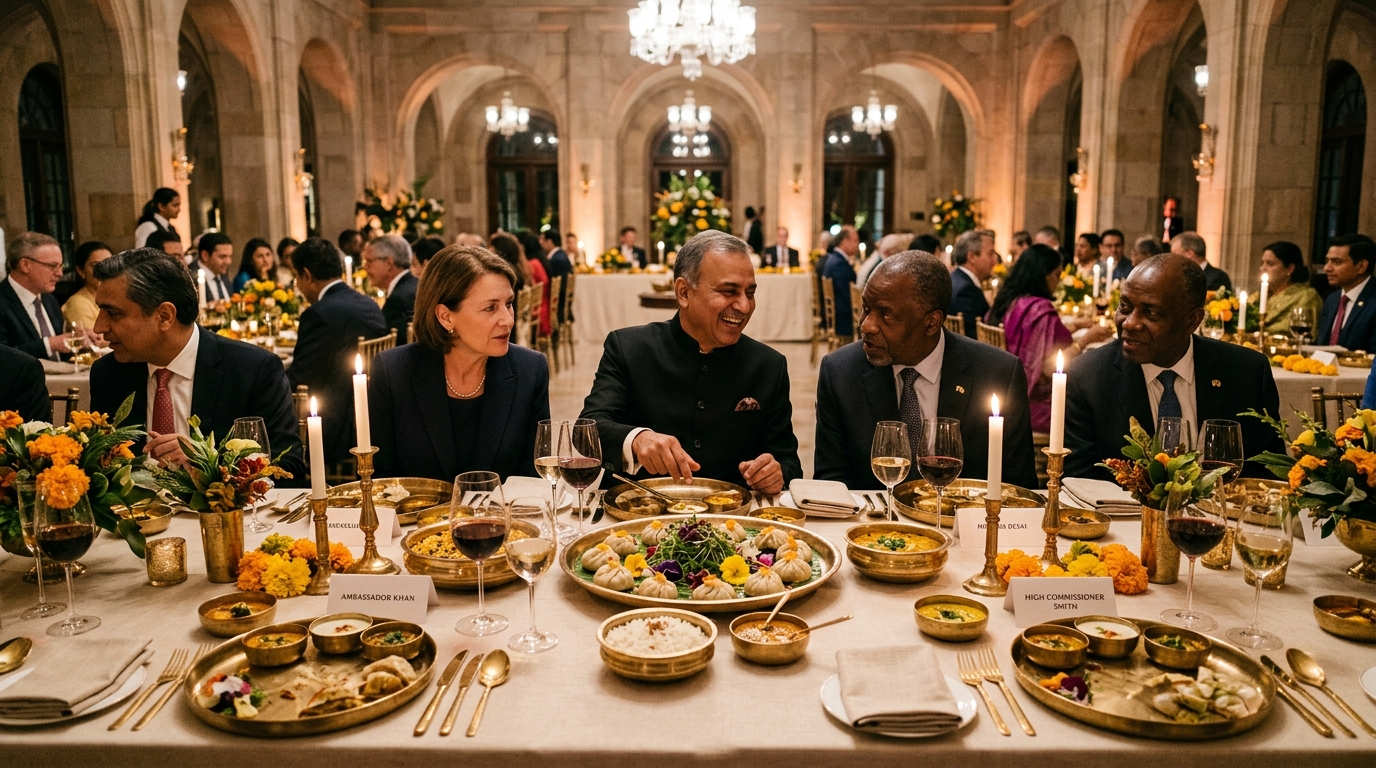
A post from a longtime member voiced sharp frustration over the meals provided to visiting heads of state at a recent summit: the all-vegetarian spread, the dhokla and thepla, the optics of serving humble regional cooking at an international table. The post drew hundreds of comments, turning into a fierce debate over taste, protocol, and cultural self-confidence.
One commenter pushed back immediately, asking whether only meat and European food counted as "international" — after all, the G20 summit in New Delhi served an all-vegetarian menu. The exchange, as reported in screenshots shared beyond the group, kept escalating from there.
It would be easy to dismiss the exchange as routine social media bickering over banquet catering. But underneath the complaints about steamed fermented gram flour and spiced flatbreads lies a much deeper cultural nerve: the lingering anxiety of post-colonial etiquette and the question of who gets to decide what counts as sophisticated on the global stage.
The Unspoken Rules of the Imperial Table
For the better part of two centuries, the etiquette of multilateral diplomacy followed a script written in Western Europe. After the Congress of Vienna in 1815, formal state dining was shaped around classical French cuisine. A serious state dinner followed an unbending pattern: multi-course plates centered on roast meats, heavy butter reductions, white bread service, and vintage wines.
When newly independent nations joined the diplomatic arena in the mid-twentieth century, their foreign ministries often adopted that exact template. They wanted to project institutional parity and reassure Western counterparts that they understood the rules of the room.
For decades in New Delhi, formal state dinners walked a cautious line. When Indian food was served, it was almost always smoothed out into the safe, cream-laden style of five-star hotel menus: butter chicken, dal makhani, paneer tikka, and naan. It was rich and well-liked, but it was designed above all not to startle an imaginary Western palate.
Regional cooking—the fermented, tangy steamed cakes of Gujarat (dhokla), fenugreek-infused flatbreads (thepla), the clear tamarind-pepper broths of Tamil Nadu (rasam), or coarse pearl-millet porridge (bajra khichdi)—was treated as domestic food. It was what you ate at home with family, not what you served under crystal chandeliers to visiting foreign dignitaries.
The Echo of the School Cafeteria
To understand why an accomplished NRI professional might cringe at seeing thepla at an international summit, you have to look at the immigrant experience of the 1980s and 1990s.
Nearly every Indian professional who moved to the United States or the UK during that era remembers some version of the lunchbox moment. In school cafeterias or corporate break rooms, the smell of mustard seeds and asafoetida tempering in hot oil drew crinkled noses and bewildered remarks. The immediate coping mechanism for many was to compartmentalize: eat sandwiches and salads in public, and save the comforting regional flavors for private evenings at home.
For that generation, the idea of being "international" became tied to blending in. Being accepted meant avoiding ethnic habits that might make someone else uncomfortable.
So when that same professional sees an Indian summit serving steamed lentils, unpolished millets, and coconut-tempered vegetables to foreign leaders, an old reflex triggers: Will they laugh at us? Will they think we are provincial?
The Asymmetry of Cultural Pride
The double standard becomes obvious the moment you look at how other nations handle state dining.
When the French government hosts an official banquet at Versailles, they don't serve stir-fry or pasta to make visiting Asian or African leaders feel at ease. They serve duck breast, pungent aged cheeses, and Bordeaux. When foreign leaders land in Tokyo, the Japanese Ministry of Foreign Affairs does not offer steak and fries out of fear that raw fish might put someone off. They serve formal Kaiseki, featuring sea urchin, fermented miso broths, and matsutake mushrooms.
You never see Japanese executives in California taking to social media to fret that foreign guests were horrified by raw fish at an international meeting.
Japan didn't apologize for its food. It took sushi—which began as working-class street food in Tokyo—and elevated it through sheer technique and uncompromising pride into one of the most respected forms of fine dining on earth.
Why should India, home to one of the oldest and most botanically diverse culinary traditions in human history, feel the need to sanitize its meals for outside approval?
Plant-Forward Dining as the Global Frontier
The irony of the discomfort over a vegetarian summit menu is even sharper given where modern gastronomy is heading.
For decades, Western culinary circles treated vegetarian food as an afterthought or a dietary restriction. Today, the most celebrated dining rooms in Paris, Copenhagen, and New York are actively dropping meat to explore plant-forward menus, citing sustainability, soil health, and metabolic longevity.
While the Western food industry rushes to invent laboratory meat substitutes and synthetic binders, India has spent centuries perfecting a sophisticated, complete plant-based cuisine from whole ingredients:
Wild lactic-acid fermentation in dishes like dhokla and idli breaks down phytic acid and nurtures the gut microbiome naturally, long before modern gastroenterologists started talking about prebiotic fibers. The classical principle of balancing the six tastes ensures that a traditional regional meal delivers sweet, sour, salty, bitter, pungent, and astringent notes in a single sitting, creating a natural sense of satiety without heavy processing. And the revival of ancestral millets—ragi, jowar, and bajra—offers climate-resilient grains that modern nutritionists now champion for stabilizing blood sugar.
Serving these dishes at a global summit is not a provincial mistake. It is a quiet assertion of culinary leadership.
Moving Beyond Second-Hand Embarrassment
The anxiety voiced in those expat comment threads feels like the closing chapter of an older mindset.
A younger generation of the Indian diaspora—founding companies, running venture funds, writing fiction, and earning Michelin stars across Manhattan, London, and Chicago—looks at their heritage with quiet confidence. They do not hide their lunch containers, nor do they feel the need to rebrand turmeric to make it palatable to casual observers.
Real cultural influence doesn't come from proving how neatly you can mimic someone else's silverware. It comes from having the self-assurance to set your own table, welcome guests into your home, and share what you have loved for generations without apology.
Related Stories

The Texas Paradox: Bo French, the 'Perpetual Foreigner' Myth, and the New Reality of Indian-American Power
Bo French's 'foreigners displacing Americans' post targeted South Asian UT students. Why the bipartisan Texas backlash cuts deeper than one tweet.

2026 Is the New 2016: The Nostalgia Explosion Taking Over the Internet
37 million Instagram posts: why '2026 is the new 2016' became the defining trend — and what the nostalgia says about a culture exhausted by AI content.
Kiki's Delivery Service Hits IMAX — Ghibli's Quiet Cultural Conquest
A 1989 Miyazaki classic is selling out IMAX screens in 2026. Why Kiki's Delivery Service — and Studio Ghibli's whole catalogue — became Gen Z's comfort cinema.