The brain, dementia in India and the brahmi pills sold for memory
The brain weighs about 3 pounds and holds close to 86 billion nerve cells. A guide to dementia in India, stroke, migraine, new research and the memory supplements that fall short.
The Body, Organ by Organ: brain.
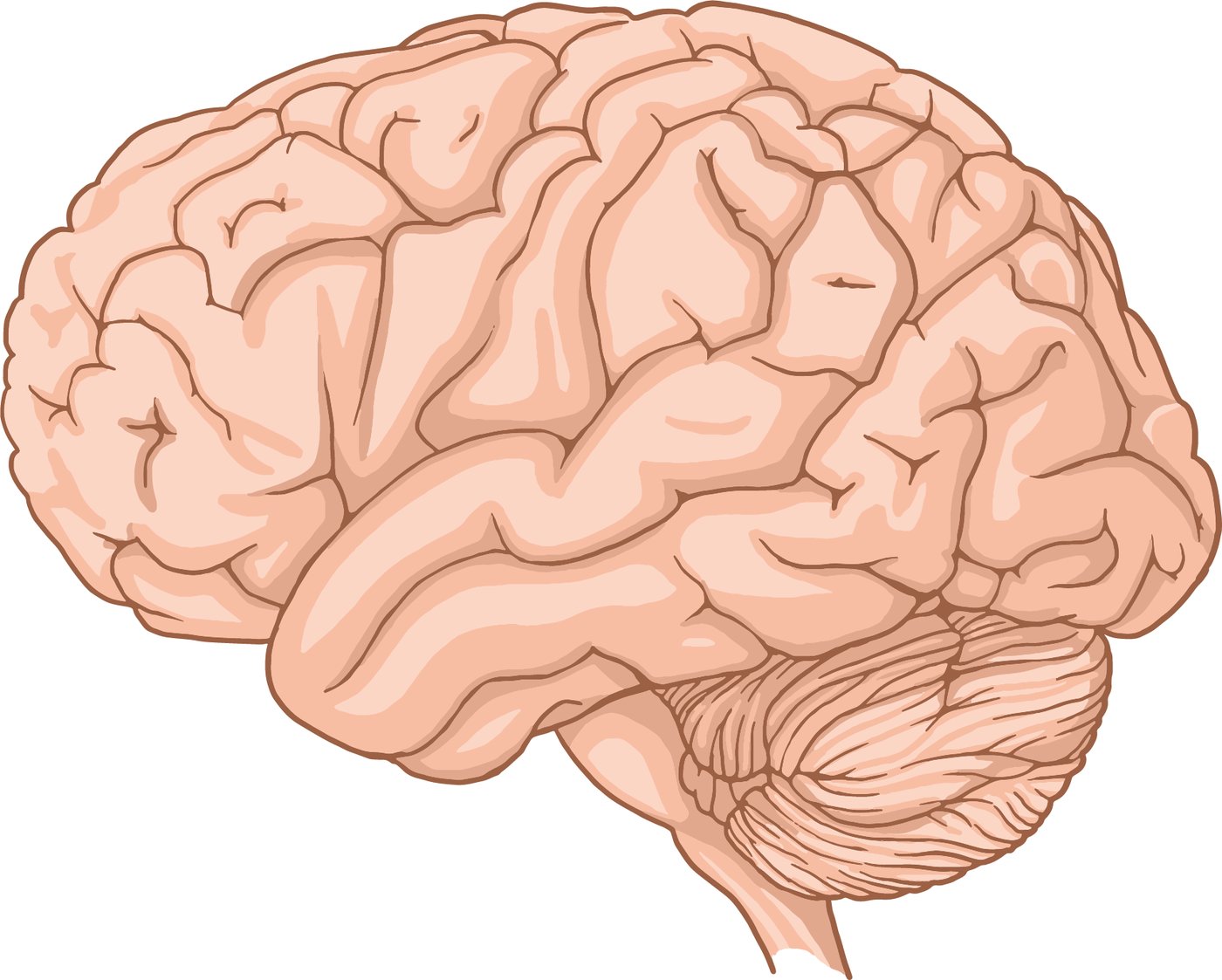
Top image: a side view of the human brain, with the folded cerebrum above and the ridged cerebellum and brainstem below, drawn by Ryan Kissinger for the National Institute of Allergy and Infectious Diseases (NIH BioArt 60), dated June 2024. Public domain, via Wikimedia Commons.
A newborn's brain weighs about a pound. It reaches about 3 pounds in an adult, roughly 1.4 kilograms, according to Cleveland Clinic.
It runs breathing, heart rate, memory, mood and movement. Cleveland Clinic counts close to 86 billion nerve cells, called neurons, and about as many glial cells, which help maintain and nourish them. The prefrontal cortex helps weigh decisions. It is among the last parts to mature, in the mid-to-late 20s.
Dementia is a group of symptoms, among them memory loss and confusion, caused by brain damage from diseases such as Alzheimer's, the NHS explains. Alzheimer's is the most common cause. The World Health Organization counted 57 million people living with dementia in 2021.
In India, an estimated 7.4 percent of people 60 and older have dementia, or 8.8 million people, the Longitudinal Aging Study in India reported in Alzheimer's & Dementia in 2023. Testing ran from 2018 to 2020. Women had a higher rate than men, 9.0 percent against 5.8. The authors said age and schooling likely explain that gap. Rural rates ran higher too, at 8.4 percent to the cities' 5.3, and varied by state.
With age, some regions important to learning shrink and blood flow may drop, the National Institute on Aging says. Given more time to learn, older adults usually match younger people.
In April 2025, a team led by Pascal Geldsetzer of Stanford reported in Nature that a shingles vaccine may lower dementia risk. The evidence came from Welsh adults aged about 80. Wales began offering Zostavax, a weakened live-virus shingles vaccine, in September 2013. Shingles is an infection that causes a painful rash, the NHS says. People born on or after Sept. 2, 1933, qualified, and anyone born earlier never did.
People born a week either side of the cutoff are unlikely to differ in other ways, the authors wrote. By the team's estimate, getting the vaccine cut the chance of a new dementia diagnosis over seven years by 3.5 percentage points, a relative drop of 20 percent. Women seemed to gain more. "The signal in our data was so strong, so clear and so persistent," Geldsetzer said in a Stanford release.
The authors noted that health records miss or delay some dementia diagnoses. Geldsetzer was seeking money for a trial that assigns the shot by chance, Stanford said in 2025. Zostavax has been unavailable in the US since November 2020, the Centers for Disease Control and Prevention says. The CDC now recommends a different vaccine, Shingrix, for adults 50 and older. The Wales study did not test Shingrix.
The US POINTER trial, published in JAMA in July 2025, tested coached daily habits in 2,111 sedentary adults aged 60 to 79. All were at risk of declining thinking skills. Half got 38 group meetings over two years, aerobic exercise four days a week, a brain-focused eating plan called the MIND diet, online brain training and reviews of lab results. The rest got six meetings and educational materials.
Both groups improved on thinking tests. The coached group gained slightly more, 0.029 standard deviations a year, a unit for comparing test scores. What that means for patients is unclear, the authors said. The trial was not built to count dementia cases and had no do-nothing group. Practice from retaking tests may explain part of the gains.
The Alzheimer's Association paid for the trial. The US Highbush Blueberry Council gave the coached group monthly rebates on blueberries.
In May 2025, the Food and Drug Administration cleared the first blood test to help diagnose Alzheimer's disease. Fujirebio's Lumipulse is for adults 55 and older with symptoms. It measures two proteins linked to amyloid plaques, protein deposits that are a hallmark of Alzheimer's. In 499 samples from adults with impaired thinking, 91.7 percent of positive results matched plaques on a PET brain scan or a spinal-fluid test. Fewer than 20 percent got an unclear result.
Martin Makary, the FDA commissioner at the time, said the disease "impacts too many people, more than breast cancer and prostate cancer combined." The FDA said the test is not for screening. Nor is it a stand-alone diagnosis.
Early dementia signs are easy to miss, the NHS says. They include memory loss, trouble finding words and confusion over change when shopping. "Dementia is not a natural part of ageing," the NHS says, and it advises seeing a doctor early about memory worries. There is no cure, the WHO says. Physical activity, social contact and help for caregivers can improve daily life. In vascular dementia, which comes from reduced blood flow to the brain, blood pressure and cholesterol medicines can sometimes slow it.
A stroke stops blood reaching part of the brain. Symptoms can come on suddenly, and the NHS uses FAST to recall them: a drooping face, a weak arm, slurred speech, and time to call an ambulance. Make the call even if symptoms stop. Other signs include one-sided weakness or numbness, blurred or lost sight and trouble finding words. A stroke can also bring confusion, memory loss, dizziness, falls, a severe headache, nausea or vomiting.
In the first 24 hours, treatment may include thrombolysis, a clot-dissolving medicine, or thrombectomy, which pulls the clot out, the NHS says. Longer-term drugs include blood thinners and cholesterol-lowering statins.
Most headaches go away on their own, according to the NHS. A sudden, extremely painful headache needs emergency care. So does one with a seizure, numbness or weakness, drowsiness or confusion, trouble speaking, balancing, walking or remembering, vision loss, a very high temperature, a stiff neck, bright light bothering the person, or a rash that does not fade when a glass is rolled over it. A head injury within three months also counts.
Migraine brings a throbbing headache, often on one side, with nausea and sensitivity to light and sound. Attacks usually last four hours to three days. Migraine has no cure, the NHS says. Painkillers, drugs called triptans and gepants, and preventive medicines can manage it.
Epilepsy causes repeated seizures, sometimes called fits. The NHS says it cannot currently be cured. Anti-seizure medicine often controls it. A first seizure needs an emergency call. So does one lasting longer than usual for the person, or past five minutes if their usual length is unknown. Three or more in 24 hours also need one. Call too if someone does not recover as usual or has another seizure before recovering.
The WHO links dementia risk to high blood pressure, diabetes, depression, hearing loss, poor sleep, smoking, inactivity and social isolation. Evidence suggests people can lower their risk, it says. The WHO recommends at least 150 minutes of moderate activity a week for adults. Adults need seven to nine hours of sleep, the National Institute on Aging says. For migraine, the NHS suggests regular meals and less caffeine. It warns that painkillers taken more than two days a week can bring on more headaches.
Ginkgo, a popular memory supplement, failed to lower dementia risk in three large studies, the National Center for Complementary and Integrative Health says. One followed over 3,000 people 75 and older. Ginkgo may raise bleeding risk with blood thinners such as warfarin. It may be unsafe in pregnancy.
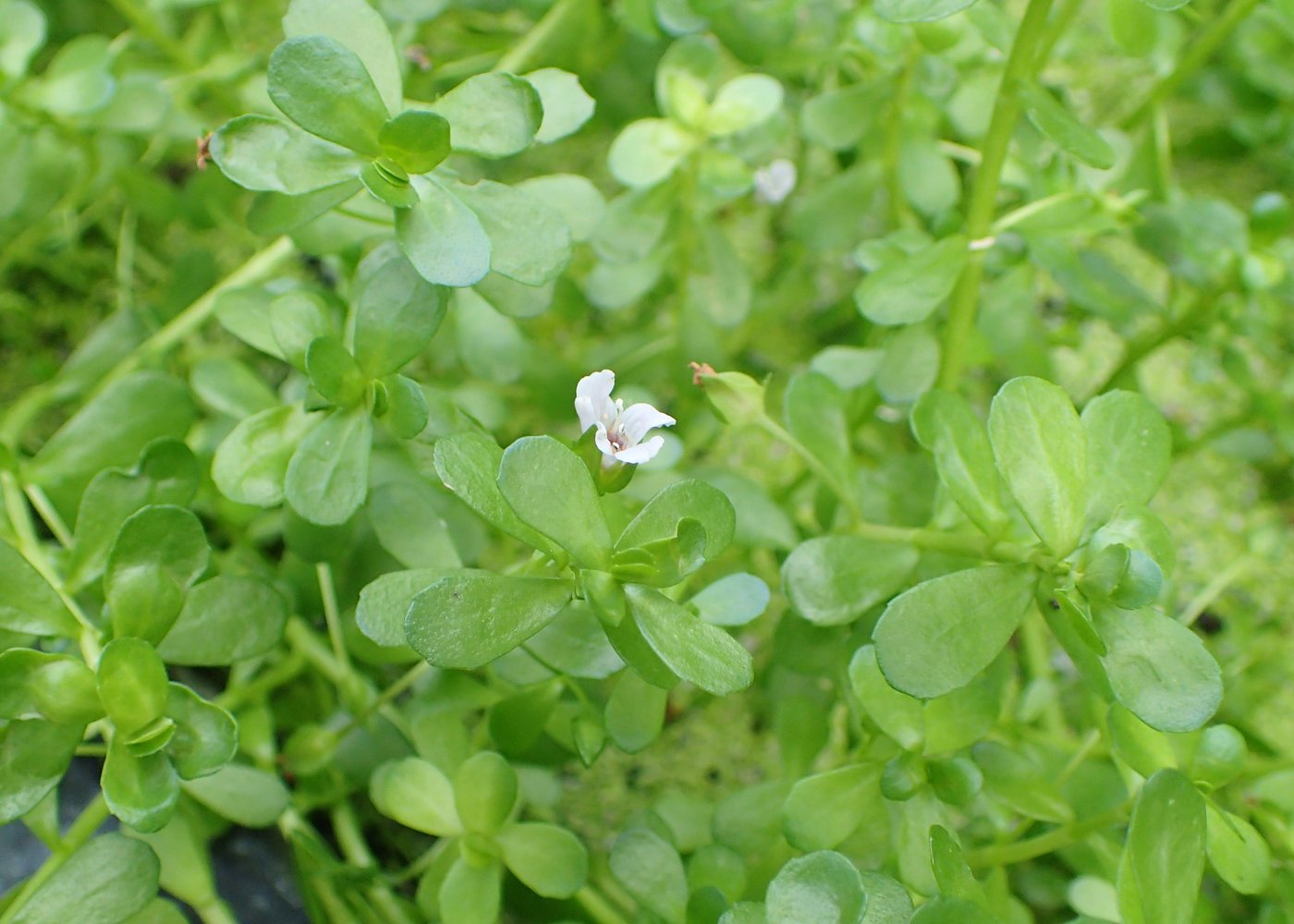 Brahmi (Bacopa monnieri), an herb long used in Ayurvedic medicine, growing at the Lincoln Park Conservatory in Chicago, photographed September 28, 2016. Photo by Krzysztof Ziarnek (Kenraiz), CC BY-SA 4.0, via Wikimedia Commons.
Brahmi, also called bacopa, has been used in Ayurvedic medicine in India for centuries, the Merck Manual notes. A 2026 review in Phytomedicine pooled 29 trials of brahmi or ginkgo in 2,107 healthy adults. High doses of brahmi improved working memory, which holds information briefly in mind, more than placebo, or dummy, pills did. Head-to-head trials were lacking, the authors noted. The trials enrolled healthy people, so they cannot show whether brahmi prevents or treats dementia.
The Merck Manual calls many bacopa studies small and of poor quality and does not recommend it. The name brahmi can also mean a different plant, gotu kola, the manual says. Side effects include upset stomach, nausea and diarrhea. Bacopa may slow the heart and raise thyroid hormone levels. It may interact with warfarin, the antidepressant fluoxetine, the Alzheimer's drug donepezil and some diabetes and blood pressure drugs. Pregnant women, people on thyroid medicine and people with ulcers or a slow heart rate should avoid it.
Readers can ask a doctor about blood pressure, a hearing test and Shingrix, which the CDC recommends in two doses.
This article is general information, not medical advice. See a doctor about any brain or memory symptom, and before starting any supplement or herbal product.


Comments
Loading comments…