Do AI layoffs hit H-1B workers first? What IBM's sponsorship cut shows
No public count shows visa holders are cut first when companies blame AI. Under US immigration rules, a layoff can cost an H-1B worker the right to stay within 60 days, and IBM's decision to stop sponsoring most consulting roles shows the door can also close without a layoff.
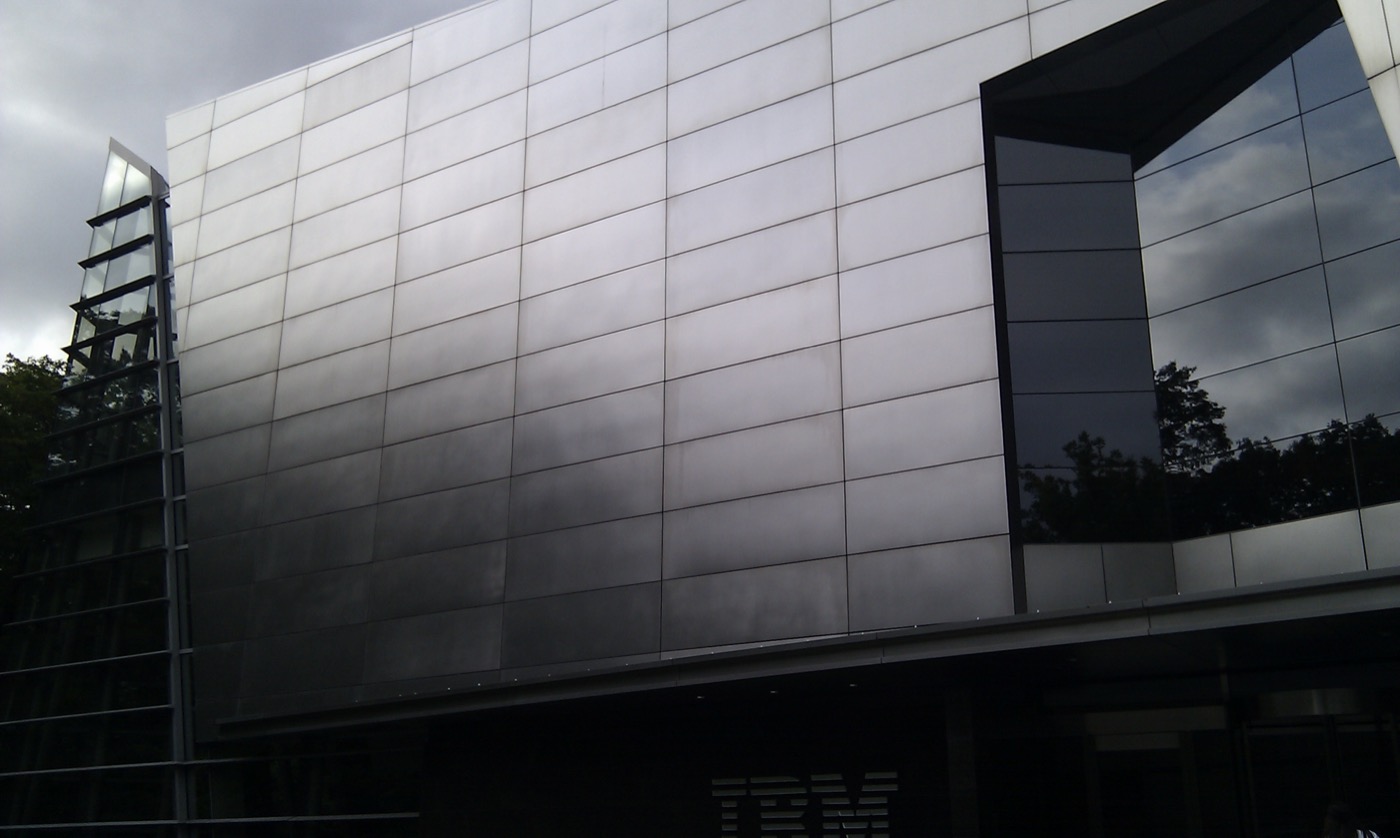
Top image: The entrance to IBM's corporate headquarters in Armonk, New York, on August 3, 2010. Photo by Mark Hillary, CC BY 2.0, via Wikimedia Commons.
No public data shows that companies lay off H-1B workers first when they cut jobs and blame artificial intelligence. The best-known counts do not record visa status at all. Under US immigration rules, a layoff costs an H-1B worker more: a visa holder can lose the right to stay within 60 days.
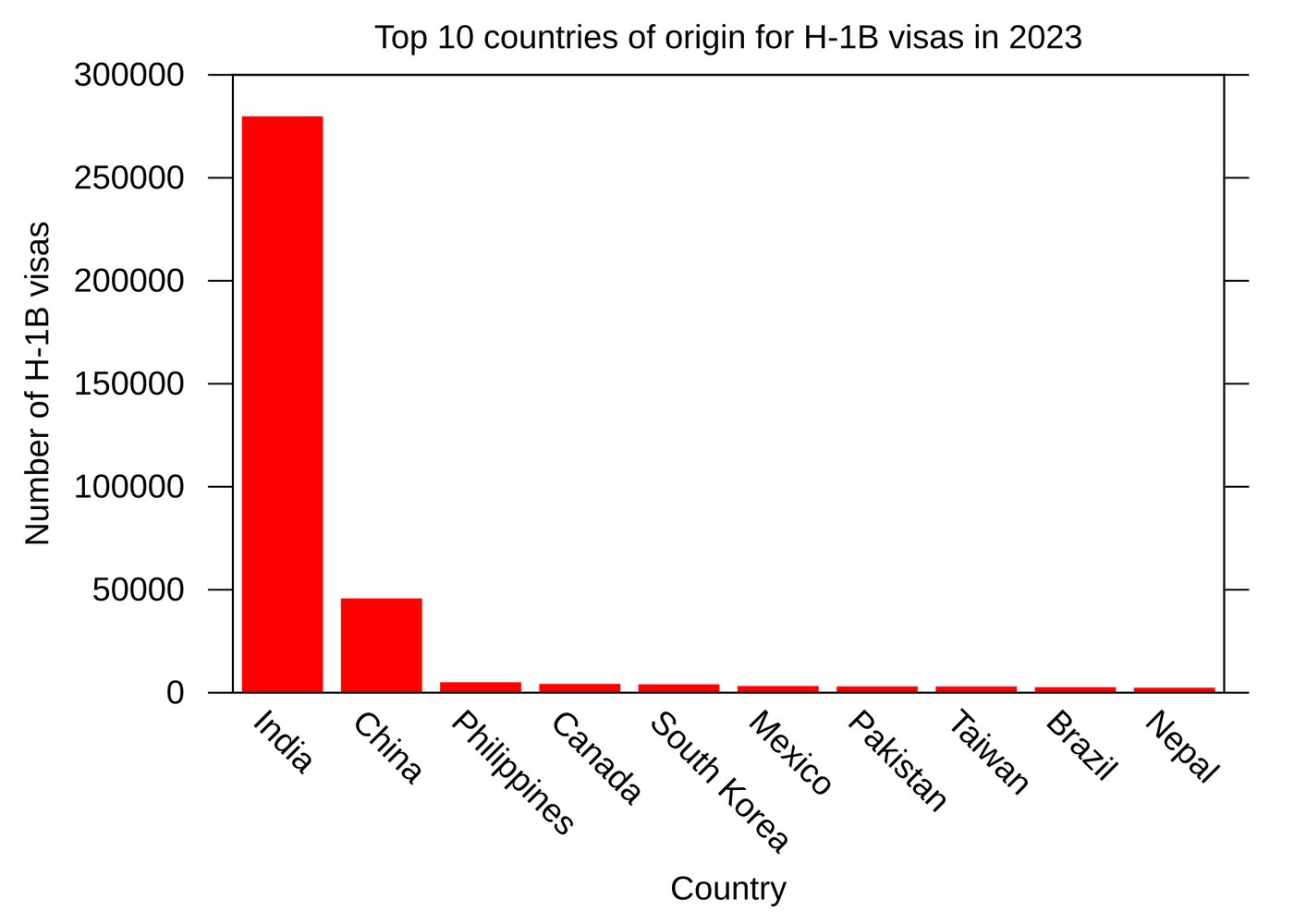
The question sharpened this month. On Tuesday, November 10, IBM confirmed to Reuters that its consulting unit would stop sponsoring US work visas for most roles, Al Jazeera reported. Green card sponsorship ends too. People born in India received 72 percent of approved H-1B petitions in fiscal 2023, according to a USCIS report to Congress. China was second, at 12 percent.
The H-1B is the US visa for skilled professionals, sponsored by an employer. The best-known tally of layoffs comes from Challenger, Gray & Christmas, the Chicago outplacement firm. Its October report, released November 5, counted 121,401 US job cuts this year in which employers cited AI. That is about 20 percent of the 617,189 cuts announced through October.
Technology companies announced 171,501 of those cuts through October, up 21 percent from the same months of 2025. Tech leads every industry. It accounts for 28 percent of all cuts this year, Challenger found. The firm records the reason a company gives when it announces cuts. It does not say who lost the jobs, or what visas they held.
That stated reason is now shifting. "The reasons employers give have shifted from technology to the economy," said Andy Challenger, the firm's chief revenue officer. AI was cited in 1,265 cuts in October. That was its lowest monthly count of 2026.
State layoff notices under the federal WARN Act leave the same gap. H1B.report, a site that tracks H-1B filings, checked the 100 biggest sponsors against notices filed in California, Texas, Illinois and three other states. Only 22 had any, as of September. The count tracks companies. It does not show how many of the affected workers held visas.
Federal law does limit one kind of cut. The Labor Department's Fact Sheet #62N covers H-1B-dependent employers and employers found to be willful violators. For a firm with 51 or more full-time-equivalent employees, H-1B-dependent means at least 15 percent hold H-1Bs, the department says. Its limit is narrow. Such firms may not displace a US worker from an essentially equivalent job in the 90 days before or after filing an H-1B petition. The rule shields US workers from replacement.
The real gap opens after the layoff. An H-1B worker may get a discretionary grace period of up to 60 consecutive days, or until the end of the worker's authorized validity period if that comes sooner. A USCIS explainer sets out the rule. USCIS has since marked that page as archived and out of date. The rule itself, 8 CFR 214.1(l)(2), still stands.
Inside that window, an eligible worker may stay by applying to change status, by applying for a green card (adjustment of status), or, with an approved immigrant petition, by applying for a "compelling circumstances" work permit, USCIS says. A new employer can also file an H-1B petition. An eligible worker may start that job once USCIS receives the petition. Spouses with their own work permits can keep working during the grace period, USCIS says. Without one of those steps, the family may have to leave.
Even that window is in doubt. The Department of Homeland Security proposed on September 11 to strike the 60-day grace period from its rules. Public comments closed on November 10. As of November 22, the Federal Register showed no final rule.
The employer has duties too. Fact Sheet #62I names the best evidence of a real termination. It is the employer's notice telling USCIS that the job has ended and the petition should be canceled. The notice also confirms the worker was paid for the trip home where USCIS rules require it. Until that "bona fide termination," the employer generally owes wages even for idle time.
Ayush Raj Jha moved from India to Illinois in 2018 for a computer science master's degree. He joined Oracle as a senior software engineer in 2022 and holds an H-1B. Layoffs have brought visa holders "constant fear and uncertainty," Jha told Business Insider in August. He said he spends 8 to 10 hours a week outside work on courses and coding tools. "At this point with AI adoption, it does not matter how well you perform," Jha said, because even a strong performer "could be replaceable."
Jha left by choice. Earlier this year he went looking for a more senior job, Business Insider reported. In July he accepted an offer from a privately owned customer service software company. He planned to start in September. His H-1B transfer had to go through first. Whether he started was not reported.
IBM's move exposes a second risk, one that needs no layoff at all. IBM Consulting's participation in high-skilled visa programs "has been declining for a number of years," a spokesperson told Newsweek. "As skill availability and client need have evolved," the spokesperson said, IBM chose to end visa and green card sponsorship for most IBM Consulting roles. Consulting is its largest division, Al Jazeera reported.
Newsweek reported that the decision halts new H-1B petitions and PERM labor certifications. PERM is the first step in the most common employer-sponsored green card category, Newsweek said. Affected workers were told they could keep working for IBM outside the United States or leave the company at the end of the year, Newsweek reported, citing Bloomberg. The deadline is weeks away. IBM Consulting employs more than 150,000 of IBM's 264,300 staff worldwide, according to Al Jazeera.
It was not clear how many people are affected. IBM has not said which roles keep sponsorship. Newsweek asked IBM what happens to current H-1B holders who now cannot apply for green cards. Its November 10 story carried no answer.
The IBM decision follows months of pressure from Washington. In October the administration suspended several companies, including Microsoft, Adobe, Cognizant, Infosys and Tata Consultancy Services, from the green card labor certification program known as PERM, citing fraud, Al Jazeera and Newsweek reported. Infosys and TCS are Indian firms. Vice President JD Vance spoke to the tech industry at an October 8 press conference, Newsweek reported. He said the administration wants companies to "employ American workers."
For a family on an H-1B, one practical step is knowing when the authorized validity period ends. Under the current rule's "whichever is shorter" wording, the grace period cannot run past that date. Keep copies of the visa approval notice and recent pay stubs where both spouses can find them. A spouse with a work permit should note its expiry date too. The DHS grace-period proposal, docket USCIS-2026-0364, still has no final rule.
This is general information, not legal advice. A worker facing a layoff should check their own dates and options with an immigration lawyer.


Comments
Loading comments…