Google's AI-or-no-Search rule for schools draws protests and workarounds
Google says K-12 schools that keep its AI tools switched off for students will lose Google Search too. New York City, Los Angeles and Chicago schools are weighing other search engines, and more than 500 Google workers have signed a petition against the rule.
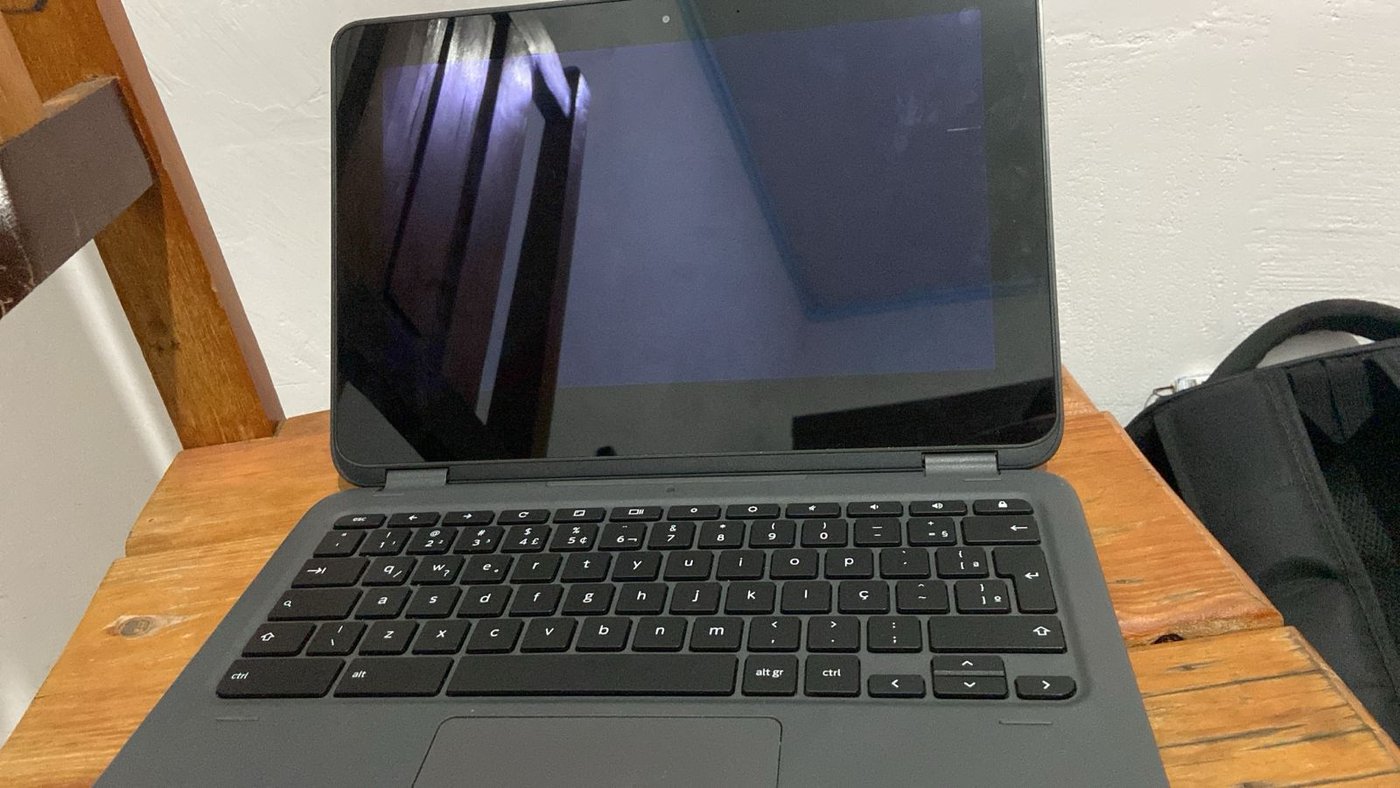
Top image: A state-issued student Chromebook in Goiás, Brazil, on May 29, 2024. Photo by Emerson Júnior Gonçalves da Silva Figueiredo, CC BY-SA 2.0, via Wikimedia Commons; resized.
Schools that want Google's artificial intelligence kept away from students will lose Google Search as well. Google announced on November 3 that Gemini, Gemini Notebook, Gemini in Classroom and Google Search will be switched off for K-12 student accounts until a school administrator turns them on. Search can be switched on alone, Education Week reported. It still carries AI summaries.
Chris Phillips, Google's vice president and general manager of education, said at a virtual meeting on November 2 that a district wanting AI off could choose to have no Search at all, Education Week reported. Rules can differ by grade. Any group of students blocked from AI loses Search too. "Search and AI are deeply integrated," Phillips said.
Google's school products reach classrooms far beyond the United States. Two senators wrote to Sundar Pichai, the chief executive of Google and Alphabet, in an October 21 letter. They were Richard Blumenthal, a Connecticut Democrat, and Josh Hawley, a Missouri Republican. Over 150 million students worldwide use Classroom, they wrote. In 2025, 93 percent of US school districts planned to buy Chromebooks, according to the letter. Other browsers are not natively available on those laptops.
Google's post gives no start date. It says the company will share specifics "in the coming months," and EdSurge reported that the change begins in early 2027. Families outside the United States face a gap. Google's post does not say whether the new controls reach them. It does say that Guided Learning became "globally available in Google Classroom" on November 3. That is an AI mode that coaches students through problems step by step.
The school systems of New York City, Los Angeles and Chicago are weighing other search engines, according to EdSurge, which cited a New York Times report from November 18. Los Angeles Unified has disabled AI Overviews, EdSurge reported. Those are the summaries Google now prints above ordinary results. The district said it would "continue to evaluate whether these and any digital tools support student learning." New York City schools are months into a one-year pause on student-facing generative AI, EdSurge reported.
Chicago Public Schools said on Monday, November 9, that it would block generative AI tools including Gemini, ChatGPT and Claude on student accounts, CBS News Chicago reported. Protest followed within days. Organizers called a rally for Wednesday, November 11, outside Google's office on Morgan Street in the West Loop. The Chicago Teachers Union and the Illinois Federation of Teachers were among them. Protests took place outside Google offices across the United States this month, NPR reported.
Politicians have piled on. Zohran Mamdani, the mayor of New York, wrote on X that "No corporation should have the power to dictate how we teach our children." He posted it on November 3. Blumenthal, in an email to Education Week, accused Google of "prioritizing profits over people." Senator Ed Markey, a Massachusetts Democrat, has urged Pichai to reverse the policy. Google has until November 30 to answer his letter, EdSurge reported.
The October letter from Blumenthal and Hawley set a November 2 deadline for answers to nine questions. One asked why Google had made AI the default on school devices. Google's statement the next day did not answer them, according to Education Week.
Pressure has also come from inside the company. More than 500 Google workers have signed a petition titled "Let Students Search," Gizmodo reported on November 19. The Alphabet Workers Union organized it. The petition asks executives to let schools turn off AI features in Search and keep Search itself. Parul Koul is the union's president and a Google software engineer. She said the choice of when to use AI in class "belongs to the educators leading it."
A Google spokesperson told EdSurge the company hears worries about students using AI to shortcut learning. The spokesperson said Google and those parents and teachers "share the same goal: help students learn." Google declined to comment to NPR. Sequoia Carrillo is NPR's education reporter. She said on air on November 21 that Google had not followed up since the protests and the petition.
Some districts already hide the AI on their own. Fairfax County Public Schools in Virginia, the country's ninth-largest district by EdSurge's count, built a browser add-on that strips AI answers from student searches. Another district shares its code. Jim Tyler is director of technology for Niles Community Schools in Michigan. He posted a free Chrome extension called Hide AI Overview on GitHub. It removes AI Overviews and AI Mode and leaves the regular results. Securly, a web-filtering company, announced on November 4 that its filter blocks both features.
Smaller districts may struggle to copy them. Yvette Renteria, chief program officer at Common Sense Media and a former principal, told Education Week that such districts "may not have the personnel." She favors Search with no AI attached. "Having Google Search without AI search is the best option," Renteria said.
Tracy Pizzo, a former Google for Education employee, now works with districts. She told NPR that schools should consider other providers. "I would encourage, at this moment, schools to say, we're not doing this," Pizzo said.
Parents whose children use school Google accounts can ask the district which of these products it will turn on, and for which grades. They can ask about filters too. A district may already hide AI Overviews with a tool like Securly's. Families outside the United States can put the same questions to schools that run Google Classroom. Google has not said where the controls apply. Teachers who switch on Guided Learning can read transcripts of students' chats with it, according to Education Week.



Comments
Loading comments…