Skin, the largest organ, and the creams in India that can harm it
A guide to the largest organ: common skin ailments, treatments, red flags, new melanoma research, and steroid and mercury creams harming skin in India.
The Body, Organ by Organ: skin.
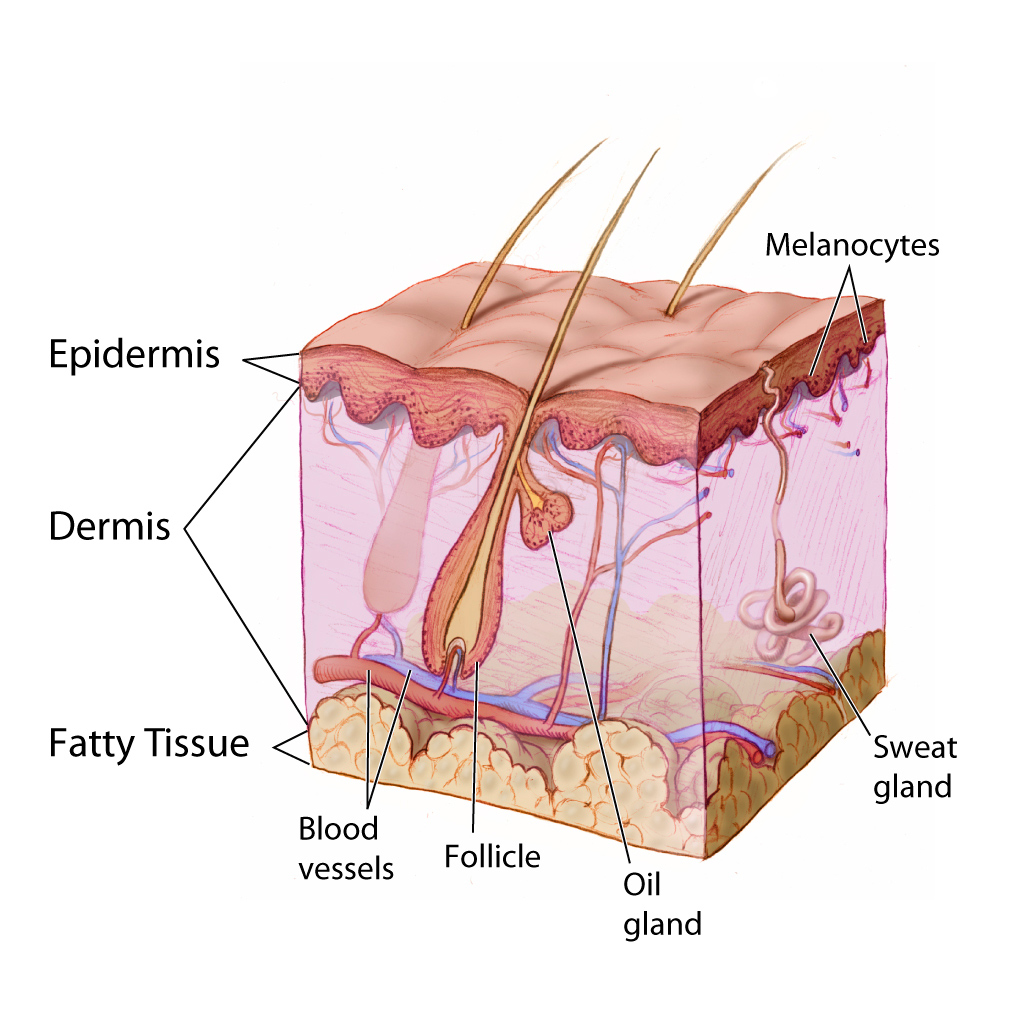
Top image: "Anatomy: The Skin," an undated cross-section illustration of skin and its layers by Don Bliss for the National Cancer Institute. Public domain, via Wikimedia Commons.
A cross-section of skin, as the National Cancer Institute draws it, holds a hair follicle, an oil gland, a sweat gland and a web of blood vessels in a single block. Every part works unasked.
A 2026 review in the Anais Brasileiros de Dermatologia puts the average surface area at nearly two square meters. A 2026 review in Frontiers in Immunology says skin makes up approximately 15 percent of total body weight. The review itself calls the figure approximate. Cleveland Clinic and both reviews call skin the body's largest organ.
Cleveland Clinic describes three layers: the epidermis on top, the dermis in the middle and a fatty hypodermis below. The dermis supplies about 90 percent of the thickness. It holds collagen, a protein that keeps skin strong, and elastin, which keeps it flexible. Skin keeps germs out, helps regulate body temperature and carries nerves that sense heat and cold. With age, collagen and elastin decline and the dermis thins.
Atopic dermatitis, usually called eczema, is a long-lasting disease that causes red, inflamed skin and severe itching, according to the National Institute of Arthritis and Musculoskeletal and Skin Diseases. Scratched patches can ooze or bleed. Tobacco smoke, fragranced soaps and very dry skin are possible triggers. Research shows it is more common in non-Hispanic Black children.
Britain's National Health Service says eczema cannot be cured. Moisturizers and steroid creams (topical corticosteroids) are the main treatments. The NHS advises moisturizing at least twice a day, even after a flare settles. The American Academy of Dermatology says to apply a child's moisturizer within three minutes of a lukewarm bath. Blistering, crusting, leaking fluid, pus, pain or a high temperature can signal infection. The NHS says that needs an urgent appointment with a general practitioner (GP).
Psoriasis is a different problem. The immune system turns overactive, and patches of thick red skin with silvery-white scales appear that itch or burn. Creams or ointments can often treat mild cases. Moderate and severe cases may need pills, injections or light treatments. Joint pain, swelling or stiffness calls for a doctor soon. Untreated psoriatic arthritis can lead to irreversible damage.
Acne starts when hair follicles plug with oil and dead skin cells. The result is whiteheads, blackheads, tender bumps and, in severe cases, deep, painful, pus-filled lesions. Squeezing, picking and scrubbing too hard can make it worse. Over-the-counter options include adapalene, benzoyl peroxide and salicylic acid, the academy says. Large, painful pimples deep in the skin, or acne that leaves scars, need a dermatologist. Dermatologist Ramone Williams says anyone pregnant or trying to conceive should consult one first.
Toothpaste is no remedy. "Keep your toothpaste for your teeth," dermatologist Julie Harper said on the academy's site. Williams said its abrasives and other ingredients can irritate or harm skin.
Vitiligo is an autoimmune disorder in which pigment-making skin cells are destroyed, leaving milky-white patches. For many people they appear before age 20. It has no cure, though treatment can be very effective at stopping the spread and reversing its effects. It may travel with thyroid disease and type 1 diabetes. A doctor can check any new pale patch.
Melasma leaves darker, blotchy patches, usually on the face. The academy says women with medium to dark skin tones are most likely to develop it, often during pregnancy or after starting birth control pills. It advises daily sunscreen and a wide-brimmed hat. Some treatments can irritate darker skin and worsen melasma.
Steroid and "fairness" creams are a documented problem in India. A study in Cureus enrolled 96 patients with steroid-damaged faces at a government institute in western Uttar Pradesh. Of the 96, 62 had used the creams without a prescription. Pharmacists recommended them to 32 of those 62. Thinned skin and lost pigment each affected 84 patients, or 87.5 percent. Ninety-two did not know what was in the cream.
The authors enrolled patients over two months in 2025 at one center. The study cannot give a national rate.
Ringworm, a fungal skin infection, is usually a scaly, itchy, ring-shaped rash. The NHS says a pharmacist can recommend an antifungal. A GP should see rashes that do not improve, scalp ringworm and anyone with a weakened immune system.
Steroid creams have complicated it in India. Authors of a September 2026 trial in the Indian Dermatology Online Journal blame misused steroids for chronic, resistant ringworm. The trial randomized 90 adults with steroid-altered ringworm to one of three antifungal pills for eight weeks. All had used steroid creams before. Between 90 and 100 percent did not know the steroid content or its side effects.
After eight weeks, 70 percent on itraconazole were cured, against 36.7 percent on terbinafine and 26.7 percent on griseofulvin. The gap was not statistically significant (P=0.529). Each group had 30 patients, and the trial was not blinded. Choosing a drug is a doctor's decision.
Mercury is a separate danger. The FDA says to stop using at once any skin product whose label lists mercury, calomel, mercuric or mercurio. Pregnant women, nursing babies and young children are especially vulnerable, it says. The World Health Organization calls mercury-containing skin-lightening products hazardous and says many countries have banned them.
A 2022 letter in the Indian Journal of Dermatology described one woman in Kerala with a kidney condition, membranous nephropathy. She had used a lightening cream for two years. The doctors measured mercury at 7,590 times the Minamata Convention limit. Her protein loss in urine went into remission after she stopped. The authors said the cream could have been the cause. One case cannot prove it. They also said they easily bought five high-mercury creams from an Indian online retailer.
Melanoma, the most serious skin cancer, is where the newest evidence sits. The American Academy of Dermatology lists the ABCDEs: a spot with one half unlike the other, an irregular or poorly defined border, varying colors, a diameter usually over 6 millimeters, and a spot that looks different or is changing. Melanomas can be smaller. The academy says to see a board-certified dermatologist about any new spot, any spot unlike the others and any spot that is changing, itching or bleeding. Even melanoma is highly treatable when caught early.
In November, the New England Journal of Medicine published a phase 3 trial, a large late-stage, double-blind study. It covered 1,137 patients whose stage IIB to IV melanoma had been surgically removed. All received the immunotherapy drug pembrolizumab. Two-thirds also received intismeran, an individualized therapy meant to prompt immune T cells to attack markers specific to each patient's tumor. The rest received a placebo.
Recurrence-free survival, meaning patients alive with no return of the cancer, was 82.2 percent at 24 months with intismeran and 70.0 percent with placebo. For six months the groups looked alike. Serious side effects (grade 3 or worse) struck 23.6 percent of the intismeran group and 20.3 percent of the placebo group. Median follow-up was 24.6 months. Long-term survival is unknown. Eight patients in the intismeran group died of adverse events, five before receiving it. Merck and Moderna funded the trial.
Darker skin does not prevent skin cancer. The academy says dermatologists recommend sunscreen for everyone. In darker skin tones it can appear on the palms, soles, nails and inside the mouth. It is often advanced by the time it is diagnosed. The academy says checking your own skin can reveal warning signs.
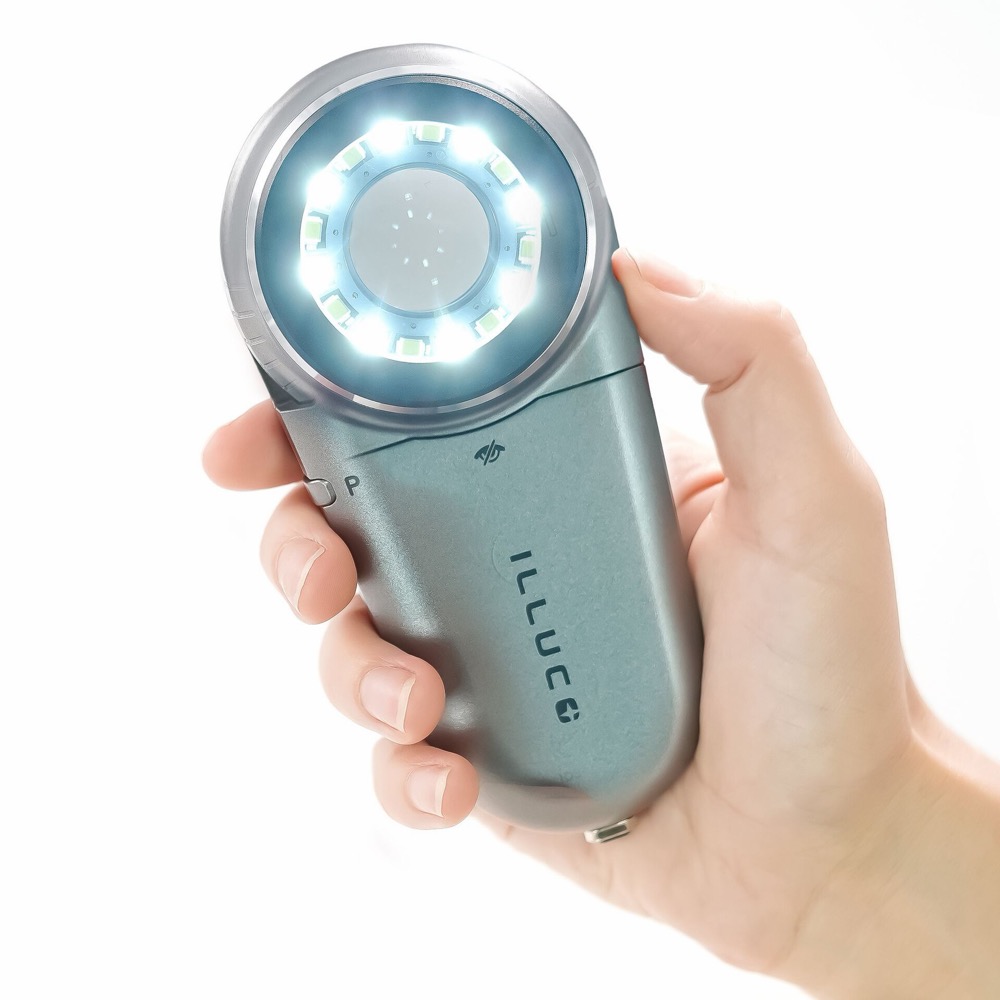 A handheld dermatoscope, a lighted magnifier that dermatologists use to examine moles and other spots, photographed February 2024. No patient appears. Photo by Abessemans94, CC BY-SA 4.0, via Wikimedia Commons.
For sunscreen, the academy recommends SPF 30 or higher, water resistant and broad spectrum, meaning it covers UVA and UVB rays. Most adults need at least an ounce. The face needs at least a teaspoon. Reapply every two hours. A tinted version with iron oxide better protects against dark spots.
Much of the daily care that helps skin happens at home, and the advice from dermatologists is simple. Start with water. The American Academy of Dermatology recommends keeping baths and showers to five to ten minutes in warm water, then applying a cream or ointment, which it says adds more moisture than a lotion. Petroleum jelly qualifies. For eczema, the NHS advises washing with an emollient instead of soap, staying cool, keeping nails short and gently rubbing an itchy patch with a finger, because scratching makes it worse. Pimples call for patience. The academy says picking or squeezing them makes acne take longer to clear and raises the risk of scars and dark spots. Aloe vera is less proven. The National Institutes of Health says there isn't enough reliable information to say whether it helps eczema.
Cleveland Clinic warns that lime juice on the skin, followed by sun, can cause painful blisters that leave brown marks lasting months. Lime juice is a poor choice for dark spots.
This article is general information, not medical advice. See a doctor about any skin symptom that is new, changing or not improving.




Comments
Loading comments…