The liver, fatty liver in South Asians and supplements that can harm it
The liver weighs 3 to 5 pounds and does more than 500 jobs. A guide to fatty liver in South Asians, hepatitis, cirrhosis, new treatments and the remedies that can injure it.
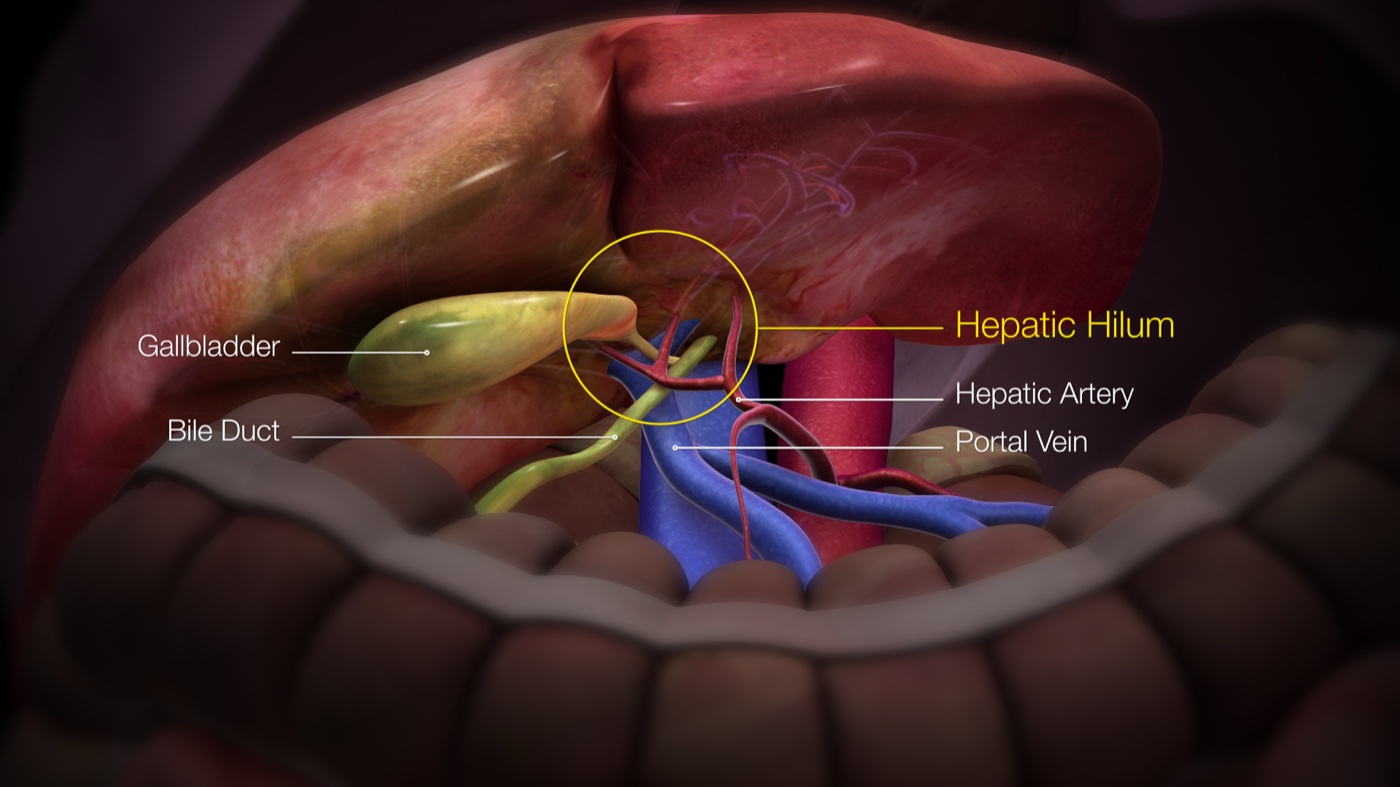
The Body, Organ by Organ: liver.
Top image: a 3D medical illustration of the underside of the liver, with the gallbladder, bile duct, hepatic artery and portal vein labeled, created November 2020 by Scientific Animations. CC BY-SA 4.0, via Wikimedia Commons.
More than 250 gallons of blood pass through the liver every day, according to Cleveland Clinic. The organ strains out toxins, stores sugar and makes bile, which helps digest fat.
The liver sits under the right ribs, beside the stomach. It is reddish-brown, about the size and shape of a football. Cleveland Clinic puts its weight between 3 and 5 pounds, roughly 1.4 to 2.3 kilograms, and counts more than 500 jobs for it. It is the largest internal organ. The liver is also one of the only organs that can regenerate itself.
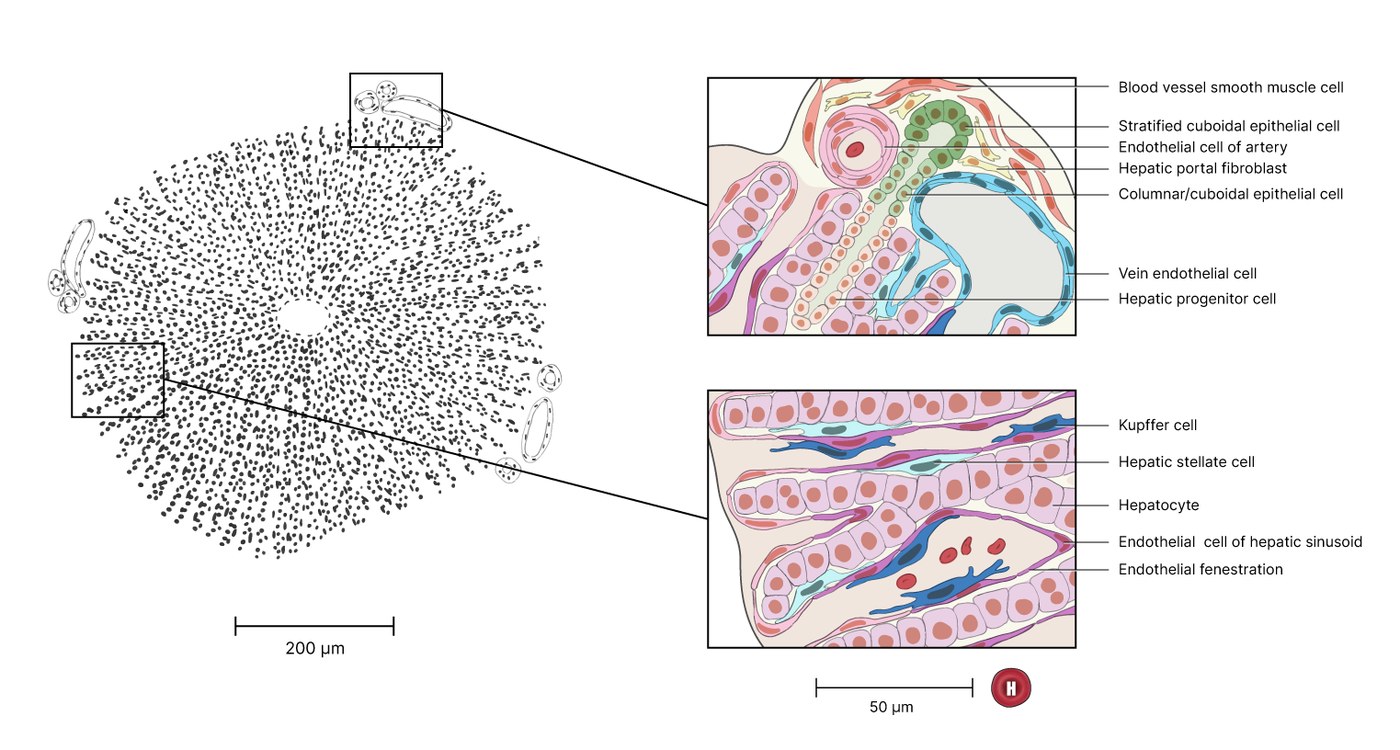 A liver lobule, the tiny unit of liver tissue in which liver cells (hepatocytes) radiate outward from a central vein, with enlarged panels labeling the cell types. Illustration by the National Institute of Allergy and Infectious Diseases (NIH BioArt 565), uploaded December 2024. CC BY 4.0, via Wikimedia Commons.
Fat in the liver is common among South Asians. A 2025 meta-analysis in the Journal of Gastroenterology and Hepatology pooled 62 studies of 40,745 people of South Asian ethnicity. Fifty-three came from India. Where studies did not select people for diabetes, 34.7 percent had fatty liver disease. Among people with type 2 diabetes, the pooled figure was 60.0 percent.
The Merck Manual says the liver's size and blood flow decrease with age, though liver test results generally remain normal. Some drugs linger longer. Doses often need to come down in older adults, the manual says, and damaged liver cells repair more slowly.
Doctors now call the fatty kind metabolic dysfunction-associated steatotic liver disease, or MASLD. Its older name was nonalcoholic fatty liver disease. The National Institute of Diabetes and Digestive and Kidney Diseases defines it as excess fat building up in the liver. Heavy drinking is not the cause. The institute estimates that about 24 percent of U.S. adults have it. In the serious form, metabolic dysfunction-associated steatohepatitis (MASH), inflammation and damage join the fat and can scar the liver.
On average, the institute says, Asian Americans with the disease have a lower body mass index (a weight-for-height measure) than non-Hispanic white Americans with it. It is usually silent. Some people feel tired or have discomfort in the upper right side of the belly. Britain's National Health Service says it is usually found when blood tests or scans are done for another reason.
In the South Asian review, pooled prevalence reached 47.1 percent in urban settings and 18.5 percent in rural ones. On average, 14.0 percent of participants had advanced scarring. The studies varied widely. Only four reported clinical outcomes, and each measured them differently. The authors, at Queen Mary University of London, said high-quality long-term studies are still needed.
The World Health Organization estimates that 240 million people were living with chronic hepatitis B in 2024. That year the virus caused about 1.1 million deaths, mostly from cirrhosis and liver cancer. Some 43 million chronic cases are in WHO's South-East Asia Region, which includes India. A safe vaccine offers nearly 100 percent protection, and WHO recommends testing migrants from regions where the virus is common.
New hepatitis B infections often cause no symptoms. When they do, WHO lists yellow skin and eyes (jaundice), dark urine, fatigue, nausea, vomiting and belly pain. Chronic hepatitis B is treatable with oral medicines such as tenofovir or entecavir. Most people who start them take them for life. Hepatitis C has no vaccine, but pills can cure it. Direct-acting antivirals cure more than 95 percent of people, WHO says.
Years of damage from fat, viruses or alcohol can end in cirrhosis, severe scarring that stiffens the liver. The NHS counts regular drinking of more than 50 units a week for men, or 35 for women, among the causes. A unit is 10 milliliters of pure alcohol. Early cirrhosis often has no symptoms. Tiredness and weight loss can come first. Itchy skin, easy bruising and yellowing tend to follow. The NHS notes that yellow skin may be harder to see on brown or black skin.
For people already diagnosed with cirrhosis, the NHS advises an urgent appointment if the skin or the whites of the eyes look yellow. Vomiting blood is an emergency. So is very dark or black stool. Cirrhosis cannot be cured. Treating its cause, such as hepatitis, can slow it or stop it getting worse. Very severe cases may need a transplant.
For people with fatty liver who are overweight, doctors recommend losing weight gradually. Losing at least 3 to 5 percent of body weight can reduce fat in the liver, the institute says. Reducing inflammation and scarring may take 7 to 10 percent. Rapid loss can make liver disease worse. Exercise helps even without weight loss.
In March 2024 the Food and Drug Administration approved resmetirom (Rezdiffra). It was the first drug for MASH with moderate to advanced scarring, for people without cirrhosis. Nikolay Nikolov, then an acting director at the agency, said patients had lacked a drug "that could directly address their liver damage."
A second drug followed. In 2025 the New England Journal of Medicine published a phase 3, or late-stage, trial of semaglutide, the drug sold as Wegovy. Its patients had MASH with moderate or advanced scarring. Among the first 800 patients, after 72 weeks, 62.9 percent on weekly injections saw the inflammation resolve without worse scarring. On placebo, a dummy injection, it was 34.3 percent.
Scarring improved in 36.8 percent against 22.4 percent. Patients on the drug lost 10.5 percent of their body weight on average. Stomach and gut side effects were more common. Novo Nordisk, the drugmaker, funded the trial. The FDA gave the drug accelerated approval for MASH on August 15, 2025, based on liver biopsies (tissue samples). The trial runs to 240 weeks to learn whether it prevents deaths and transplants.
A cohort study in the Journal of Nutrition followed 170,044 adults for a median 12.4 years. People who drank 1.5 to 2.5 unsweetened coffees a day had a 25 percent lower risk of chronic liver disease than non-drinkers. Sweeteners changed the picture. Adding sugar went with higher risk, as did two or more teaspoons of artificial sweetener per drink. The study shows an association and cannot prove that coffee protects the liver.
Most liver care at home is plain. The NHS advises at least 150 minutes of exercise a week for fatty liver and no more than 14 units of alcohol a week. People with cirrhosis should stop drinking. Cleveland Clinic advises using medications as directed and avoiding unnecessary herbal supplements. Anyone with cirrhosis should ask a pharmacist or doctor before taking any medicine, including herbal ones, the NHS says.
Popular liver tonics have little backing. The National Center for Complementary and Integrative Health calls trials of milk thistle for liver disease conflicting or too limited. It funded two trials, in hepatitis C and MASH. Neither showed a benefit. People allergic to ragweed or marigold may react to it.
The center's turmeric warning concerns supplements. It says highly absorbable curcumin supplements may harm the liver. Adding piperine, from black pepper, is one way makers boost absorption. Turmeric supplements may be unsafe in pregnancy. For ashwagandha, the center calls liver injury rare but reported. It advises against the herb in pregnancy and for people with thyroid or autoimmune disorders. It may interact with thyroid and diabetes drugs.
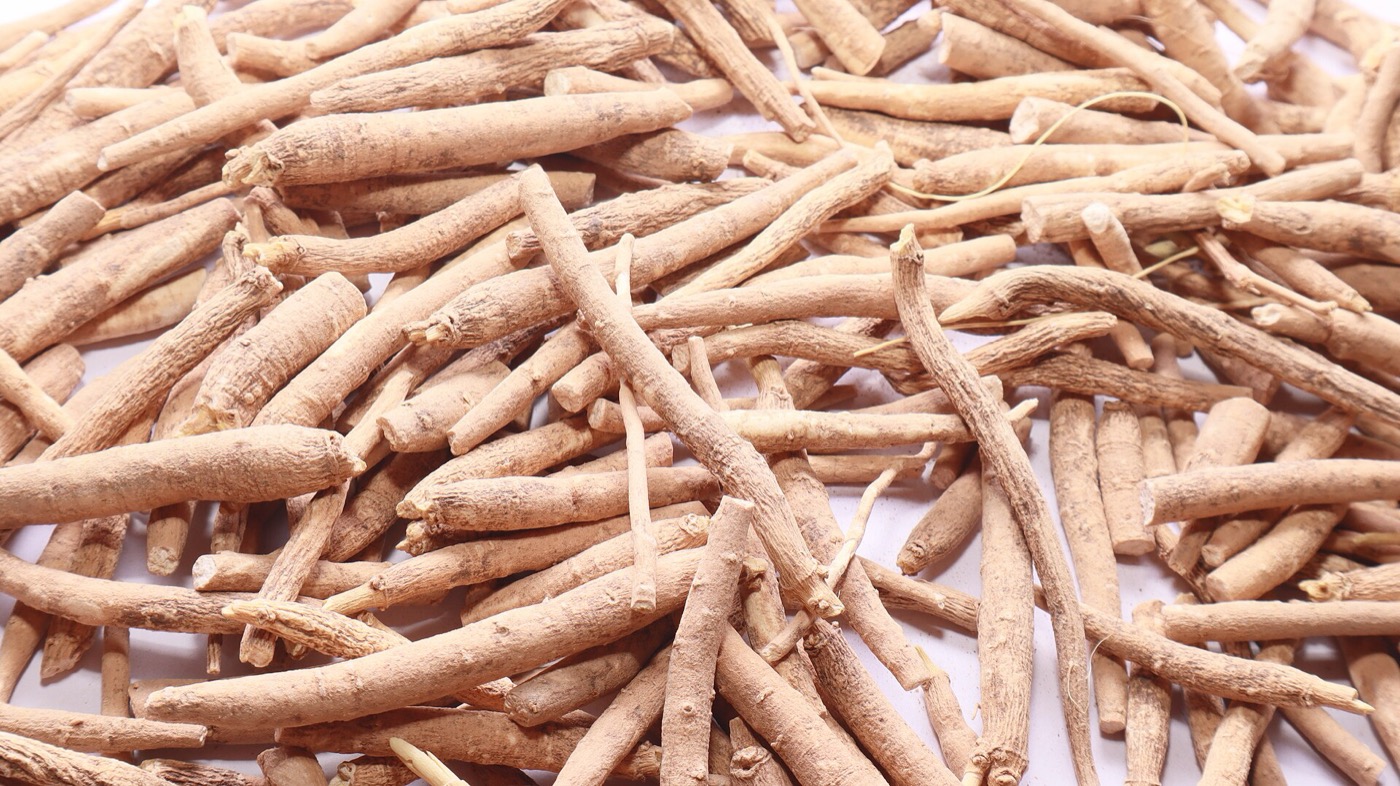 Graded, dried ashwagandha (Withania somnifera) roots, photographed November 20, 2018. Photo by Piyush Kothari, CC BY-SA 4.0, via Wikimedia Commons.
A 2026 review in Cureus gathered 25 published cases of ashwagandha-linked liver injury. Jaundice and itching were common, and most patients recovered after stopping. One needed a transplant. Three people who already had cirrhosis died.
In Kerala, doctors have tested the remedies themselves. At Rajagiri Hospital in Aluva, they analyzed 386 alternative medicine products taken by 91 patients treated for related harm from 2021 to 2023. Metals could be measured in 335 of them. Mercury exceeded WHO limits in 34 percent of those. Undeclared pharmaceutical drugs turned up in 27.7 percent of all 386. Patients who took unlabeled products were more likely to die.
Thirty-six patients developed acute-on-chronic liver failure, a sudden collapse in an already diseased liver. Of those, 38.9 percent died. The study appeared in March in Frontiers in Gastroenterology. It looked back at patients from one hospital who had already fallen ill. It cannot say how common contaminated products are on Indian shelves. Cyriac Abby Philips and colleagues wrote of "the urgent need for mandatory product surveillance."
Readers can ask a doctor about a liver blood test or a hepatitis B test. Cleveland Clinic names belly pain that does not go away, unintended weight loss and yellow eyes or skin as reasons to call a health care provider.
This article is general information, not medical advice. See a doctor about any liver symptom, and before starting any supplement or herbal product.



Comments
Loading comments…