Eat as You Wish, Pay as You Feel
From a vegetarian buffet in Malaysia to Michelin-starred kitchens in Mexico City, some restaurants let diners set the price. Some have done it for decades.
From a vegetarian buffet in Malaysia to Pakistani cooking in Vienna and Michelin-starred restaurants in Mexico City, a growing number of establishments are allowing customers to decide what their meals are worth. Some have been doing it for decades.
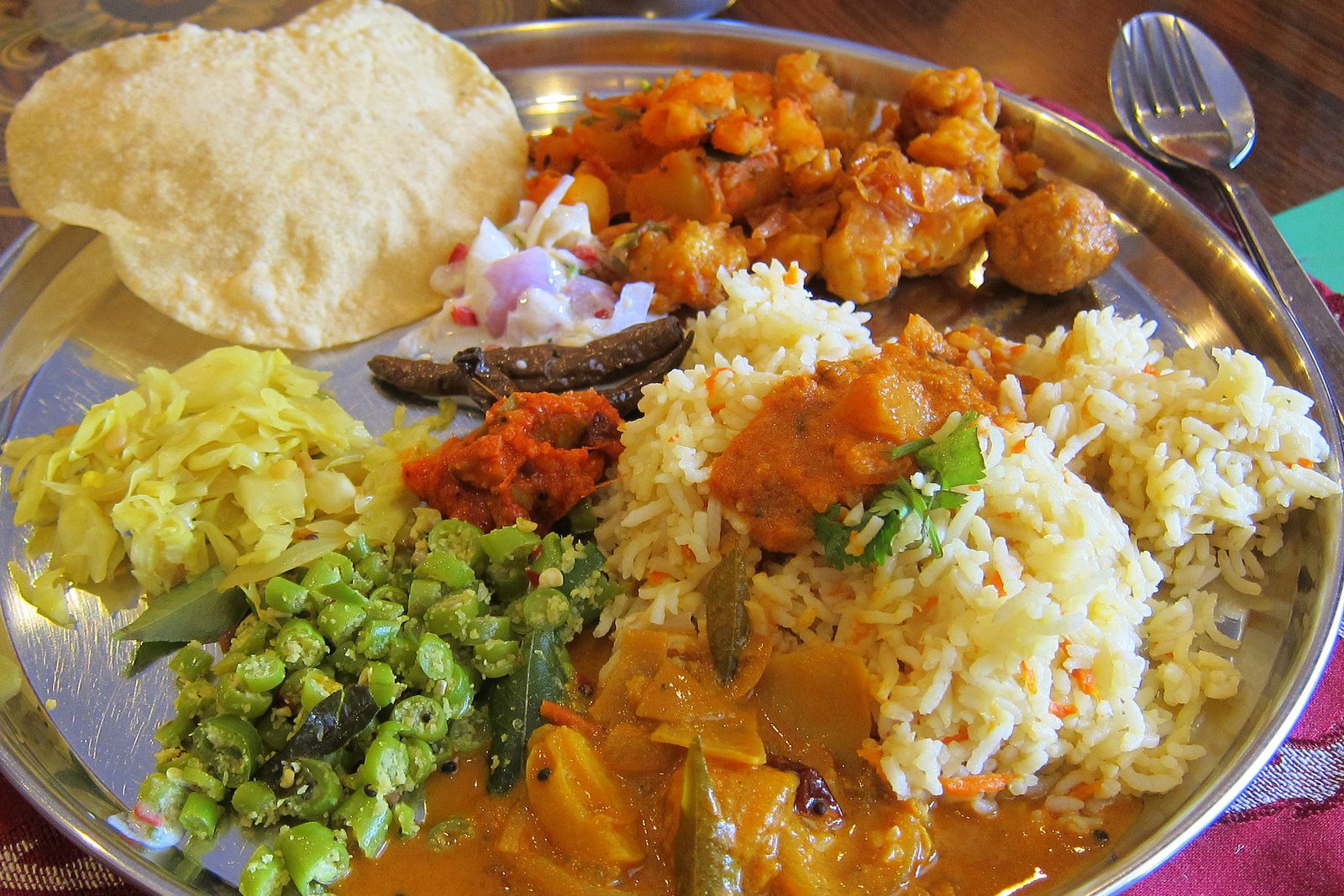
Top photo: A vegetarian thali at Annalakshmi in Johor Bahru, Malaysia, in June 2012, when the restaurant was on Jalan Ibrahim. Photo by Johor Haki, CC BY-SA 4.0 (cropped), via Wikimedia Commons.
At a vegetarian restaurant in Johor Bahru, Malaysia, diners help themselves to rice, sambar, okra curry, crisp papadums and dessert, then leave whatever they wish in a donation box. There are no fixed prices for the buffet, and the restaurant does not present a conventional bill.
I came across Annalakshmi, as the restaurant is called, in a social-media reel. The food was familiar to anyone who has grown up eating South Indian meals, but the payment arrangement caught my attention. Restaurants operate on carefully calculated margins, accounting for everything from cooking oil and vegetables to electricity, rent and wages. Here, the price of lunch was left to the customer.
I wondered how the arrangement worked in practice. Surely some people paid generously, while others left very little. What happened when the money collected fell short of the day's expenses?
As I began reading about Annalakshmi, I discovered that its origins stretched back four decades, to an Indian monk who had made Malaysia his home. Similar restaurants had survived for years in Austria, Australia and the United States, while a more recent experiment had brought the idea to dining rooms recognized by the Michelin Guide in Mexico City and San Francisco. The menus ranged from South Indian vegetarian food and Pakistani curries to American comfort food and elaborate tasting menus.
Annalakshmi's history begins with Swami Shantanand Saraswathi, an Indian spiritual teacher who arrived in Kuala Lumpur in 1971. Ten years later, he established the Temple of Fine Arts, an organization dedicated to preserving and teaching Indian classical music and dance. The institution began modestly, in a bungalow, and now occupies a five-story building in the city's Brickfields neighborhood.
According to an account preserved by Annalakshmi in Singapore, Shantanand had entered monastic life at sixteen when he received a meal from a stranger at the Kashi Annapurna Temple in Varanasi. The woman asked for nothing in return. The kindness stayed with him, eventually inspiring the idea of a restaurant where a person's ability to pay would not determine whether they could eat.
The first Annalakshmi opened in Bangsar, Kuala Lumpur, in 1984, three years after the Temple of Fine Arts was founded. Its name combines annam, the Sanskrit word for food, with Lakshmi, the Hindu goddess of prosperity and abundance. Its guiding principle was Atithi Devo Bhava, the ancient Indian expression that regards a guest as divine.
The enterprise grew largely through the efforts of volunteers, many of whom brought family recipes and years of home cooking experience into its kitchens. Branches eventually appeared in Singapore, Johor Bahru, Penang and several Indian cities, although their payment arrangements have since evolved differently.
Singapore's Annalakshmi, which opened in 1986, initially charged fixed prices before adopting the pay-as-you-wish model in 2001. Today, it serves a home-style Indian vegetarian buffet at Downtown Gallery, in the city's financial district, where office workers and other diners can decide what to contribute. Groups of eight or more must make a fixed contribution, while a separately priced café and catering services provide additional income.
The organization also supports charitable programs. In 2020, as the pandemic disrupted ordinary dining, Annalakshmi in Singapore provided more than 50,000 meals to migrant workers, along with food assistance for elderly residents and families in need.
The Johor Bahru restaurant that appeared in the reel operates from a house on Jalan Dapat. It moved there in 2015 from Jalan Ibrahim, where it was serving by 2012. It serves lunch on weekdays, from 11 a.m. to 3 p.m., according to a March 2026 guide. A donation box, rather than a cashier calculating the price of every plate, remains part of the dining experience.
For Indian readers, the practice of feeding people without charging them has a familiar precedent in the Sikh tradition of langar. At the Golden Temple in Amritsar, volunteers prepare vast quantities of dal, vegetables and chapatis, feeding tens of thousands of visitors daily, with the number sometimes reaching 100,000 or more. People sit together in rows, sharing food served on steel plates, without distinctions of caste, religion or income.
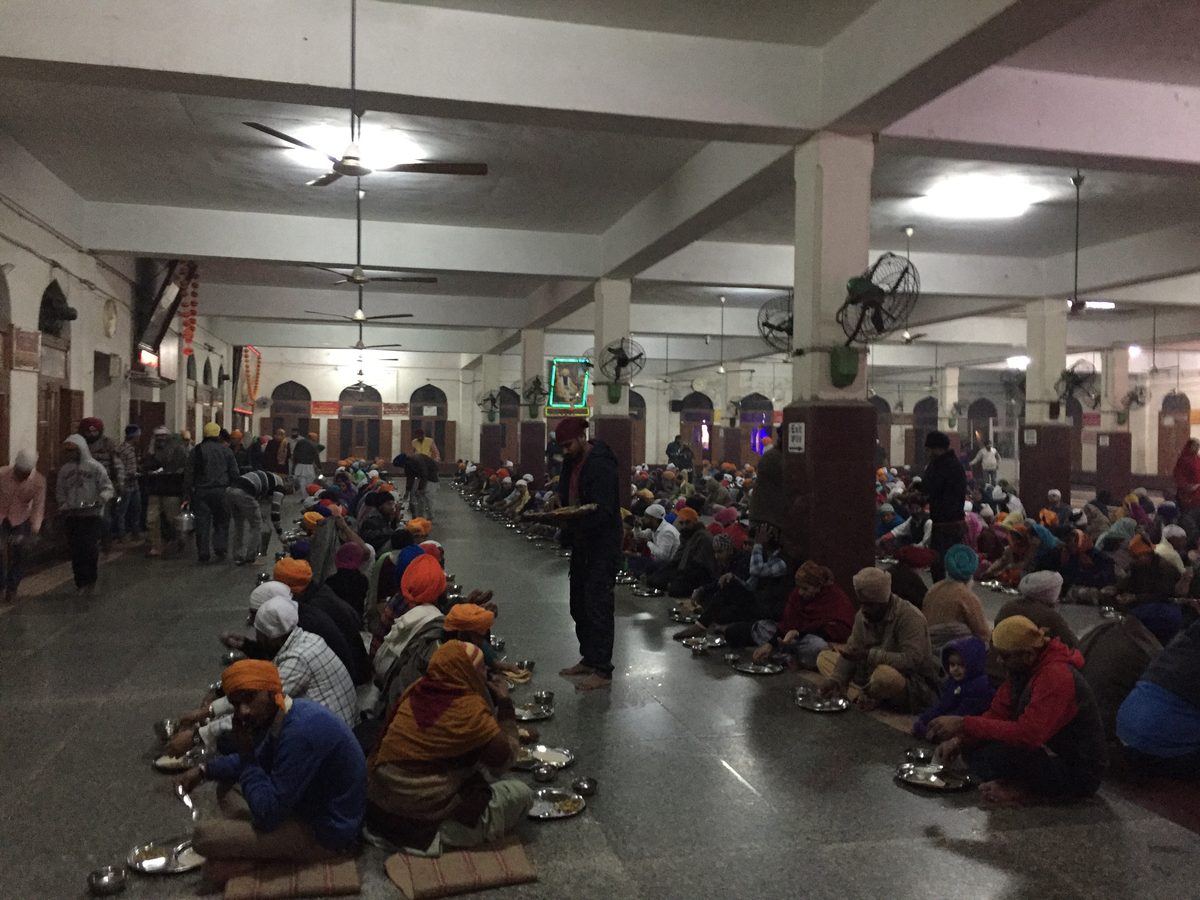 Visitors eat in rows at the Guru Ram Das Langar, the community kitchen and dining hall of the Golden Temple complex in Amritsar, in 2017. Photo by shankar s., CC BY 2.0, via Wikimedia Commons.
Langar, which originated with Guru Nanak and was institutionalized by Guru Amar Das, is sustained by voluntary donations and seva, or service. Annalakshmi belongs to a different religious tradition and invites contributions rather than offering an entirely free meal, but both draw upon the belief that hospitality carries obligations beyond the exchange of money. In many Indian households, food offered to a visitor is still understood as an expression of welcome rather than a transaction.
The next restaurant I encountered was in Vienna, where two people with roots in different countries had built a business around the food and traditions of hospitality familiar across much of the Indian subcontinent.
Der Wiener Deewan opened in April 2005, founded by Afzaal Deewan, who had arrived in Austria from Pakistan seeking asylum, and Natalie Deewan, then a student of languages and philosophy. They put their own savings into the restaurant and served a buffet of Pakistani dishes: dal, basmati rice, meat and vegetable curries, bread and sweets. Customers could eat their fill and decide how much to pay for the food, although drinks were priced separately.
The restaurant drew students, office workers, tourists and regulars, eventually attracting the attention of two economists, Gerhard Riener and Christian Traxler. They examined more than 80,000 payments made over two years, hoping to understand how people behaved when they could determine the price of something they had already consumed.
Only 0.5 percent of the recorded payments were zero.
Almost everyone paid something, even though the restaurant allowed them to eat without doing so. The researchers traced payments to social norms among regular guests, and even to the weather. People appeared reluctant to take full advantage of the freedom they had been given, although their reasons were not necessarily charitable. Paying nothing in a restaurant, particularly when others are paying, may carry its own discomfort.
The findings challenged the assumption that customers, offered something for nothing, would inevitably choose to pay nothing. Der Wiener Deewan has now operated for more than twenty years, long enough for its unconventional pricing to become an accepted part of the dining experience.
Across the Atlantic, American restaurants have developed variations that allow customers to contribute labor or produce instead of money. SAME Café, which opened in Denver, Colorado, in 2006, serves pizza, soups, salads and other dishes made with locally sourced ingredients. Its name stands for So All May Eat. Those who cannot afford lunch can volunteer for half an hour or donate fresh produce, while customers with money are invited to contribute what they can.
At A Place at the Table in Raleigh, North Carolina, the menu offers the comforts of an American café—waffles, biscuit sandwiches, salads and sandwiches—but the payment system is flexible. Customers may pay the suggested price, make a smaller contribution or volunteer in exchange for a meal. Founder Maggie Kane, who opened the café in 2018, wanted people of different economic circumstances to share a dining room without being separated into those receiving help and those providing it.
In New Jersey, JBJ Soul Kitchen, established by Dorothea Bongiovi and associated with the Jon Bon Jovi Soul Foundation, takes a similar approach to a three-course restaurant meal. Guests who can afford to pay are encouraged to contribute enough to help cover someone else's food, while those who cannot are welcomed and invited to participate through volunteering. Since the first location opened in 2011, the organization has served more than 275,000 meals.
An English café near Durham has approached the problem from another direction. At REfUSE Café in Chester-le-Street, volunteers collect surplus ingredients from supermarkets and other businesses, preparing soups, quiches, curries and cakes from food that might otherwise have been discarded. The menu changes according to what arrives in the kitchen, and customers pay what they feel, in money or through contributions of time and skills. About eight metric tons of food are rescued each month, much of it still perfectly edible but no longer commercially useful to the businesses discarding it.
For years, such arrangements were associated mainly with community cafés and nonprofit kitchens. Volunteers kept labor costs down, donations helped pay the bills, and the food was generally inexpensive to prepare. A rather different version has emerged in Mexico City, where restaurants with international reputations have been experimenting with flexible pricing.
Masala y Maíz, founded by chefs Norma Listman and Saqib Keval, has earned a Michelin star for cooking that draws on Mexican, Indian and East African culinary traditions. Its food reflects histories of migration and cultural exchange, combining ingredients and techniques that have traveled across continents and found new expressions in Mexican kitchens.
Listman and Keval were concerned about the growing expense of dining out in Mexico City, where gentrification and rising costs have placed some celebrated restaurants beyond the reach of people living in their own neighborhoods. They began experimenting with days when customers could order from the regular menu and pay according to their means.
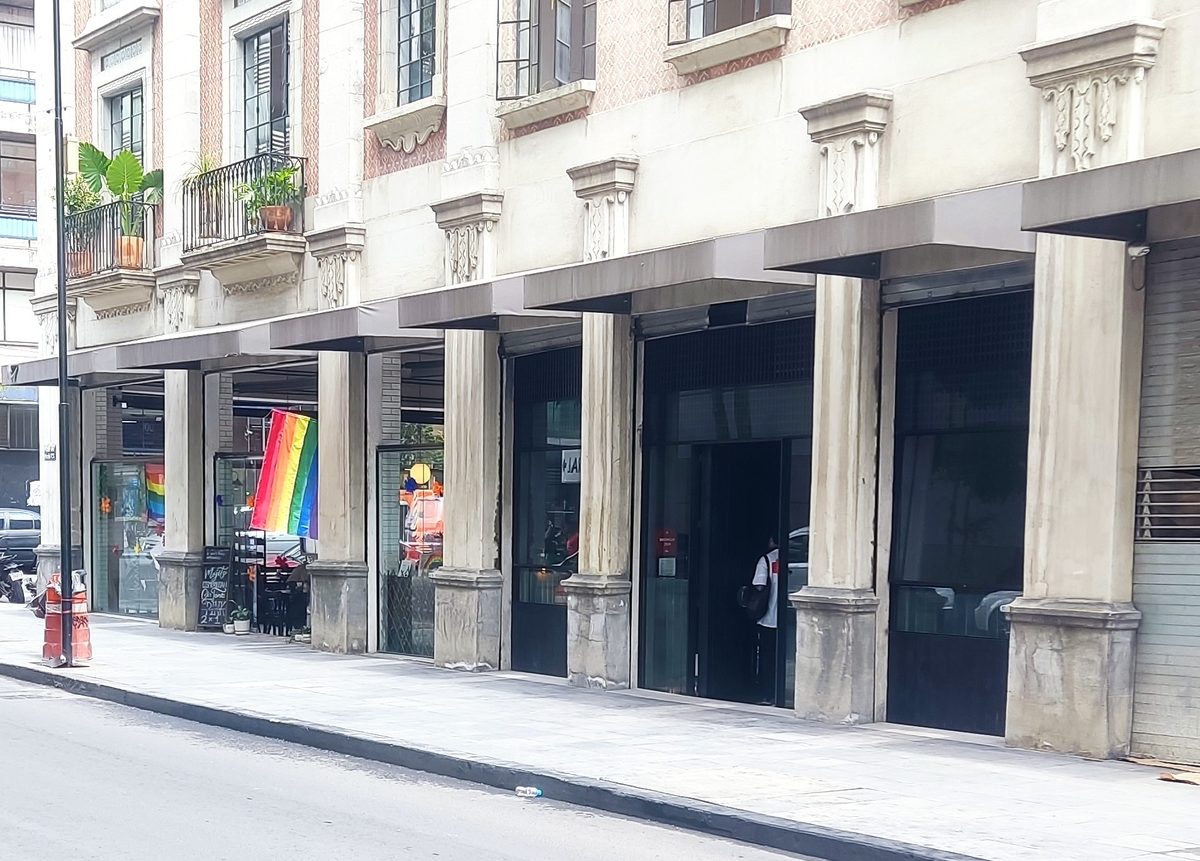 The street front of Masala y Maíz on Calle Artículo 123 in Mexico City's historic center, June 2025. Photo by Tbhotch, CC BY-SA 4.0, via Wikimedia Commons.
In August 2026, the idea became an international event. More than 100 restaurants across more than a dozen countries participated in Paga Lo Que Puedas, or Pay What You Can, on August 26, serving their usual food while allowing diners to choose what they could afford to contribute.
The participating restaurants offered an extraordinary range of culinary traditions. Albi, the Michelin-starred Palestinian restaurant in Washington, D.C., joined the initiative, as did Kamayan, known for Filipino food in Atlanta. In Oakland, Reem's California brought its Arab breads and cooking traditions to the event. El Padrino, a taco counter in Lagos, Nigeria, participated, while Piedra, a restaurant in Lima, Peru, also took part. Restaurants in Brazil, India, Turkey and several European countries joined the effort.
At most of them, regular menu prices returned the following day. Customers who might never have considered eating at some of these establishments had nevertheless been offered an opportunity to experience their cooking without the usual financial commitment.
In San Francisco, Merchant Roots, a restaurant known for elaborate tasting menus that ordinarily cost around $238 per person, has taken up the idea. In July 2026, chef-owner Ryan Shelton said he planned to set aside the first Tuesday of each month for a pay-what-you-want dinner.
For a restaurant like Merchant Roots, a monthly event can introduce its cooking to new customers without requiring a complete change in how the business operates. At SAME Café in Denver, or Annalakshmi in Malaysia, the calculation must work day after day, through changing food prices, fluctuations in donations and the ordinary uncertainties of running a kitchen.
Some of the best-known ventures have struggled to maintain that balance. In Melbourne, Lentil as Anything became one of Australia's most celebrated pay-as-you-wish restaurants after opening in 2000. Its vegetarian food attracted students, artists, travelers and people living on limited incomes, and the organization eventually expanded to several locations. The restaurants developed loyal followings, but financial problems and allegations of mismanagement mounted over the years, and the organization went into administration in February 2022, leaving staff owed more than $369,000 in unpaid wages.
That same year, Annalakshmi on the Swan, a much-loved vegetarian restaurant overlooking the waterfront in Perth, closed after the pandemic left it struggling with debts. Panera Bread's American experiment with pay-what-you-can cafés, known as Panera Cares, had also ended.
The difficulties at these establishments arose from different circumstances. Lentil as Anything faced management and financial problems, while the pandemic placed extraordinary pressure on restaurants everywhere. Voluntary payments added another uncertainty to businesses already exposed to rising costs, fluctuating customer numbers and the challenge of retaining staff.
The establishments that have survived longest tend to draw support from sources beyond their dining rooms. Annalakshmi benefits from its association with the Temple of Fine Arts and income from other dining services. SAME Café operates as a nonprofit, relying on donations, volunteers and community support. JBJ Soul Kitchen draws on its foundation's fundraising network.
These arrangements require careful management, particularly when some customers are unable to contribute financially. Ingredients still have to be purchased, equipment repaired, rent paid and kitchens staffed. The cost of one person's lunch may ultimately be covered by a stranger who pays extra, a volunteer who contributes an hour of work or a donor who supports the restaurant without ever eating there.
The restaurants have found different ways to make that possible. Annalakshmi's history stretches back more than forty years, Der Wiener Deewan has passed its twentieth anniversary, and SAME Café celebrated the same milestone in October 2026. Between them, they have served countless meals to people whose financial circumstances must have varied enormously.
I returned to the reel from Johor Bahru after reading about them. The buffet looked much as it had the first time: generous helpings of rice, sambar and vegetables, served without ceremony in a modest dining room. The appeal of the food was immediate, especially to anyone who had grown up eating such meals.
What now held my attention was the donation box. I had begun by wondering how many people might take advantage of a restaurant that allowed them to pay almost nothing. After reading about kitchens that had survived for decades on similar arrangements, I found myself thinking about all the people who must have paid enough to keep them going, including those who had quietly contributed toward the cost of a stranger's lunch.




Comments
Loading comments…