Dussehra on four plates: what Bengal, Jharkhand, Gujarat and Tamil Nadu cook
Sonia Sharma follows the festival's last day through Kolkata, Jamshedpur, Ahmedabad and Chennai, with the trade routes behind the food and two home recipes you will not find in a sweet shop.
Column
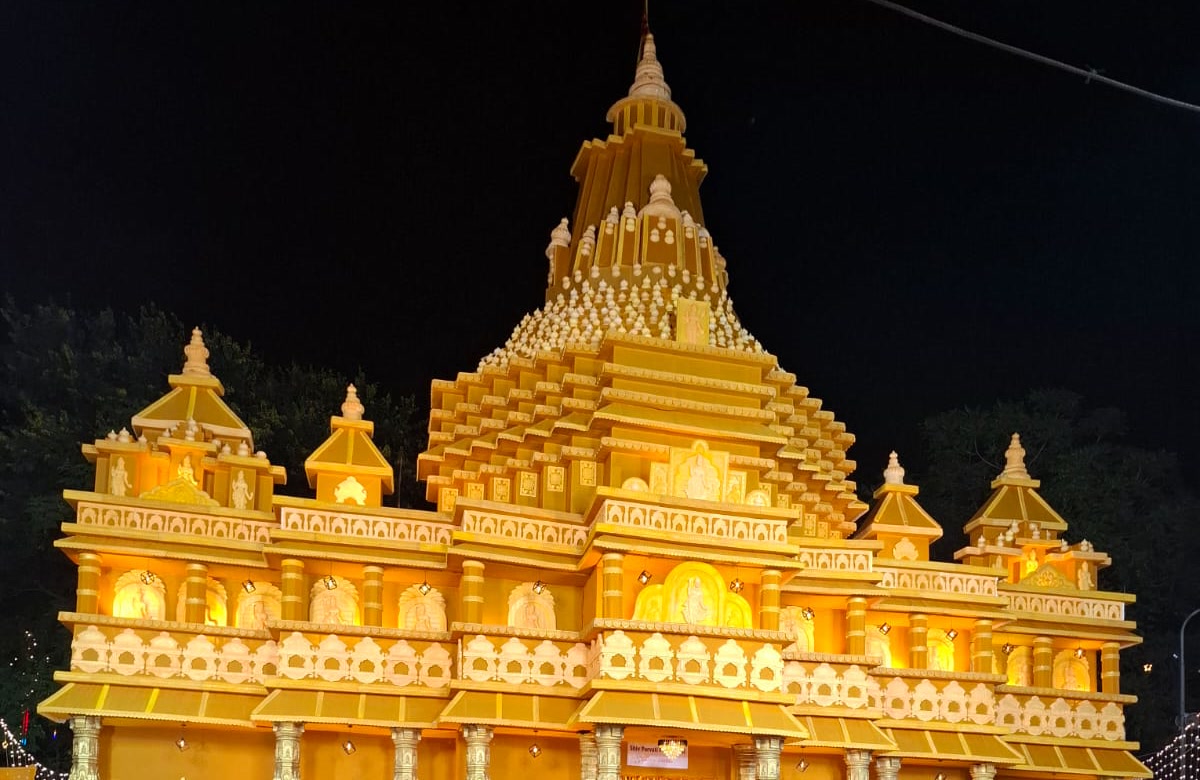
Top photo: a Durga Puja pandal in Jamshedpur, built in the style of a temple and lit gold for the festival, on October 18, 2026. Photo by S.C. Baranwal, used with permission.
Dussehra falls on Tuesday, October 20, by Drik Panchang's calendar. Bengal keeps its Bijoya Dashami a day later, on Wednesday. Four states cook four different menus.
In Bengal the day means coconut sweets for visitors. Gujarat queues for fafda and jalebi at breakfast. Tamil homes hand out sundal beside the Golu dolls, and Jamshedpur sends hundreds of goddesses into two rivers.
In Bengal the goddess goes home on Bijoya Dashami, and the house fills with people. Married women offer sindur and sweets to Durga before the immersion. They then smear the vermilion on each other in sindur khela. Then come the visits, the pranaam to elders, and sweets for everyone who calls.
 Women play sindur khela at a Durga Puja in Kolkata on October 13, 2024. Photo by Goutam1962, CC BY-SA 4.0, via Wikimedia Commons.
The sweet that belongs to the day is narkel naru. It is grated coconut cooked down with jaggery and rolled into balls. The food channel Bong Eats says few sweets mark Bijoya the way naru does. Beside it sits nimki, small salty diamonds of fried dough served with sweets at Bijoya, Archana's Kitchen notes.
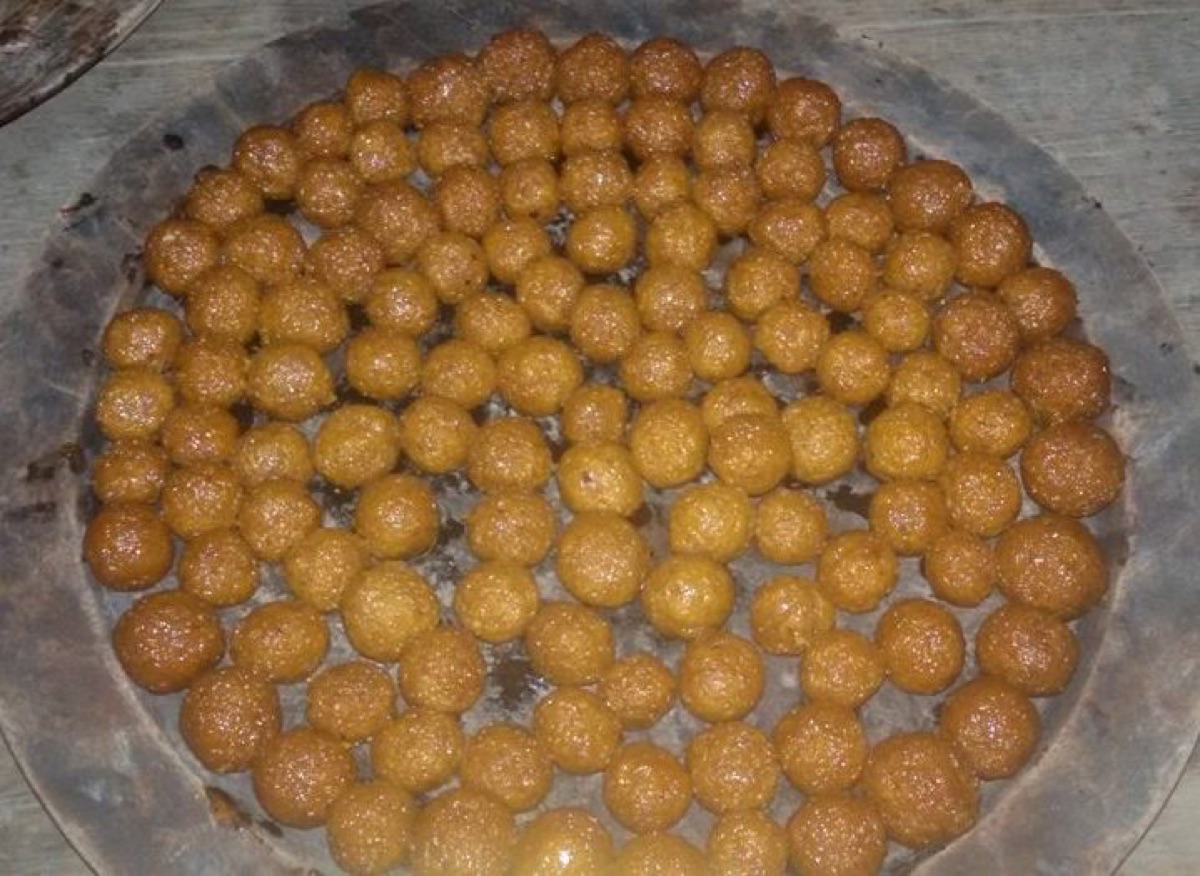 Narkel naru, made with coconut and gur, uploaded in 2015. Photo by Amitbsws, CC BY-SA 4.0, via Wikimedia Commons.
Bengal's sweet shops are a different story, and a travelled one. Sandesh and rosogolla are built on chhena, milk split with acid. Curdling milk was long counted inauspicious, Live History India notes. The site credits Portuguese settlers on the Hooghly with the technique. Others point to the 12th-century Manasollasa, which describes souring milk to make chhena, according to Wikipedia. The case is still open.
Jamshedpur keeps the festival between two rivers. The steel city stands where the Subarnarekha meets the Kharkai, on the site of a village called Sakchi that was renamed Jamshedpur in 1919, according to Wikipedia. In 2011, 19.1 percent spoke Bengali.
In 2024 the city had about 320 pandals, and 320 idols went into the water at 12 ghats on the two rivers, 123 of them on the Subarnarekha, Avenue Mail reported. Married women first smeared her with vermilion. In Sonari, the Ram Mandir committee burned a 50-foot Ravan, a custom it has kept since 1958.
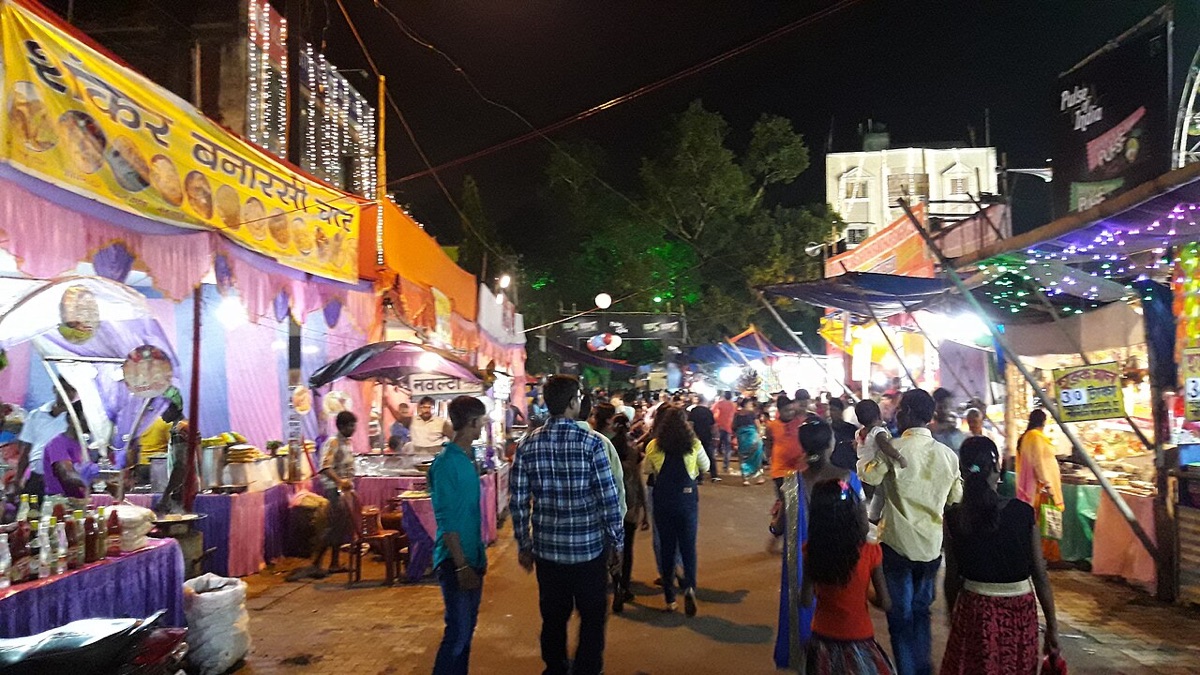 A Durga Puja fair in Jamshedpur on October 7, 2016. Photo by Mohitjamshedpurian, CC BY-SA 3.0, via Wikimedia Commons.
The bhog at Bengali pandals runs to khichuri, labra, fried vegetables, chutney and payesh, Gulf News noted. At home the plate is simpler. The Jamshedpur food blogger Wagisha marked the last day of Navratri in 2024 with puri and black chana, her Instagram post shows. The festival also has a Santal side. From the seventh day of the puja, Santal dancers go from home to home with drums for Dasain, searching for two lost lovers named Durga and Devi, WION reported.
Gujarat answers the question before anyone asks it. On Dussehra morning, the queue is for fafda and jalebi. Fafda is crisp strips of gram flour, and the jalebi is the sweet coil on the side. In 2020, with Navratri called off for the pandemic, Sabarmati still lined up for "Fafda, Jalebi and Cholafali," DeshGujarat reported. The queues held.
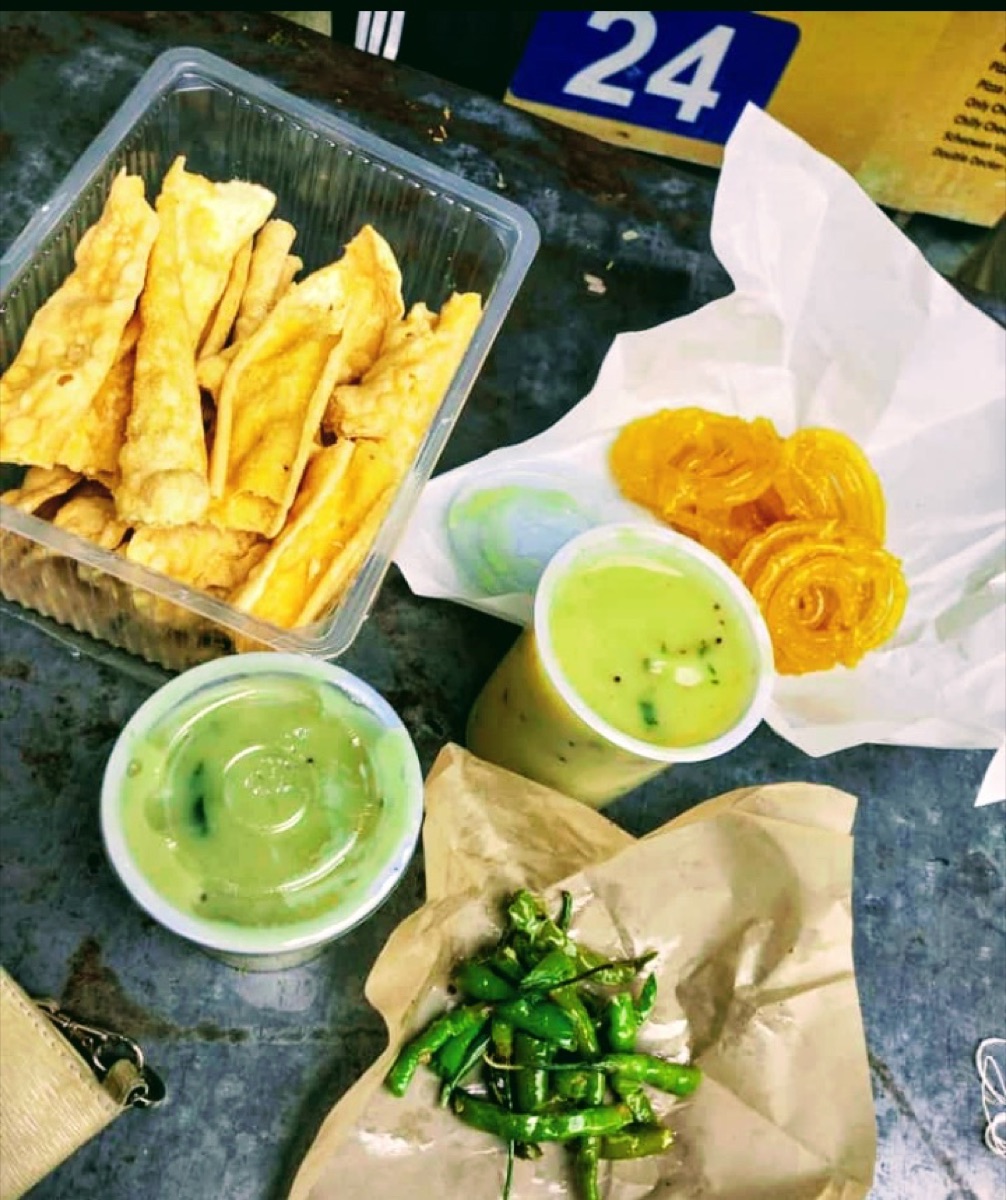 Fafda and jalebi with chutney in Surat, July 2020. Photo by बृहस्पति, CC BY-SA 3.0, via Wikimedia Commons.
The jalebi, though, has paperwork. Its ancestor is zalabiya, lattice fritters soaked in syrup. The 10th-century Baghdad cookbook of Ibn Sayyar al-Warraq, the Kitab al-Tabikh, records it, according to Wikipedia. By about 1450 a Jain text, Jinasura's Priyamkaranrpakatha, serves jalebi at a rich merchant's dinner.
Even the syrup travelled. The English word "sugar" came through Persian and Arabic from the Sanskrit sharkara, Etymonline notes. It first meant grit or gravel.
In Tamil homes, Navaratri means the Golu, steps of dolls arranged from gods at the top to village scenes below. Neighbours come every evening to see it. Every evening there is sundal, too. It is boiled chickpeas or other pulses, tempered with mustard seed and curry leaves and finished with coconut. Swasthi of Indian Healthy Recipes says many South Indian temples offer it to the deities.
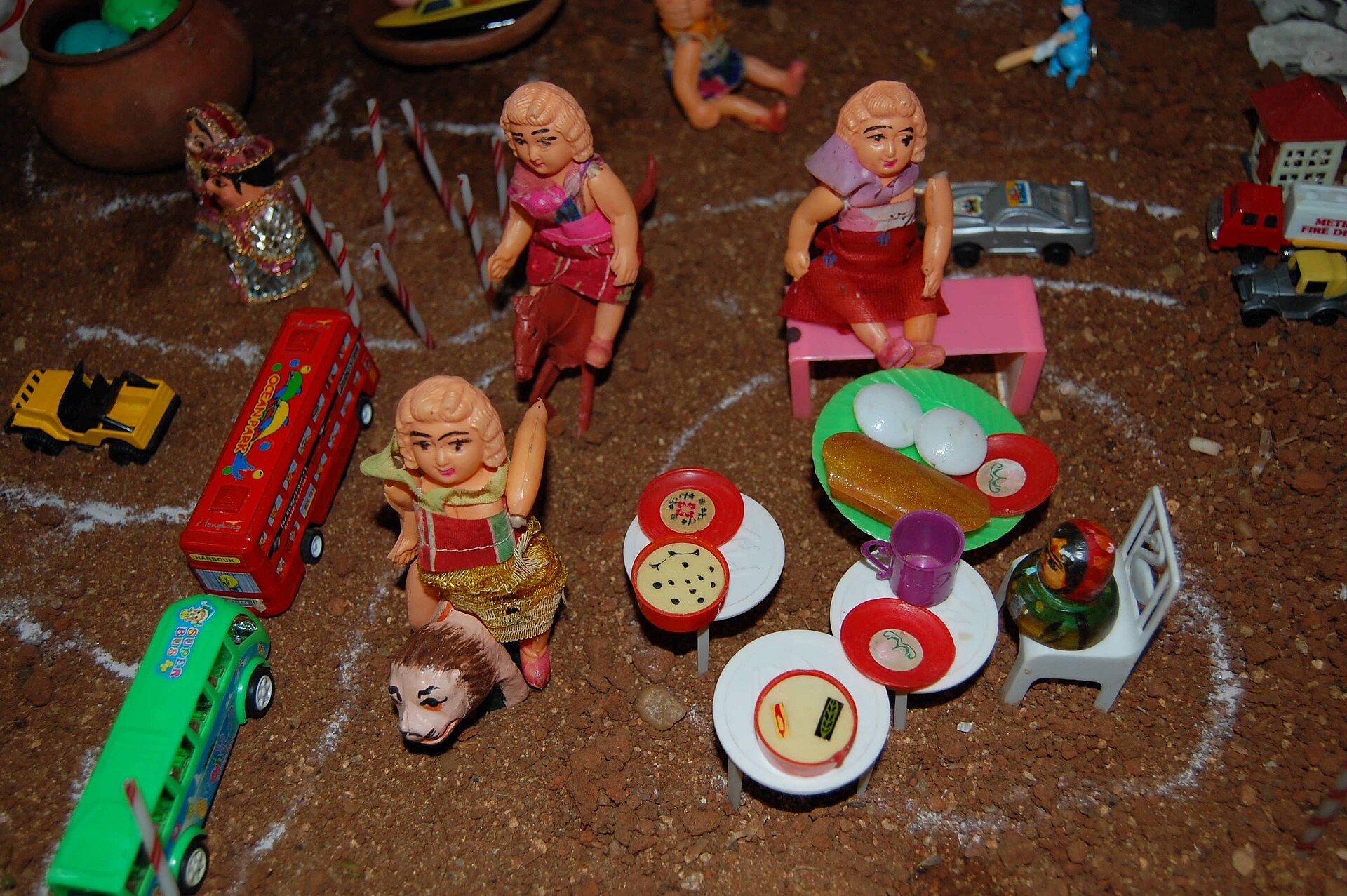 A Navaratri Golu in a home in South India, October 2008. Photo by GoDakshin, CC BY-SA 2.0, via Wikimedia Commons.
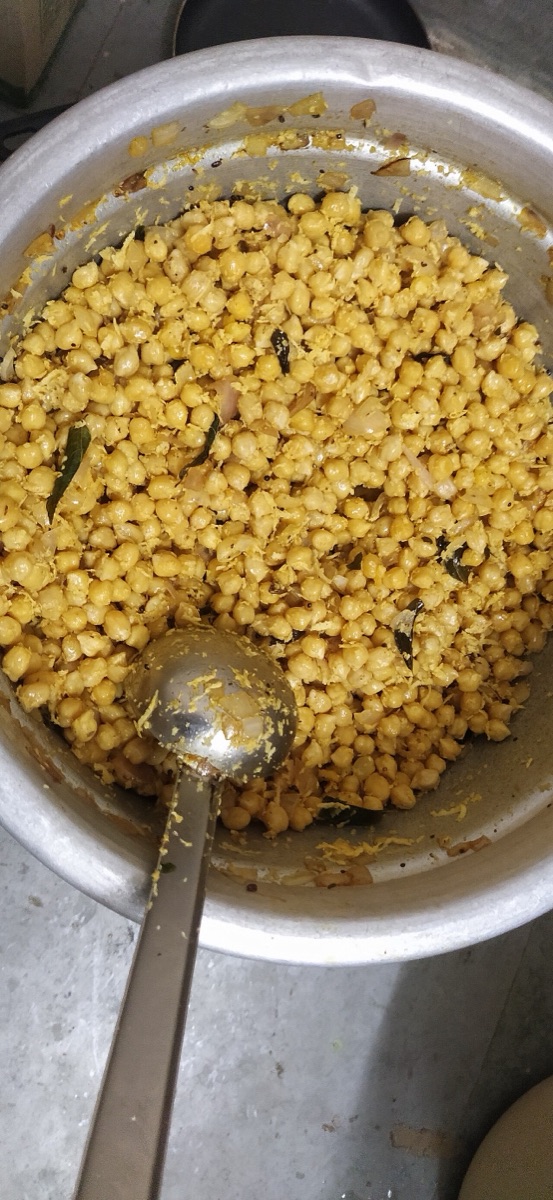 Sundal with puffed rice in Salem, Tamil Nadu, October 2023. Photo by Madhavan M murugaiyan, CC0, via Wikimedia Commons.
The chickpea in that packet is a migrant too. It was domesticated about 10,000 years ago in what is now Turkey and Syria, and it was grown at Indian sites such as Inamgaon and Daimabad by about 1750 to 1500 BCE, Wikipedia's entry notes. India grew three-quarters of the world's chickpeas in 2023.
One visitor saw the festival at its grandest. Domingos Paes, a Portuguese horse trader, watched the Mahanavami at Vijayanagara around 1520. The king "fasts all these nine days," he wrote, in Robert Sewell's translation, A Forgotten Empire. Each day they ate nothing until everything was finished. Dinner came at midnight.
The sweet shop will sell you jalebi and sandesh any day of the year. These two are mostly made at home, around this festival, and rarely sold.
Elo jhelo, from Bengal, is a twisted, layered fried snack made for Durga Puja and Bijoya Dashami, Kankana Saxena writes on Playful Cooking. The recipe below follows hers. Some families, as Debjani's Kitchen shows, dip the fried pieces in sugar syrup.
- 1½ cups all-purpose flour (maida)
- 1 teaspoon salt
- 1 teaspoon sugar
- 1 teaspoon nigella seeds (kalonji)
- 2 tablespoons ghee
- Water, as needed
- Oil for deep frying
Combine the flour, salt, sugar and nigella seeds. Work in the ghee with your fingertips until the mix looks like coarse crumbs. Add water a little at a time and knead to a firm dough. Fold it over itself a few times so it fries in layers. Cover it with a damp cloth for 30 minutes.
Pinch off small balls and roll each into a thin oval. Cut even lengthwise slits through the middle, leaving about a quarter inch uncut at each end. Twist the strip gently, press the ends to seal, and fry in medium-low oil until golden all over. Drain on a rack and let them cool fully before you store them.
Vella puttu, from Tamil Nadu, is steamed rice flour bound with jaggery, which Jeyashri Suresh's family makes on the Fridays of Navaratri, according to her recipe on Jeyashri's Kitchen. It serves two.
- ¼ cup raw rice (or ¼ cup rice flour)
- ¼ cup jaggery
- ½ teaspoon ghee and a few cashews
- 2 tablespoons grated coconut
- A pinch each of cardamom powder, turmeric and salt
- A tiny pinch of edible camphor (optional)
Soak the rice for 30 minutes, drain and dry it on a cloth. Then grind it to a fine powder and sieve it. Dry-roast the flour in a pan until it turns a pale brown and smells toasty. Stir the turmeric and salt into a little water and sprinkle it over the flour. Rub it in with your fingers until it feels like damp sand and holds when pressed. Steam it, wrapped in a cloth, for 10 to 15 minutes, then crumble it fine.
Melt the jaggery in ¼ cup of water and boil it to the hard-ball stage. A drop in cold water should set firm. Pour the syrup over the steamed flour and mix well. Fry the cashews in the ghee and fold them in with the coconut, cardamom and camphor.
I would start with the vella puttu, which needs only a steamer. Bengal's Bijoya Dashami falls on Wednesday, October 21. That leaves a day to fry the elo jhelo.


Comments
Loading comments…