Ladakh's pashmina walks in Delhi, and the FTC has a word for shoppers
Four Ladakhi labels showed pashmina on the last day of Lakmé Fashion Week in Delhi. Before you buy one in America, know what the label is allowed to say.
Column
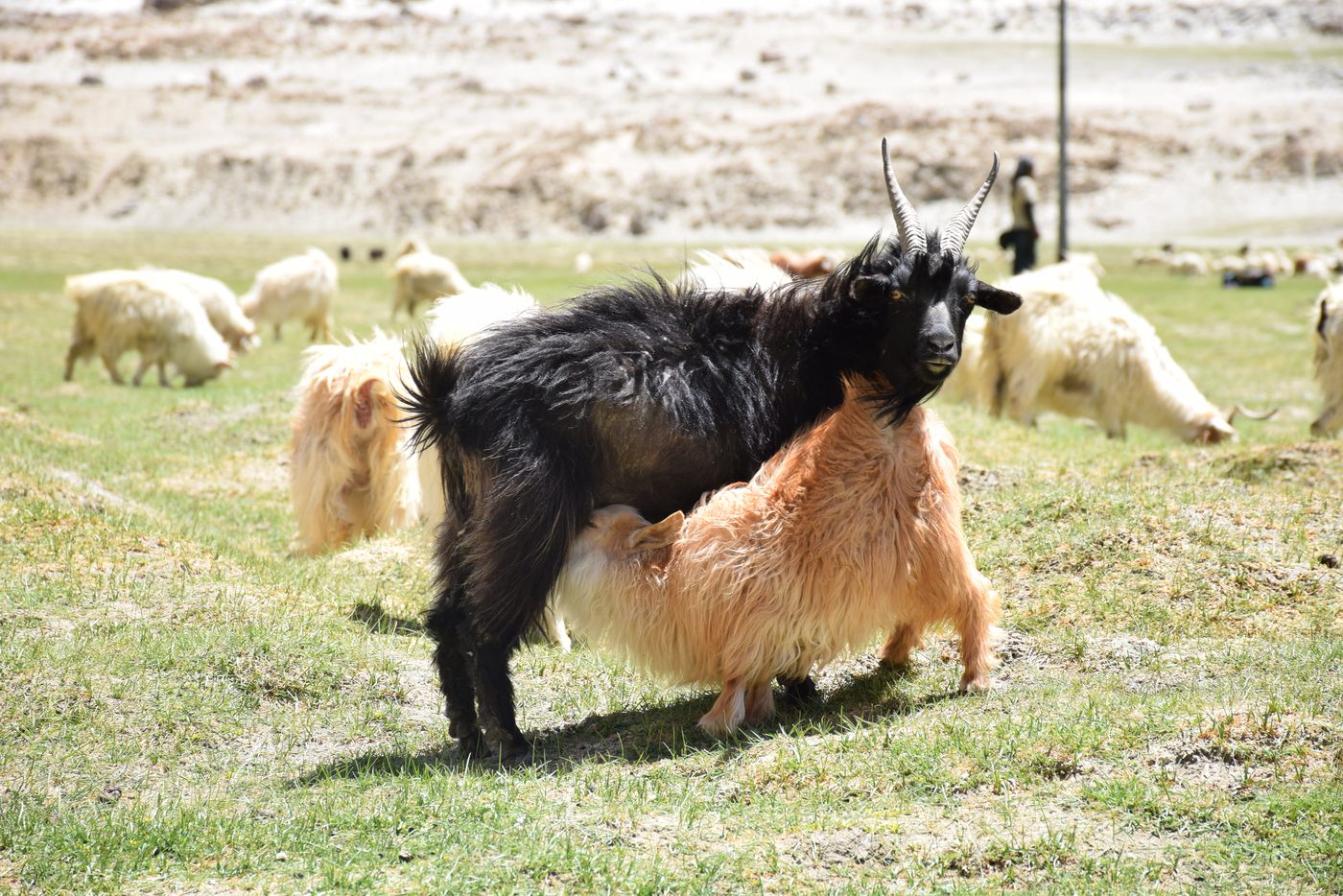
Top photo: a Pashmina goat feeds her kid on a pasture in Ladakh, June 2016. Photo by Rahul Ajmera, CC BY-SA 4.0, via Wikimedia Commons.
Lakmé Fashion Week's last day in New Delhi, on Sunday, made room for a show about goats. At the Taj Palace, the Ladakh government's industries department staged a showcase called "The Fifth Season: A Fashion Story from Ladakh," according to the Kashmir Observer. Its subject was pashmina, from pasture to ramp.
Four Ladakhi labels took part. Padma Yangchan's Namza opened with 18 looks that put brocade beside pashmina, according to the Kashmir Observer and the Daily Excelsior. The department's preview had billed Zilzom to open.
Stanzin Palmo's Zilzom sent out 18 more, printed with silks she designed after Changthang's landscapes. Changra Ladakh, run by Deskit Angmo, and Rigzin Yangdol's Charkha Ladakh showed handspun, handwoven shawls, the Excelsior reported. The showstopper was Shalini Passi, in a Zilzom gown.
Diwali falls on November 8 this year, and many families will give or wear a shawl. The word "pashmina" sells $1,268 shawls, and scarves whose fibre you can only guess at. In the United States, the law limits how that word can be used.
The money behind the show was public. The Department of Industries and Commerce of the Union Territory of Ladakh organised it under the Union MSME ministry's RAMP scheme, with the Fashion Design Council of India's support, the Excelsior reported.
"Pashmina is the soul of fashion here," said Ashish Kundra, Ladakh's chief secretary, in the department's press release. Himanshu Gupta, the territory's industries secretary, said the showcase takes Ladakh's pashmina "to wider audiences." FDCI's chairman, Sunil Sethi, framed it as fashion that keeps "craftsmanship and the communities behind it at the centre."
That community is the Changpa. These herders raise Changra goats on pastures nearly 14,000 feet above sea level, the Excelsior noted.
India's tourism ministry, on its Leh shopping page, calls Ladakhi pashmina "exceptionally high-grade cashmere" from the goats' soft underbelly. Kundra's press release spoke of wool "combed with love by the pastoralists."
Lieutenant Governor Vinai Kumar Saxena joined by video and asked for craft to be tied to entrepreneurship and wider markets, the Kashmir Observer reported. A Ladakh Pashmina Conclave on October 23 and 24 expects more than 50 stalls and over 100 entrepreneurs and buyers, the Excelsior reported. The paper did not say where.
Other labels leaned on craft too. Tasva by Tarun Tahiliani reworked the wedding sherwani, with the actor Ali Fazal as showstopper. Anurag Gupta built a collection on water hyacinth, rooted in his hometown of Biskohar in Uttar Pradesh. TIL, led by the designer Ankur Verma, stitched a collection out of discarded threads and fabric remnants.
In Open magazine, Shailja Tiwari asked in her headline whether Indian fashion is really reinventing craft. She asked whether water-hyacinth production can generate reliable incomes. Sorting discarded fabric for reuse, she noted, takes considerable labour. No report answered that for Ladakh.
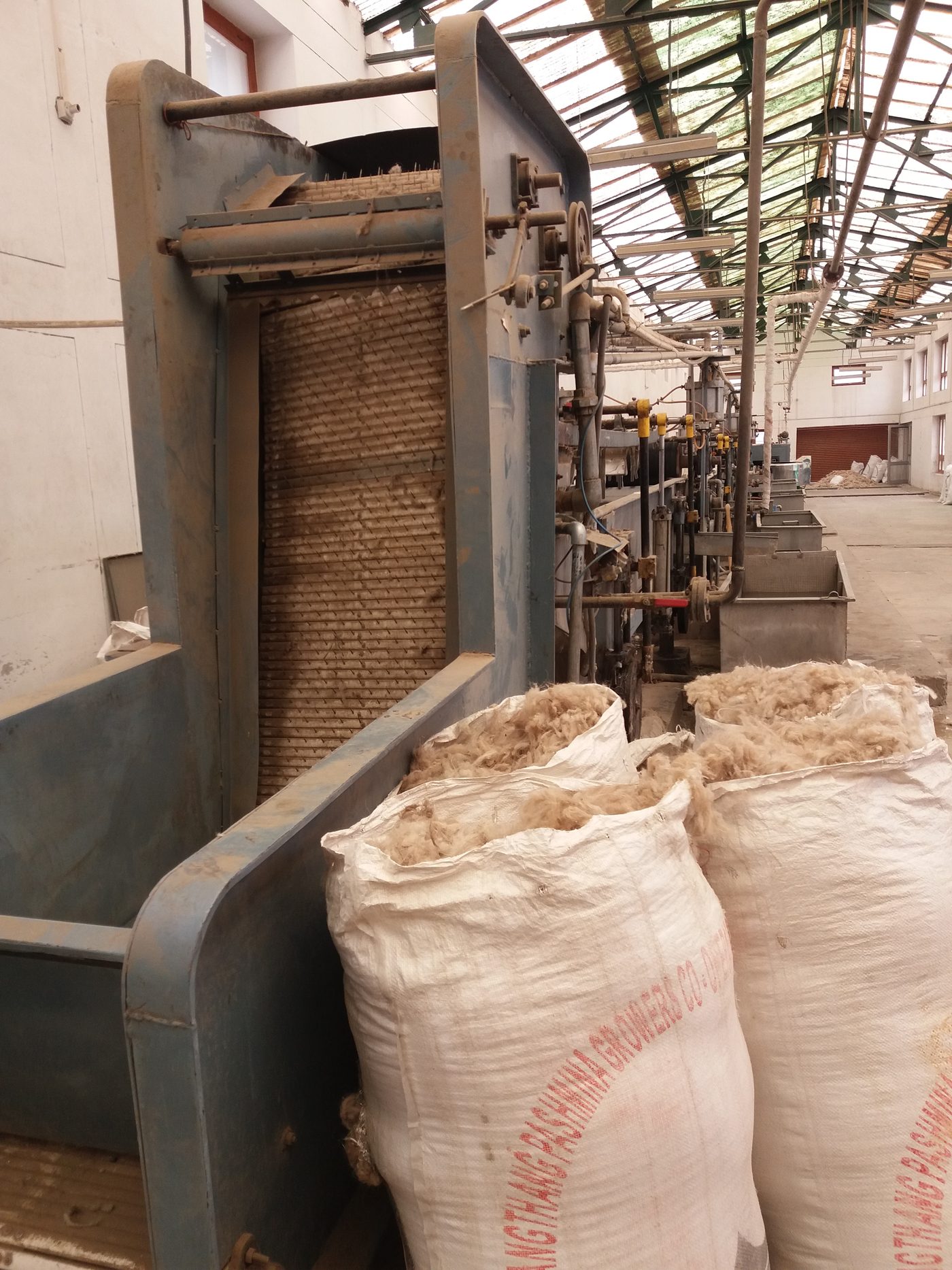 Sacks of raw pashmina fibre, printed with the name of a Changthang growers' co-operative, beside a processing machine in Leh, Ladakh, August 2018. Photo by Yann Forget, CC BY-SA 3.0, via Wikimedia Commons.
It was not clear from any report how much a Changpa herder earns from a kilogram of raw fibre. Nor did the organisers say what the four labels sold.
The nearest thing to a livelihood figure comes from a cooperative in Leh. Village Square reported that its sales reached Rs 42 lakh (4.2 million rupees) in the first ten months of 2023-24, up from Rs 34 lakh in all of 2022-23. A third of revenue goes to members, it said.
That cooperative is Looms of Ladakh, founded in 2017. Village Square's Unnati Sharma reported in January 2025 that it had 427 artisans across 16 villages. Its co-founder, Abhilasha Bahuguna, said, "Ecology is at the heart of everything we do." Its shop sits in downtown Leh, according to the tourism ministry's guide.
The Federal Trade Commission says flatly that "pashmina is not a labeling term recognized by the Wool Act and Rules," in its 2014 guide to cashmere labelling. US labels must name the real fibre. The FTC's guide says a tag reading "100% Pashmina" breaks the rules.
So turn the shawl over and find the sewn-in fibre label. A genuine piece should say cashmere, alone or with silk in stated percentages. A tag that says only "pashmina" gives you nothing to hold a seller to. A two-metre pashmina shawl weighs only 150 to 170 grams, according to Village Square.
A "pashmina" whose label never mentions cashmere is a scarf with a travel story.
Then look at the price. On Pernia's Pop Up Shop, which lists in US dollars, Pashme Ladakh's hand-embroidered shawls were priced at $384 for a 200 by 70 cm piece and $1,268 for a 200 by 100 cm one. Both prices exclude US customs duty. On Monday morning each listing showed as sold out.
Neither listing names the fibre beyond the word "Pashmina." Ask the seller what the sewn-in label says before you pay. Orders ship two to three weeks after they are placed, the site says. Three weeks from Monday is November 9, the day after Diwali.
In Jane Austen's Mansfield Park, published in 1814, Lady Bertram hopes her nephew William will go to the East Indies so that she may have her shawl. "I think I will have two shawls," she adds.
European weavers copied the Kashmir shawl in Norwich, Paisley and France, according to a catalogue note from the Victoria and Albert Museum. Its entry calls the motif "paisley cones, or boteh."
I am glad Ladakh used its Delhi slot to put the herders' plateau on the ramp. The next show could print what a Changpa family is paid per kilogram. Until then, the FTC supplies the most useful fact: a real pashmina's label says cashmere.