The Childhood That Belonged to Everyone Else: From Christopher Robin to Family Vloggers
Christopher Robin Milne, Jackie Coogan, Boram and Bel para Meninas: how parents turned their children's lives into stories, fame and income.
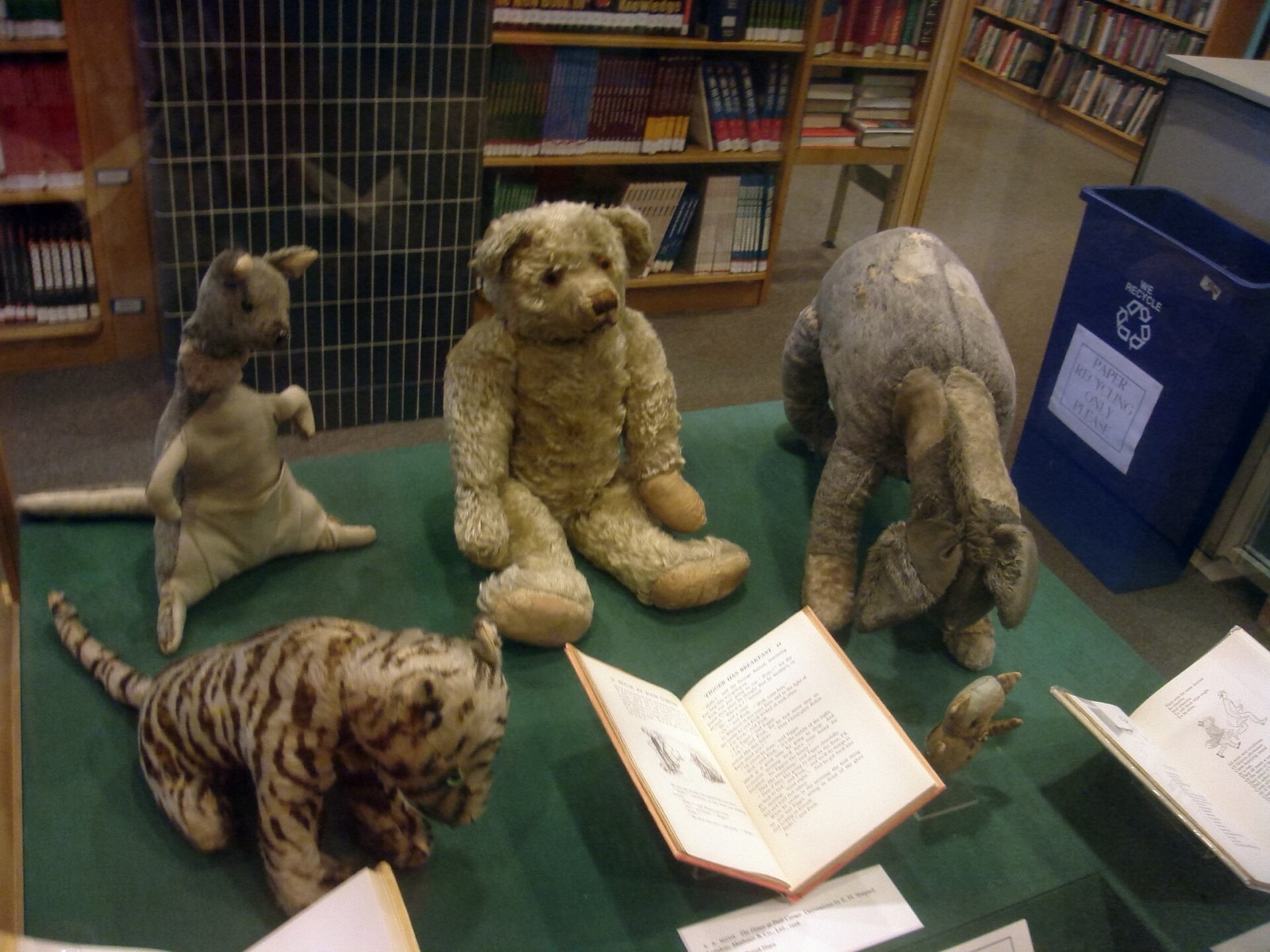
From Christopher Robin and Gone Girl to Zarna Garg and the world's family influencers, parents have long found inspiration, fame and sometimes fortune in their children's lives. But the children have not always been able to choose the stories told about them.
Top photo: Christopher Robin Milne's real toys, which became Kanga, Winnie-the-Pooh, Eeyore, Tigger and Piglet, on display at the New York Public Library in 2006. Photo by Spictacular, public domain, via Wikimedia Commons.
Christopher Robin Milne was still a small boy when his father gave him a kind of immortality. Neither could have anticipated it. In the nursery of their English home lived a collection of stuffed animals, among them a bear called Edward, a donkey and a tiger. Their adventures in A.A. Milne's imagination became Winnie-the-Pooh. The stories, published during the 1920s, brought extraordinary affection and fame to their creator. The little boy who accompanied the animals through the Hundred Acre Wood became one of literature's most recognizable children.
For generations of readers, Christopher Robin remained forever young, wandering through the forest with his bear, dispensing advice and making discoveries. Even the smallest troubles could be resolved before bedtime. The real Christopher grew older, went away to school and discovered that his fictional counterpart had followed him there. Other boys teased him about the poems and stories, sometimes reciting his father's words to embarrass him. The name that had made him famous before he understood fame became increasingly difficult to escape.
As an adult, Christopher Robin Milne would write about his discomfort with the books that had delighted other children. In his 1974 memoir, The Enchanted Places, he wrote that it seemed to him almost that "my father had got to where he was by climbing upon my infant shoulders." He was left, he felt, with an unwanted fame.
The remark carried the bitterness of someone who had spent much of his life trying to separate himself from a character bearing his name. His father had given the world a beautiful childhood. It was not quite the one Christopher remembered living.
Nearly a century later, Gillian Flynn's novel Gone Girl turned a similar predicament into something far more sinister. Amy Dunne's parents, both psychologists and successful authors, have built their fortunes on a series of children's books called Amazing Amy. The books were inspired by their daughter. The fictional Amy grows up alongside the real one, although the two are rarely allowed to occupy equal ground. Where the real Amy makes mistakes, the imaginary girl succeeds. Where she disappoints, her literary double fulfills her parents' ambitions.
 Gillian Flynn at the premiere of the film of Gone Girl at the New York Film Festival, September 2014. Photo by aphrodite-in-nyc, CC BY 2.0, via Wikimedia Commons.
Amy's childhood has become both a commercial property and a continuing reminder of her inadequacies. Strangers admire an ideal daughter who never existed. Flynn's invention gives a disturbing dimension to an old literary practice. Parents take the raw material of their children's lives and turn it into stories that belong, once published, to everyone else.
The practice itself has often arisen from affection. In Sweden, in 1941, seven-year-old Karin Lindgren was confined to bed with pneumonia. She asked her mother, Astrid, to tell her a story about a girl named Pippi Longstocking. Karin had invented the name, and her mother began improvising adventures about an extraordinary child with red braids, enormous strength and a cheerful disregard for adult authority.
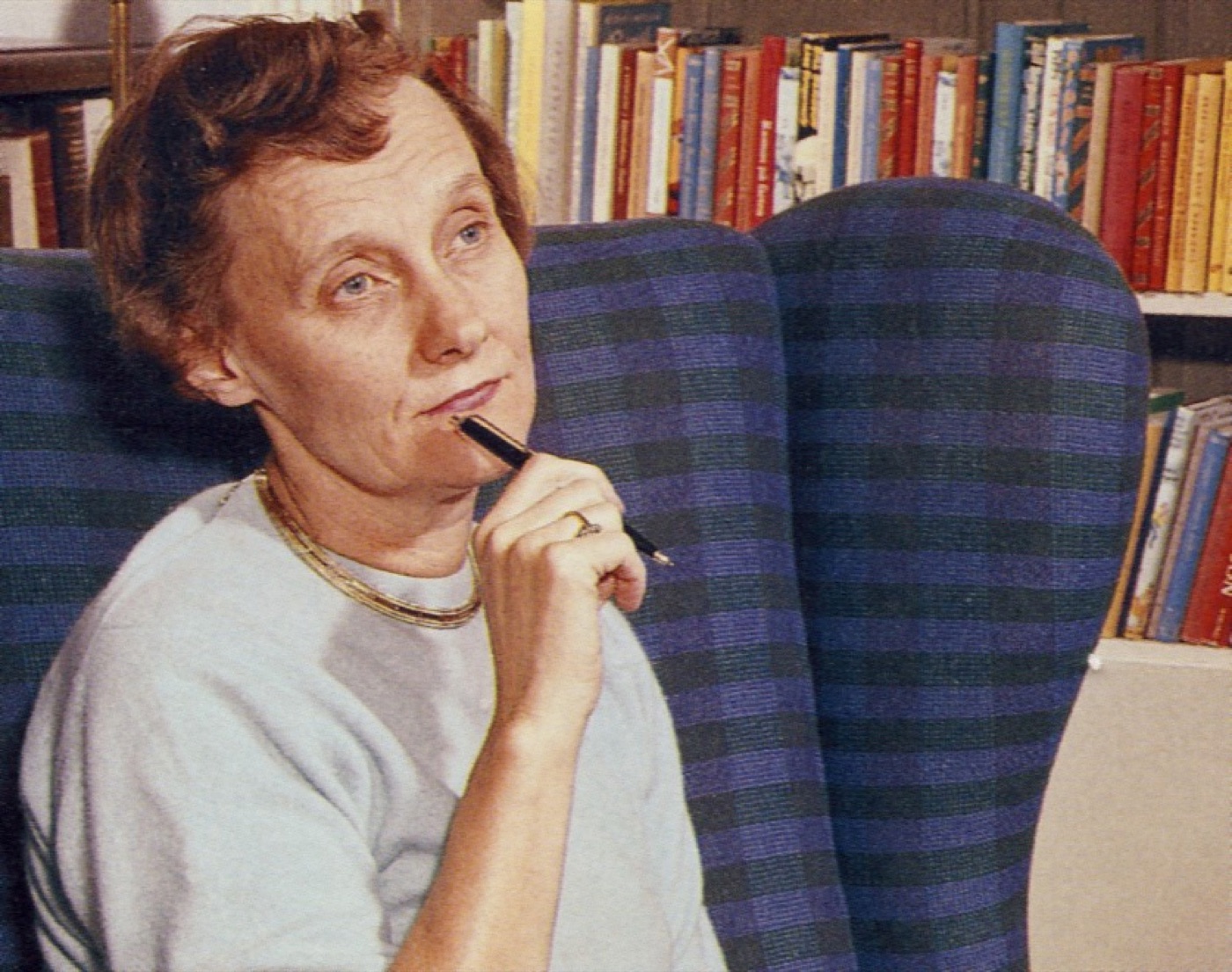 Astrid Lindgren around 1960. Photographer unknown, public domain, via Wikimedia Commons.
The stories eventually became books. Pippi Longstocking entered the imaginations of children around the world. Karin had supplied the inspiration. The fictional girl, however, was never a version of Karin whose behavior could later be measured against her own. The stories belonged to a world that mother and daughter had begun imagining together.
For writers, family life has always offered material of a particularly intimate kind. Children change the rhythm of a household, introduce new anxieties and reveal hidden aspects of adult character. Their unpredictable remarks, quarrels, triumphs and disappointments are irresistible to a parent who writes. This is especially true when the parent is also struggling to understand the experience of raising them.
Yet the child who provides the material is rarely in a position to negotiate how it will be used.
When Amy Chua published Battle Hymn of the Tiger Mother in 2011, she gave readers a detailed account of raising her daughters, Sophia and Lulu, through a demanding regime of academic discipline and musical training. The memoir described family arguments and the girls' resistance. Its account of Chua's often uncompromising expectations provoked an international debate about parenting and achievement. Both girls had grown up inside the narrative their mother was preparing to publish.
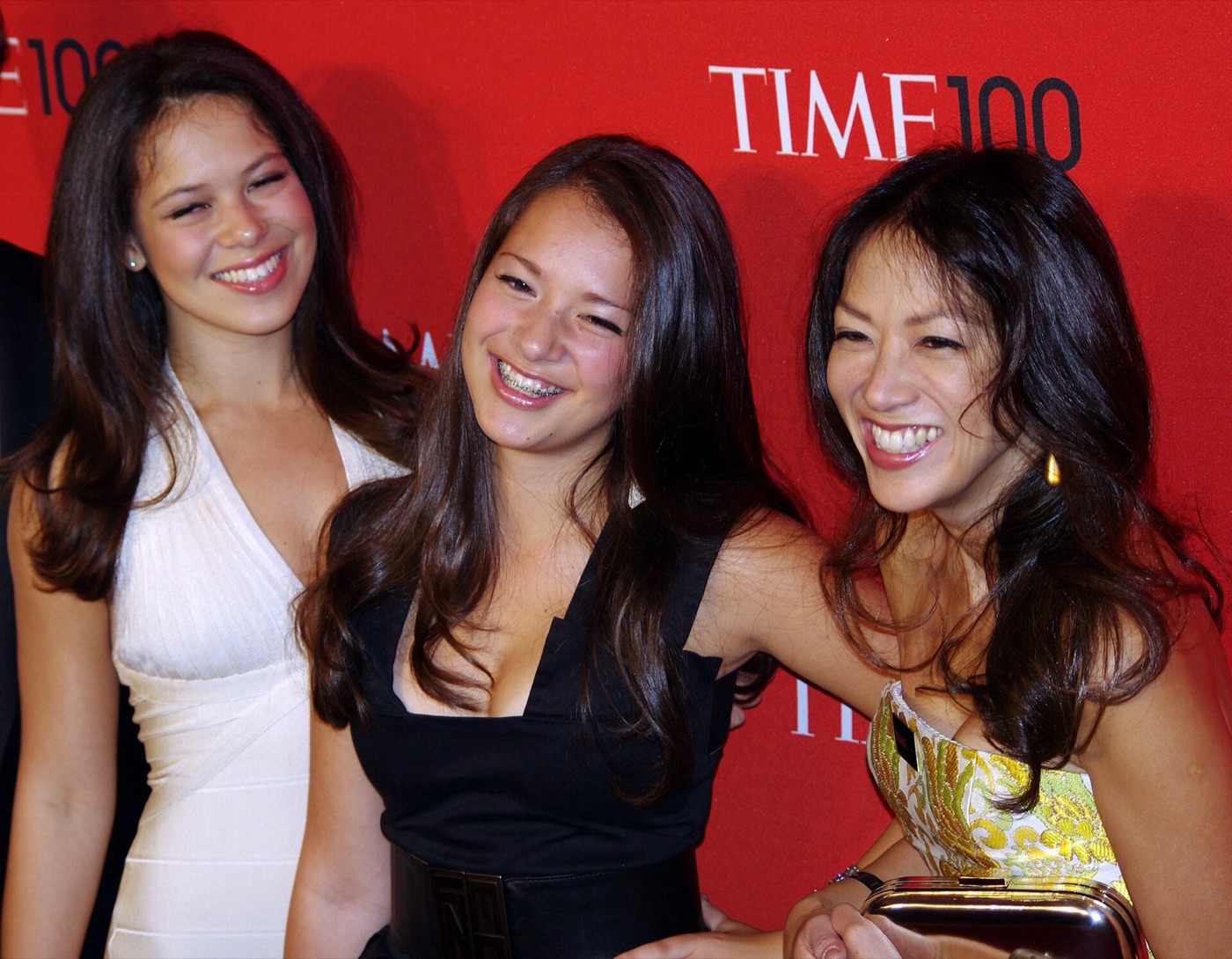 Amy Chua, right, with her daughters at the Time 100 gala in New York, April 2011. Photo by David Shankbone, CC BY 3.0, via Wikimedia Commons.
A family memoir is inevitably assembled from competing memories. What a parent recalls as a moment of tenderness may remain, for the child, an embarrassment. An argument that altered the course of a young person's life may occupy only a few paragraphs. The book is concerned with the mother's larger journey. Even when everyone remembers the same event, they may disagree profoundly about its meaning.
Chua's daughters have not presented themselves simply as victims of their mother's ambitions. Sophia, then 18, publicly defended her in a New York Post open letter days after the book appeared. She offered an account of her upbringing more complicated than the one emerging from the controversy. The family's responses themselves became part of the conversation. They showed how children may eventually claim a voice in stories that began as their parents' alone.
Indian-American comedian Zarna Garg has earned a substantial following with jokes about marriage, motherhood and immigrant family life. For her, the relationship between parent and child has developed into a particularly lively collaboration.
Garg spent sixteen years as a stay-at-home mother before pursuing stand-up comedy, encouraged by her children. They believed she had a talent worth sharing beyond the family. Her jokes frequently draw upon the familiar negotiations of Indian households and the expectations surrounding marriage. They also draw on the differences between immigrant parents and their American-born children.
A son becomes material for a punchline; a daughter's response offers a competing interpretation of the same family incident. Onstage, Garg's motherly authority is part of the performance. So is the audience's recognition that her children may not always agree with her.
What began as an unlikely second career has grown into a family enterprise. Her daughter Zoya, a Stanford graduate, has helped shape the digital strategy behind Garg's comedy, Forbes reported in 2025. Her sons Brij and Veer have run the social-media operation. The family also produces a podcast in which the children can challenge their mother's opinions.
In a Washington Post Live conversation in November 2025, Garg and Zoya talked about building the family business together. Her son Brij made the TikTok video that first went viral, while the pandemic kept comedy clubs shut.
Garg's children helped create the very business that now uses the family's relationships as entertainment. Their participation offers a contrast to a child whose life becomes public before they can understand what that means. It also raises questions that may grow more complicated as younger family members become adults. The boundaries between home, work and performance keep shifting.
The family business built around a parent's creative work has a long history. Social media has changed the speed at which domestic experiences can become public property. The practice is now often called sharenting. A novelist may spend years shaping childhood memories into a book, allowing distance to soften or alter their meaning. A parent with a camera can publish a child's embarrassment within minutes, while the event is still unfolding. No one involved has had a chance to decide.
In the early years of personal blogging, Heather Armstrong wrote under the name Dooce. She helped transform the ordinary difficulties of motherhood into a widely read and commercially successful form of writing. Her accounts of parenting, marriage and domestic life attracted an enormous audience. Advertisers soon recognized the value of her readers' attention.
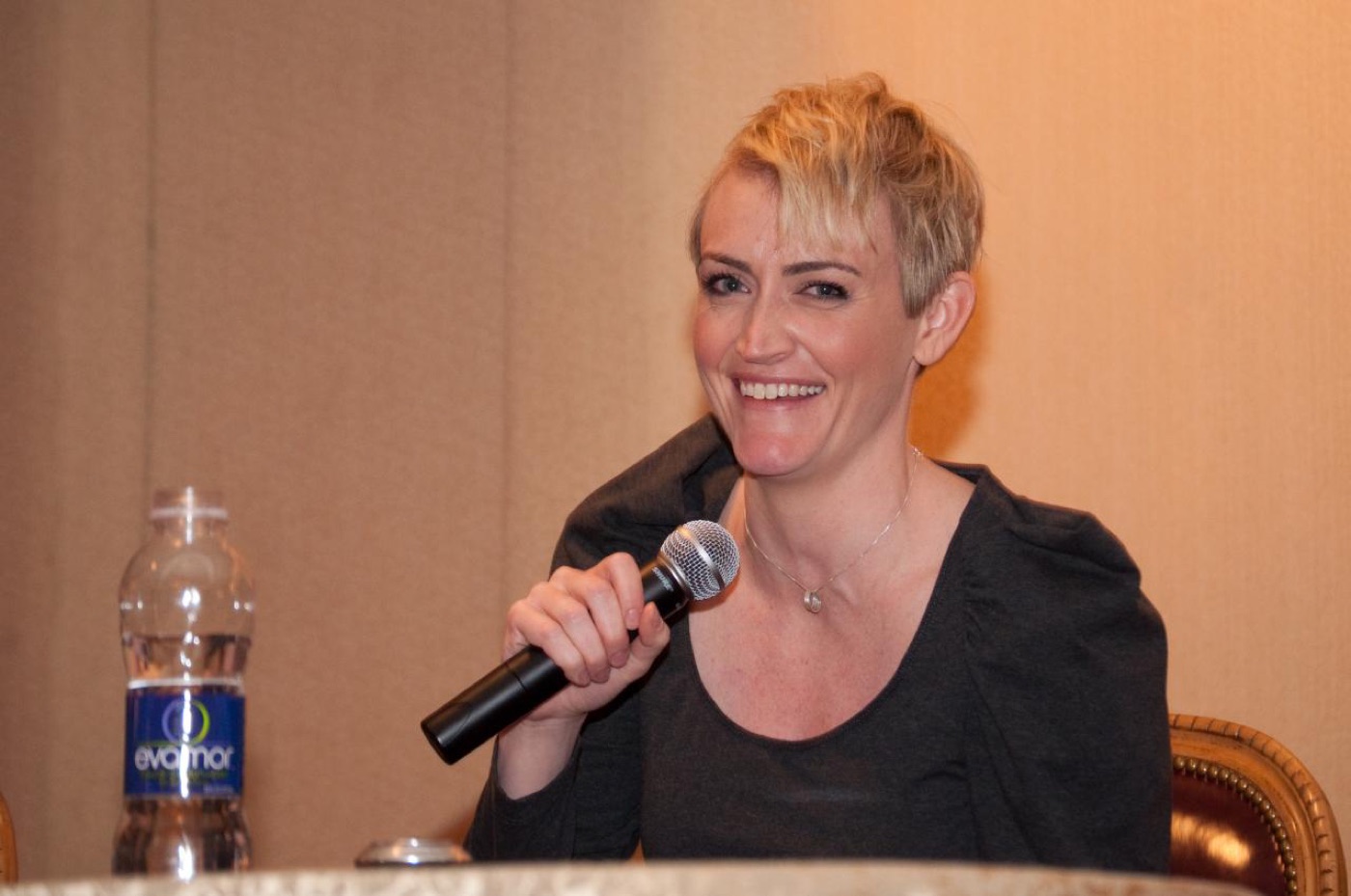 Heather Armstrong, the blogger behind Dooce, at the Mom 2.0 Summit in Houston, February 2010. Photo by Sarah from Houston, CC BY 2.0, via Wikimedia Commons.
The writing that had begun as a personal record gradually acquired obligations to sponsors. A product needed to appear in a photograph, and a family outing could become an advertising opportunity. The spontaneous moments that had once supplied material for a blog were increasingly expected to serve commercial purposes.
In 2015, Armstrong told The Guardian that she had reached a breaking point. One of her daughters had refused, in tears, to go on an outing for a sponsored post. She decided she could no longer go on blogging that way. She recognized how far the demands of advertisers had entered her family's private life.
Her experience belonged to an earlier phase of an industry that would eventually become far more elaborate. The parent no longer needed to be a skilled writer or a natural performer. A family did not require a publisher or television network to reach an audience. A camera, an internet connection and an appealing child could be enough to begin building a business.
In South Korea, a little girl known as Boram became the face of two enormously popular YouTube channels. They were devoted to toys and family entertainment. By 2019, when she was six, her channels had accumulated more than 30 million subscribers. That year, a company established by her parents bought a five-story building in Seoul's affluent Gangnam district. It cost about $8 million, the Korea Times reported.
The property made the financial possibilities of children's online entertainment unusually tangible. A child reviewing toys had helped create a business capable of buying valuable real estate. Questions arose about the pressures involved in sustaining it. Save the Children Korea had earlier raised concerns about some of the channel's content. A court had ordered her parents to attend counseling.
In Australia, the Norris family built a substantial YouTube audience around the lives of their children. Their surfing, skating, family disagreements and personal milestones became recurring subjects of online videos. Alongside competitions and everyday adventures, viewers were invited into experiences that most families would consider private. These included medical concerns and hospital visits.
The combination of entertainment and intimacy has proved commercially powerful. It encourages audiences to feel that they know the people they are watching. A child seen in hundreds of videos may be greeted by strangers who remember birthdays, illnesses and family disagreements. The child may not recall ever choosing to discuss any of them publicly.
In Brazil, the YouTube channel Bel para Meninas became the center of a national controversy in 2020. Viewers had criticized videos featuring a young girl and her mother. Some of the scenes appeared humiliating to critics, prompting concern about the treatment of children whose performances were being monetized. The family rejected accusations of mistreatment.
The dispute acquired another dimension in August 2025, when YouTube removed the channel, citing violations of its child-safety policies. Bel, by then eighteen, publicly protested and defended her parents. She said they had been fulfilling her own wish to be known on the internet. She rejected the portrayal of herself as a victim.
Her response complicated the assumptions of some of those who had campaigned on her behalf. It was possible to question the wisdom of exposing a young child to millions of viewers. One could do so without presuming to know how that child would eventually understand the experience. A young person might resent the publicity, embrace it or feel both at different stages of life.
The first generation to have its childhood extensively documented online has begun to describe the experience. It means inheriting a public identity formed long before adulthood.
In a 2023 NPR report, a young adult identified as Lou spoke about growing up while their mother wrote publicly about family life. Lou was nine when the blog began. Some of the mother's readers later tracked Lou down online, and some of those strangers groomed them. Details that might have remained among relatives and friends had become available to people the family had never met.
Lou described the difficulty of living alongside a public version of themselves constructed through someone else's recollections. Their mother told NPR that Lou felt traumatized by her blogging and that she accepted the fault. In a longer NPR episode, she said she had edited or deleted posts her children objected to. The disagreement was painful precisely because the original writing had not necessarily been intended to cause harm.
Among the most difficult aspects of family storytelling is the unequal relationship between the storyteller and the person described. A parent ordinarily controls the camera, chooses the photograph, edits the anecdote and decides when to publish. The child may be the reason an audience has gathered. Yet the child may have little influence over what that audience is allowed to see.
In the older world of books and newspapers, publication created a relatively permanent record. Its reach was limited by distribution and the attention of readers. Online, a video may be copied, circulated and rediscovered years after its original audience has moved on. A child who changes schools or moves to another city may still meet people who know about old incidents. They happened long before the child could understand them.
Long before social media, Hollywood had confronted part of the problem through the financial exploitation of child performers. Jackie Coogan's appearance alongside Charlie Chaplin in The Kid made him a star. As an adult, he discovered that much of the money he had earned during childhood was gone. His legal battle with his mother and stepfather helped inspire California's Coogan Law in 1939. It established protections for children's entertainment earnings.
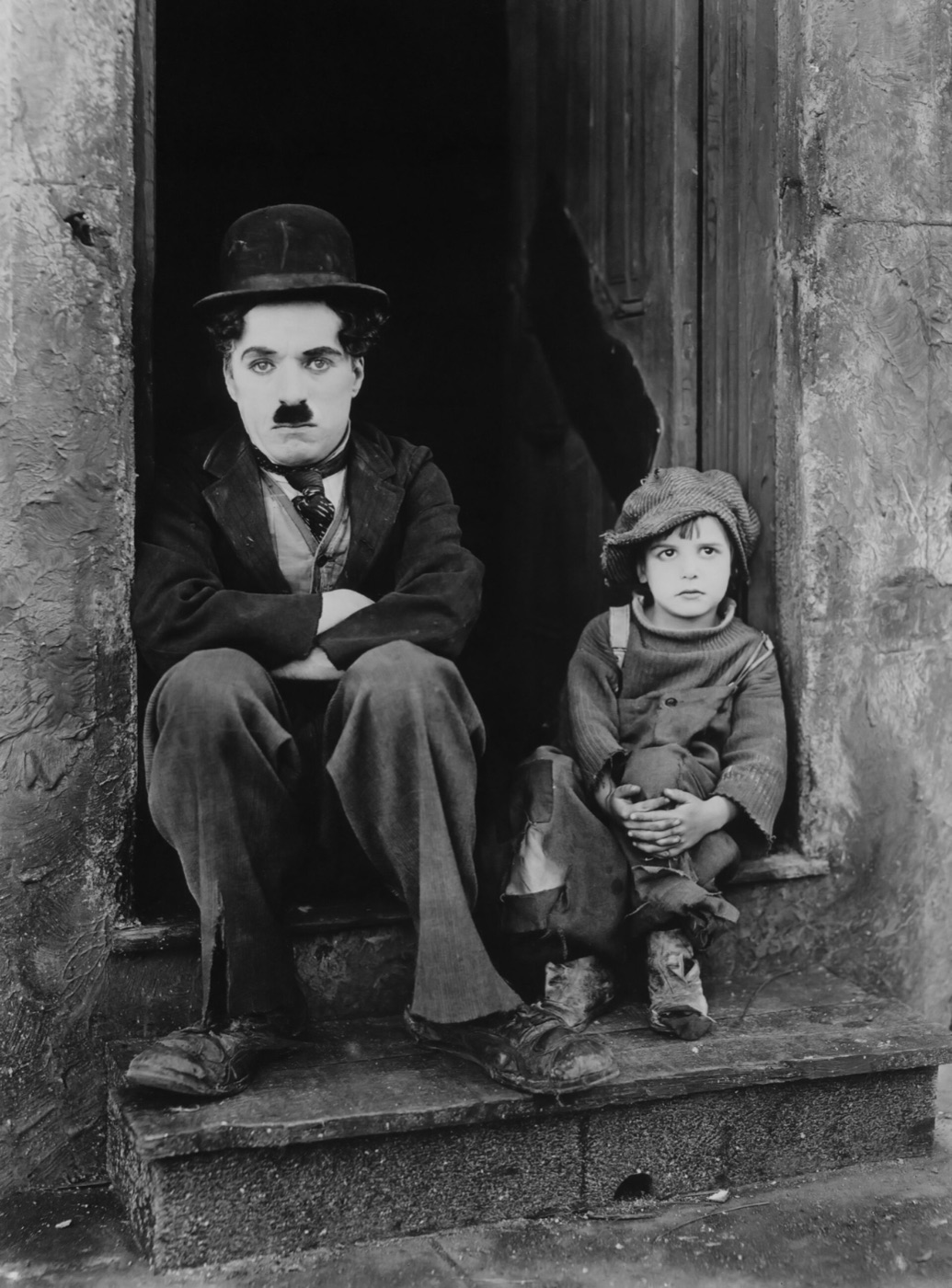 Charlie Chaplin and Jackie Coogan in a publicity photo for The Kid, 1921. Public domain, via Wikimedia Commons.
For decades, similar protections did not necessarily extend to children appearing in online family content. The line between sharing a parent's ordinary life and working for a commercial enterprise could be difficult to draw.
France adopted legislation in 2020 to regulate the commercial use of children's images in online videos. It covers working conditions, earnings and privacy. Illinois followed with a law that took effect in 2024. It requires qualifying family vloggers to set aside money for children whose appearances generate revenue. California expanded financial protections for young online performers that same year. In September 2026, it enacted SB 1247. It gives qualifying adults a way to request the removal or alteration of monetized content featuring them as minors.
These laws reflect a growing recognition that a child's contribution to a family business may be substantial. The work may take place at home, without a contract, a film set or an outside employer.
Money, however, accounts for only part of what children may lose when their lives are made public. The question of who controls the record remains difficult. It is especially so when the person who published it is also the person responsible for the child's care.
A family photograph passed among relatives once carried an understanding, however imperfect, of its audience. An embarrassing childhood story might be repeated over dinner, causing irritation that faded once the guests had departed. A parent could remember a child at an age the child had long since outgrown, without requiring the rest of the world to do the same.
The internet has changed that arrangement. A toddler's tantrum may remain available when the toddler is applying to college. A child's difficulty at school may become part of a parent's account of perseverance, family sacrifice or overcoming adversity. The child might later prefer that it had remained private. The audience can keep meeting a version of the child the adult has spent years trying to leave behind.
Christopher Robin Milne eventually opened a bookshop with his wife, Lesley, in Dartmouth, Devon. There he built a life removed from the literary fame that had defined his earliest years. He wrote his own memoirs, revisiting the childhood that had been transformed into fiction and attempting to reclaim something of its meaning. His relationship with his father's work remained complicated. It was marked by affection, resentment and the peculiar burden of being known to strangers before he knew himself.
 The Harbour Bookshop in Dartmouth, which Christopher Robin Milne opened with his wife in 1951, photographed in 2009. Photo by Jim Linwood, CC BY 2.0, via Wikimedia Commons.
Winnie-the-Pooh, meanwhile, continued his adventures through the Hundred Acre Wood, accompanied by a small boy who would never grow older, never object to the stories and never ask his father to put down the pen.
Christopher Robin could leave the nursery. The other Christopher Robin would remain there, waiting for the next generation of children to discover him.




Comments
Loading comments…