Boston judge strikes down DHS four-year limit on F-1 student stays
A federal judge in Boston on Monday vacated the Homeland Security rule that would have capped most F-1 and J-1 stays at four years. International students, including more than 339,000 from India, keep the open-ended admission known as duration of status.
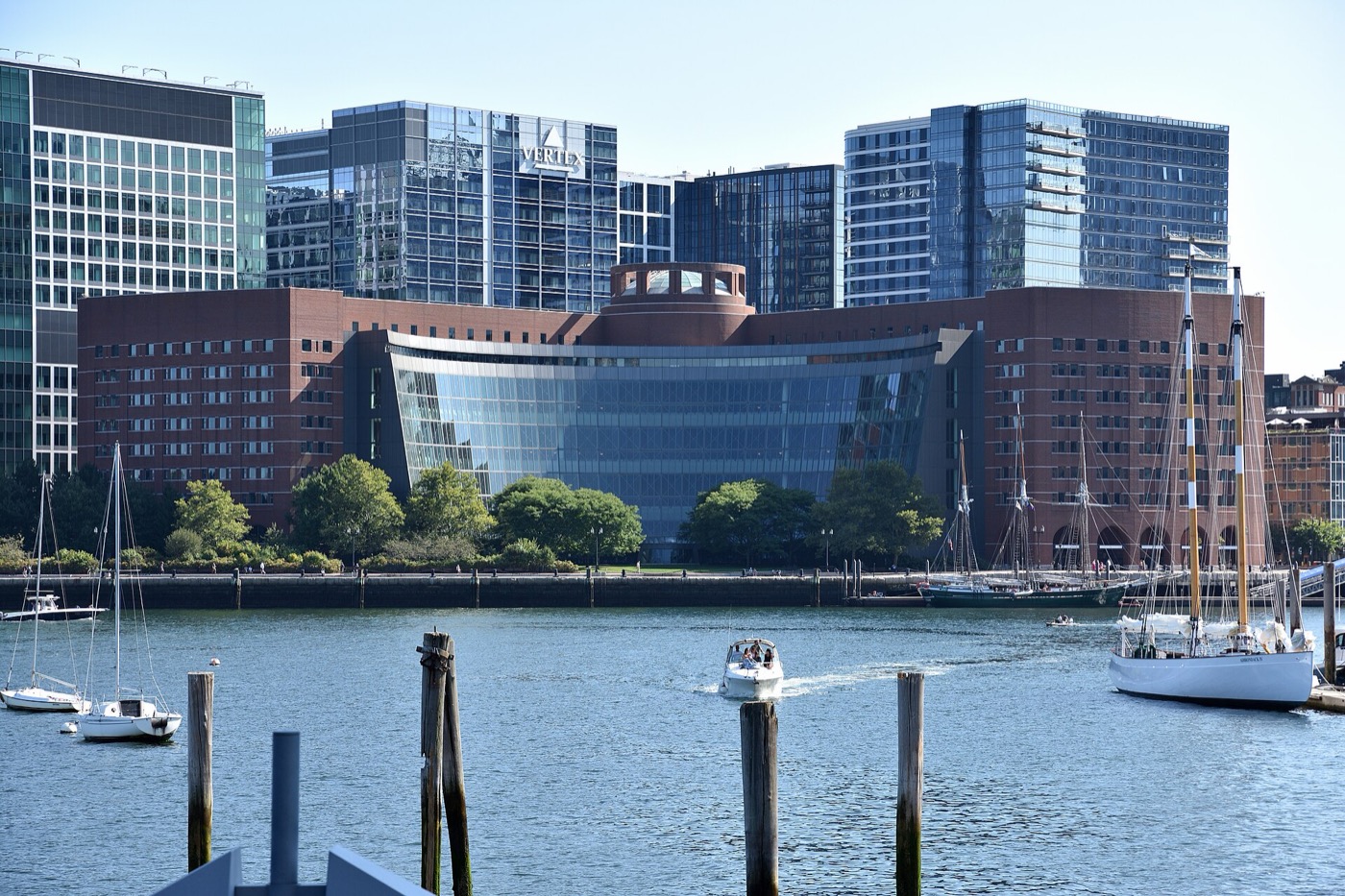
Top image: The John Joseph Moakley United States Courthouse on Fan Pier in Boston, which houses the U.S. District Court for the District of Massachusetts and the First Circuit appeals court, photographed on September 15, 2024. Photo by 4300streetcar, CC BY 4.0, via Wikimedia Commons.
A federal judge in Boston on Monday struck down the Homeland Security rule that would have limited most F-1 students and J-1 exchange visitors to fixed stays of no more than four years. The rule is gone. Students keep the open-ended admission, known as duration of status or "D/S," that the country has used for decades. For now, nothing changes for current students.
U.S. District Judge F. Dennis Saylor IV granted summary judgment to a coalition of colleges, educators and unions in an eight-page order dated November 16. He vacated the whole rule. The Department of Homeland Security (DHS) had published it in the Federal Register on Friday, July 17, over the signature of Secretary Markwayne Mullin. It was due to take effect on September 15.
Many of those students are Indian. India had 339,435 students in the United States in the 2025–26 school year, down 6.5 percent from 363,019 a year earlier, according to the Open Doors India fact sheet the Institute of International Education released on Monday. Most were in graduate school or on work training. The count includes 116,609 graduate students and 182,201 on Optional Practical Training (OPT), the work period after a degree.
The rule tied each F and J admission to the program's length, capped at four years. Anyone whose program ran longer, as many doctoral programs do, would have had to apply to U.S. Citizenship and Immigration Services (USCIS) for an extension of stay. F-1 graduates would also have lost time to leave. After a degree or OPT, they would have had 30 days, down from 60. Language students faced a 24-month limit.
Saylor had already paused the rule in a September 14 order, a day before its start date. On Monday he adopted that reasoning in full. DHS failed to weigh the rule's costs against its benefits, he found. Its stated grounds, fraud and national security, did not support the change.
He also faulted the department for skipping a cheaper option. Schools already report each foreign student's address, courses and status through SEVIS, the federal tracking database. DHS should have weighed better use of that system against "the immense costs and limited benefits" of the new rule, the judge wrote. It never did.
The judge went further. He ruled that the rule's limits on switching majors, joint degrees and second degrees at the same level exceeded what the F-1 statute allows. DHS lacks "such broad and open-ended authority," he wrote. Take a student pursuing a joint graduate degree in electrical engineering and business. That student is "without doubt a 'bona fide student,'" the order says.
DHS asked for a gentler remedy. It wanted the rule sent back to the agency for repairs, left standing in the meantime. Saylor refused. Decades of practice stand behind the old system, he wrote, and the new rule never took effect. Vacating it would cause little disruption, he found.
DHS has defended the rule as a security measure. Government lawyers wrote in an October 30 brief that it would "modernize an outdated immigration framework and close systemic vulnerabilities." The rule makes the same case. Open-ended admission "poses a challenge to DHS's ability to efficiently monitor and oversee" these visitors, the rule itself says. DHS counted 1,816,480 F-1 admissions in fiscal 2024. It put the rule's yearly cost above $443 million.
Miriam Feldblum is president of the Presidents' Alliance on Higher Education and Immigration, the lead plaintiff. In a joint statement on Monday, she said the ruling was "a clear and important victory for international students and scholars." She also cited falling enrollment.
"The longstanding Duration of Status policy is retained," said Fanta Aw, executive director of NAFSA: Association of International Educators, in the same statement. NAFSA is a co-plaintiff. The other plaintiffs include the American Federation of Teachers, the United Auto Workers and The NewsGuild-CWA.
The fight may continue. The government appealed the September order to the First Circuit on September 30, according to the plaintiffs' case page. That appeal was paused on November 13. The government can also appeal Monday's final judgment and ask for a stay, the page says, though neither step suspends the ruling by itself. DHS's next move was not clear on Tuesday.
Students on F-1 and J-1 visas have no new forms to file. They still must stay enrolled and keep their SEVIS records current through their school. Rules on work and OPT are unchanged. A student who travels can confirm that the new admission record reads "D/S" on CBP's I-94 website. Families weighing a Ph.D., a joint degree or a second master's can plan under the old rules for now. The international student office is the first stop for questions about a specific case.
This article is general information, not legal advice. Talk to an immigration lawyer about your case.


Comments
Loading comments…